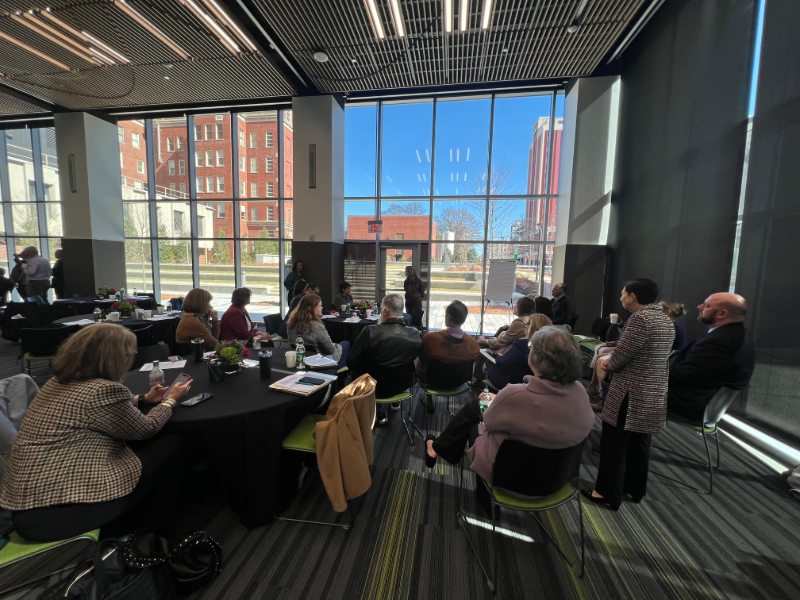
 On Feb. 12, 2026, the Heersink School of Medicine Office of Research held its annual Strategic Research Retreat in the Heersink Conference Center. The day brought leaders from across the school and campus together and emphasized collaboration, infrastructure, and the growing impact of interdisciplinary science at UAB.
Tika Benveniste, Ph.D., senior vice dean at the UAB Heersink School of Medicine, welcomed the room and reviewed UAB’s biomedical research landscape across the past year, including updates on funding mechanisms and institutional investments that continue to support investigators at critical stages of their research. She highlighted multiple avenues of research support, including REFRESH Awards, traditional and extended-review bridge funding, and UAB Presidential Bridge Funding, underscoring the institution’s commitment to sustaining high-quality research during funding gaps. Wrapping up, Benveniste covered Heersink buildings, both existing and new, and explained the national funding package passed on Feb. 3, 2026.
Victor Darley-Usmar, Ph.D., senior associate dean for Research Compliance and Administration, and Jason Nichols, O.D., MPH, Ph.D., senior associate vice president for UAB Research, presented on the Institutional Research Core Program (IRCP) and the University-Wide Research Institutes and Centers (UWRIC). Nichols stressed the essential role UWRICs play in catalyzing collaborative research, and new resources to support the IRCP. IRCP Director James Kobie, Ph.D., appointed Feb. 11, 2026, outlined the program’s next steps.
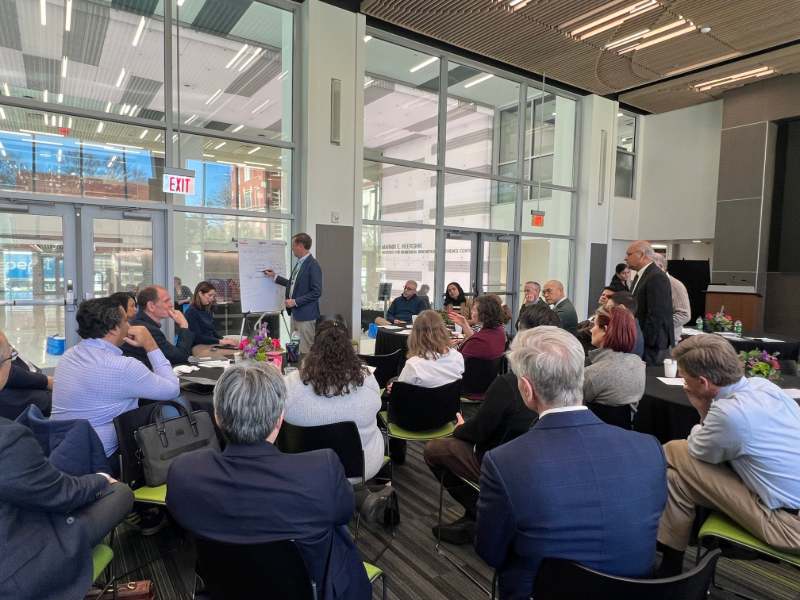 Following this, several leaders spoke about the strategic visions for focus areas. Jeremy Day, Ph.D., director of the Comprehensive Neuroscience Center, presented a forward‑looking vision for the neurosciences, including strengths in neurodegeneration, addiction, mental health disorders, neurodevelopment, neuroengineering, and strong clinical programs. He noted broad engagement across Heersink departments and proposed key measures of success, including faculty recruitment, technological integration, scholarship and discovery and growth of the funding portfolio.
Paige Porrett, M.D., Ph.D., professor in the Department of Surgery, introduced the I‑4ward vision, addressing why UAB is uniquely positioned to lead in immunologic and inflammatory disease research. She described a plan to connect teams across disciplines and accelerate discovery-to-delivery, bringing faculty and resources together through shared space and coordinated administration. Porrett pointed out an overarching theme: advancing Immunotherapeutics to transform treatment modalities, not only for cancer but also for a wide range of chronic and immune-related diseases.
Barry Sleckman, M.D., Ph.D., director of the O’Neal Comprehensive Cancer Center, highlighted the faculty‑driven strategic plan for cancer research and underscored the growing importance of team science. He noted increasing support among major funders for large, multi‑investigator teams. The long‑term vision includes deeply integrated cross-disciplinary teams housed in upcoming research buildings, with success measured by scientific breakthroughs and their translation into patient care.
Orlando Gutierrez, M.D., senior associate dean for Clinical and Translational Research, closed the morning’s strategic sessions by diving into implementation science. Measures of success will focus on increased multidisciplinary programs, community health impact, the cultivation of the next generation of dissemination and implementation scientists and funding growth,
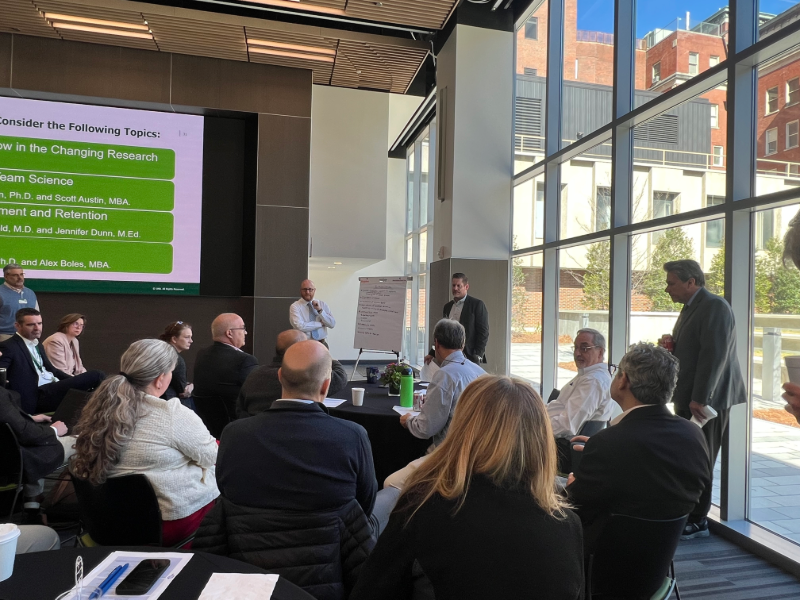 Attendees then moved into breakout sessions to discuss strategies for excelling and growing in the changing research landscape. Specifically, they covered collaborative and team science (moderated by Renee Heffron, Ph.D., professor in the Department of Medicine), recruitment and retention (moderated by Mark Dransfield, M.D., chair of the Department of Medicine), and infrastructure (moderated by Tom Buford, Ph.D., associate dean of the Department of Medicine). Across the breakouts, participants emphasized systems and structures that support UAB’s people, teams, and long‑term research priorities. Together, the conversations pointed toward an integrated approach to growth, valuing alignment, efficiency, and the power of working together.
Anupam Agarwal, M.D., senior vice president for Medicine and dean of the Heersink School of Medicine, closed the retreat by highlighting the energy and creativity that emerged from the breakout discussions. “There were some really amazing ideas that came from today’s small group sessions,” stated Agarwal. “I look forward to charging our leaders to find a few action items we can implement right away.” He also emphasized that UAB’s focus areas are thematic and interconnected, and that diversifying our research portfolio and supporting existing faculty and staff are important, all while inviting broad input from our Heersink community to help shape what comes next.
A common thread ran through the retreat as participants highlighted how linking people, space, data, and programs is helping the Heersink School of Medicine and UAB build momentum for discovery and translation heading into 2026 and beyond.