Four projects have been selected as the inaugural awardees of the Dr. Latesha E. Elopre Health Across the Lifecourse (HEAL) Pilot Program, supporting innovative research designed to improve health outcomes across the lifespan.
Designed to support early-stage ideas with strong potential for real-world impact, the HEAL Pilot Program advances research that examines how biological, environmental, social, and structural factors interact over time to shape health. The pilot program builds on the HEAL research focus area introduced by the Heersink Office of Research in 2025, which emphasizes understanding how experiences and exposures across the life course shape health outcomes.
Named in memory of Latesha Elopre, M.D., a physician‑scientist and leader who served at UAB for 10 years, the pilot program reflects her commitment to collaboration, mentorship, and connecting research to communities for real‑world impact. Her legacy continues to shape the school’s approach to advancing health across the lifespan.
“It is humbling and heartwarming to announce the 2026 Heersink School of Medicine Dr. Latesha E. Elopre HEAL Pilot Program awardees,” said Michael Mugavero, M.D., associate dean for Clinical and Translational Research and HEAL lead. “These four projects and research teams are emblematic of Dr. Elopre’s deep-seated conviction to collaborate and partner with communities. To leverage research as a means for UAB investigators to provide agency to communities to identify and evaluate solutions to the multi-level challenges plaguing their health and wellness. From virtual reality to built environment, these projects collectively capture the ambitious overarching goals of the Heersink School of Medicine HEAL—to embrace a precision population health approach so that everyone can achieve their full health potential.”
The four awardees were selected through a competitive, multi-stage review process that emphasized innovation, scientific rigor, and potential for translation into practice and policy. The funded projects span environmental health, artificial intelligence, infectious disease prevention, and cardiometabolic risk, reflecting the breadth of lifecourse-focused research at Heersink.
Advancing precision environmental interventions for asthma
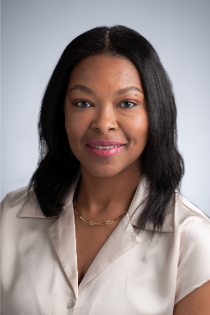 Crystal Stephens, Ph.D.Crystal Stephens, Ph.D., assistant professor, Department of Medicine, Division of Pulmonary, Allergy, and Critical Care Medicine
Project: Asthma Intervention for Residential Spaces (AIRS)
Asthma continues to disproportionately affect residents of aging public housing, where indoor environmental exposures contribute to poor disease control. Stephens’ study evaluates how improving indoor air quality in living spaces can help people better manage asthma.
Building on the ongoing HEALTHe Birmingham study, the AIRS project integrates clinical phenotyping, biomarker analysis, and real time in-home air monitoring to evaluate how interventions such as filtration and allergen reduction improve asthma symptoms. By linking health outcomes with environmental data, the team aims to better understand how residential environments shape disease control and identify which strategies work best and for whom. The research focuses on practical changes that can be made at home, helping connect medical care with everyday living environments.
The multidisciplinary team includes mentors Gabriela Oates, Ph.D., associate professor in the Department of Medicine, and Jennifer Trevor, M.D., professor in the Department of Medicine, with Hafsa Safdar, M.D., pulmonary fellow, contributing clinical assessments and data interpretation. In‑kind support from the HEALTHe Birmingham study provides equipment and infrastructure, reinforcing strong cross‑project collaboration.
Findings will help guide future research and inform home-based strategies that can improve the quality of life for people living with asthma.
Using AI to map neighborhood influences on women’s health
 Rena Patel, M.D., and John Osborne, Ph.D.Rena Patel, M.D., associate professor, Department of Medicine, Division of Infectious Diseases
John Osborne, Ph.D., associate professor, Department of Biomedical Informatics and Data Science
Project: Advancing Understandings of Neighborhood-Level Social Vulnerability for Women’s Health Across the Lifespan: Using Geospatial Embeddings in Electronic Health Records
What if your surroundings—your street, your sidewalk, even the green space nearby—could help doctors better understand your health?
Patel and Osborne will use artificial intelligence (AI) to better understand how neighborhood conditions influence health across adulthood. The study will analyze Google Street View imagery and community input to identify features of neighborhoods, such as housing conditions, walkability, and access to outdoor space, to create dynamic, granular measures of neighborhood conditions. These AI enhanced “virtual audits” will capture more day-to-day factors that traditional data sources often miss.
By combining these insights, the team aims to create a clearer picture of how local environments shape health over time. The long-term goal is to connect these insights with electronic health records, helping care teams better understand each patient’s context and identify opportunities for earlier, more personalized prevention.
The project combines advanced data science with community input, ensuring the work reflects real experiences on the ground. Community engagement experts Tiffany Osborne, program director in the Department of Medicine, Division of General Internal Medicine and Population Science, and Harriette Reed-Pickens, program manager for the Center for AIDS Research, are part of the team, helping guide how neighborhood features are defined and interpreted.
This pilot will create a new AI ready dataset and framework that can be used in future research and care settings. Over time, it could support more informed, place aware approaches to improving women’s health across Alabama.
Community built virtual reality intervention for HIV prevention
 Matt Gravett, M.D., Sarah MacCarthy, Sc.D., and Trevis SmithMatt Gravett, M.D., assistant professor, Department of Medicine, Division of Infectious Diseases
Sarah MacCarthy, Sc.D., professor, School of Public Health, Department of Health Behavior
Trevis Smith, director of prevention, AIDS Alabama
Project: A Community Built Virtual Reality-Based Intervention to Advance Precision Population Health for HIV
HIV continues to disproportionately affect young men in the Southern United States, where innovative, scalable, and culturally responsive prevention strategies are urgently needed. To address persistent gaps in HIV testing and linkage to care, Gravett, MacCarthy, and Smith are testing a virtual reality platform designed to make HIV self-testing more accessible and supportive.
The team is developing and evaluating V’SHA (Virtual Sexual Health Access), a virtual reality tool that allows individuals to complete HIV self-testing at home while interacting with trained staff in a virtual setting. The experience recreates a familiar clinic environment, offering both privacy and real-time guidance.
The study will assess how easy the tool is to use and how well it supports individuals through testing and connection to care services. It explores whether virtual tools can reduce testing barriers by assessing VR-enabled testing's feasibility, acceptability, and appropriateness versus telehealth, and by examining early indicators of linkage to prevention and treatment.
The project is a collaboration between UAB researchers and AIDS Alabama, bringing together expertise in HIV prevention, public health, and health communication. Katia Bruxvoort, Ph.D., associate professor in the School of Public Health Department of Epidemiology, and Yuanfeixue Nan, Ph.D., postdoctoral scholar in the Department of Medicine, are also serving as senior collaborators on the multidisciplinary team.
Results will help determine how innovative, technology‑enabled approaches can support future testing and care efforts, strengthening pathways to prevention and care and offering insights into scalable prevention strategies in clinical and community settings
Improving early detection of cardiometabolic risk across adulthood
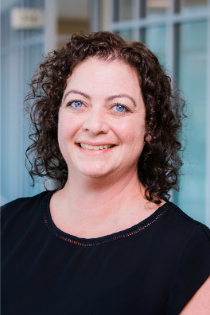 Carrie R. Howell, Ph.D.Carrie R. Howell, Ph.D., assistant professor, Department of Medicine, Division of General Internal Medicine and Population Science
Project: Adult Lifecourse Validation of the Cardiometabolic Disease Staging (CMDS) Risk Score Using Deep Learning on Real‑World EHR Trajectories
Cardiometabolic diseases remain a leading cause of preventable illness and death in the United States, with risk building over decades of adulthood. Existing tools used in clinical care often miss how metabolic, vascular, and social factors interact and change over time to drive conditions like type 2 diabetes and cardiovascular disease.
Using large-scale health data, Howell is working to improve the early identification of these conditions. Her study will validate and expand the Cardiometabolic Disease Staging risk score by applying advanced analytics to long-term electronic health record data. This approach will allow researchers to track how risks develop and identify age-specific “sensitive windows” that signal when someone may benefit most from early prevention.
By accounting for a broader range of factors, Howell’s work aims to produce more precise, practical tools for use in healthcare settings. These insights could enable earlier, more targeted prevention strategies, particularly for populations heavily affected by cardiometabolic disease.
Findings will inform future research and contribute to tools that help clinicians recognize risk sooner and act at the most impactful time.
A foundation for lifecourse-focused equitable innovation
Together, the inaugural HEAL Pilot Program projects emphasize the Heersink School of Medicine’s commitment to advancing precision population health and addressing complex health challenges through interdisciplinary collaboration. Although several projects involve partners from across UAB and the community, the initiative highlights the leadership and innovation of Heersink faculty who are driving solutions that span environments, technologies, and all stages of human health.
The program’s success was bolstered by a consortium of collaborating centers and institutes that provided co-sponsorship and expert review support. Partners included the Center for Palliative and Supportive Care, Center for the Study of Community Health, Center for Research in Women’s Health, Immunology Institute, Lung Health Center, Mary Heersink Institute for Global Health, Comprehensive Healthy Living Research Center, Center for Clinical and Translational Science, Center for Lung Analytics and Imaging Research (CLAIR), Comprehensive Diabetes Center, Center for Outcomes and Effectiveness Research and Education, Center for AIDS Research (CFAR), and the Forge AHEAD Center.
As these pilot studies generate early findings, they are expected to catalyze larger extramural funding and help guide interventions to improve health outcomes across Alabama and beyond.