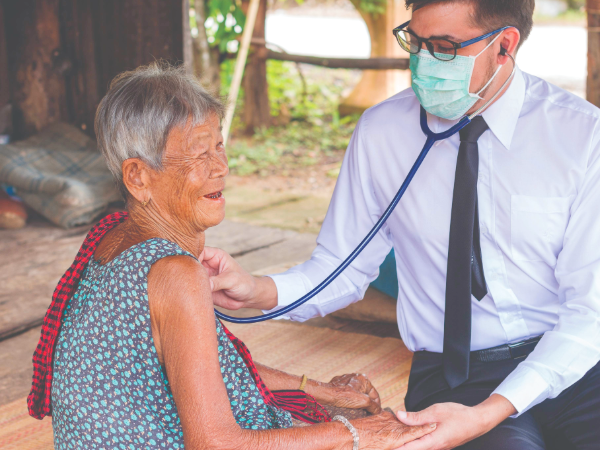
 For students, trainees, and faculty across UAB, global health isn’t just a field of study; it’s a commitment to improving health everywhere, grounded in meaningful partnerships and shared understanding.
But while transformative global experiences are essential for developing the next generation of global health leaders, access to these opportunities is far from guaranteed.
International travel, lodging, conference registration, and research expenses create very real financial barriers that prevent many deserving scholars from participating in fieldwork, academic exchange, or collaborative projects.
And for UAB’s global partners, the challenge is enduring—the cost of traveling to Birmingham can hinder joint innovation, mentorship, and training.
Recognizing these persistent obstacles, the Mary Heersink Institute for Global Health (MHIGH) at UAB has developed the Global Health Travel Awards Program, a new initiative designed to bring life-changing global health experiences within reach for both UAB scholars and international collaborators.
A program built on collaboration and exchange
At its core, the Global Health Travel Awards Program supports bidirectional travel between UAB and global partner institutions.
“The concept of ‘bidirectional’ was essential to the program from the very beginning,” said Program Manager Kristin Garrett, MPH. “It’s not just about sending our students, trainees, and faculty abroad,” Garrett explained. “Our collaborators around the world can leverage opportunities to come here, learn from our experts, and share the knowledge and experience they bring from their own institutions, so it’s truly collaborative.”
These global partner institutions, or “key collaborating centers,” are universities and research hubs abroad where UAB faculty already conduct work in global health.
Seven centers across four continents have been identified so far, with more expected as the program continues to build momentum.
UAB students, trainees, and faculty can use the travel support for research, education, or service activities, the three pillars of MHIGH’s mission. Collaborating partners may send visiting scholars to Birmingham for training or joint project development related to any of the three pillars as well.
Rena Patel, M.D., MPH, M.Phil., associate director for Research at MHIGH, explains, “We are confident that the Travel Awards Program will make a difference in inspiring the next generation of global health innovators by providing hands-on global health experiences and building a workforce equipped to address health challenges worldwide.”
By supporting travel in both directions, the program strengthens the relationships at the heart of the global health workforce—relationships built on mutual respect, shared learning, and long-term collaboration.
Supporting research, education, and service
The opportunities supported by the Global Health Travel Awards are based on three principles:
- Support international collaboration
The awards will provide travel funding between UAB and partner institutions to promote cooperative projects, build capacity, and enhance the development of the global health workforce.
- Promote academic exchange and innovation
The program supports transformative experiences across research, education, clinical service, and fieldwork. Whether a faculty member is traveling to collaborate on a new project or a student is participating in hands-on learning abroad, these experiences broaden perspectives and deepen global health expertise.
- Strengthen global partnerships
By facilitating scholarly exchange, mentorship, and joint programming, the awards help cultivate sustainable, equitable global relationships, which are the foundation of effective global health work.
These principles mirror the curiosity, collaboration, and willingness to learn across borders that global health work demands.
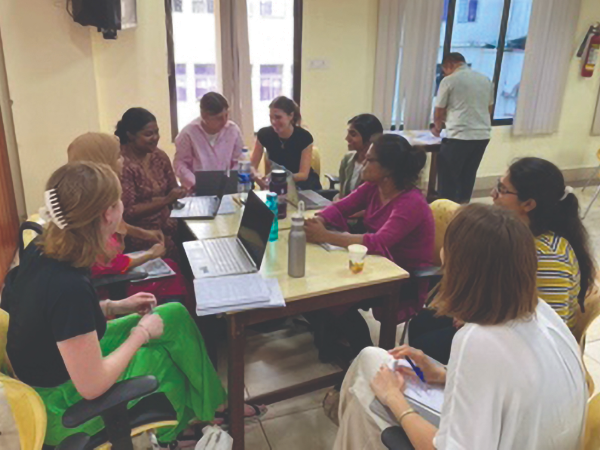 A broad, interdisciplinary opportunity
Although the program originates within the Heersink School of Medicine, its reach will be intentionally interdisciplinary. Applicants may include undergraduate, graduate, and professional students, trainees, staff, and faculty from across UAB.
While many assume global health belongs solely to medicine or public health, Garret emphasizes that the award’s scope is much broader. “Global health is inherently interdisciplinary,” she said. “If someone is in social work, nursing, or engineering”—any field with a global or community health connection—“they can potentially benefit from these awards.”
As long as applicants are pursuing a global health activity aligned with research, education, or service, they will be eligible to apply once the program launches.
A moment of renewed commitment
Although the program is not a response to any one event, Garrett noted that accessible health experiences are especially important right now. Recent funding shifts, including changes to NIH’s approach for global health grants, have limited travel opportunities for researchers and trainees.
Rather than focusing on uncertainty, Garrett sees this as a moment for recommitment. “We want to help future leaders gain hands-on experience,” she said. “Travel is essential to global health work, not optional. This program helps ensure that opportunities to travel [for global health work] don’t disappear simply because of a lack of funding opportunities.”
By establishing an endowed fund, MHIGH aims to create a permanent source of support so that global health engagement remains strong for generations to come.
“Your support,” Patel said, “will help reduce financial barriers, foster innovation, strengthen international partnerships, and advance the training of future global health leaders.”
Building the global health workforce of tomorrow
Ultimately, the Global Health Travel Awards are about far more than flights, lodging, or conference fees. They are about developing a globally engaged health workforce while strengthening UAB’s partnerships around the world.
These travel awards are about empowering students, trainees, and faculty to step into places where health challenges are often most urgent and most in need of innovative, collaborative solutions. “And bringing those lessons back to Alabama, where our populations can benefit from innovations developed abroad,” added Patel.
As MHIGH lays the foundation for this new initiative, the vision is clear—a future where UAB’s health leaders and their global partners have the support they need to learn, collaborate, and build a healthier world together.
Give now to the Global Health Travel Awards project. Learn more about UAB Giving Days and the other 2026 Heersink-focused projects: MAA Medical Student Assistance Fund, Mini Medical School, and Equal Access Birmingham.