 Researchers at the University of Alabama at Birmingham (UAB) Department of Ophthalmology and Visual Sciences are developing technologies designed to improve how eye conditions are studied, monitored, and managed through advanced imaging software and light-based therapies.
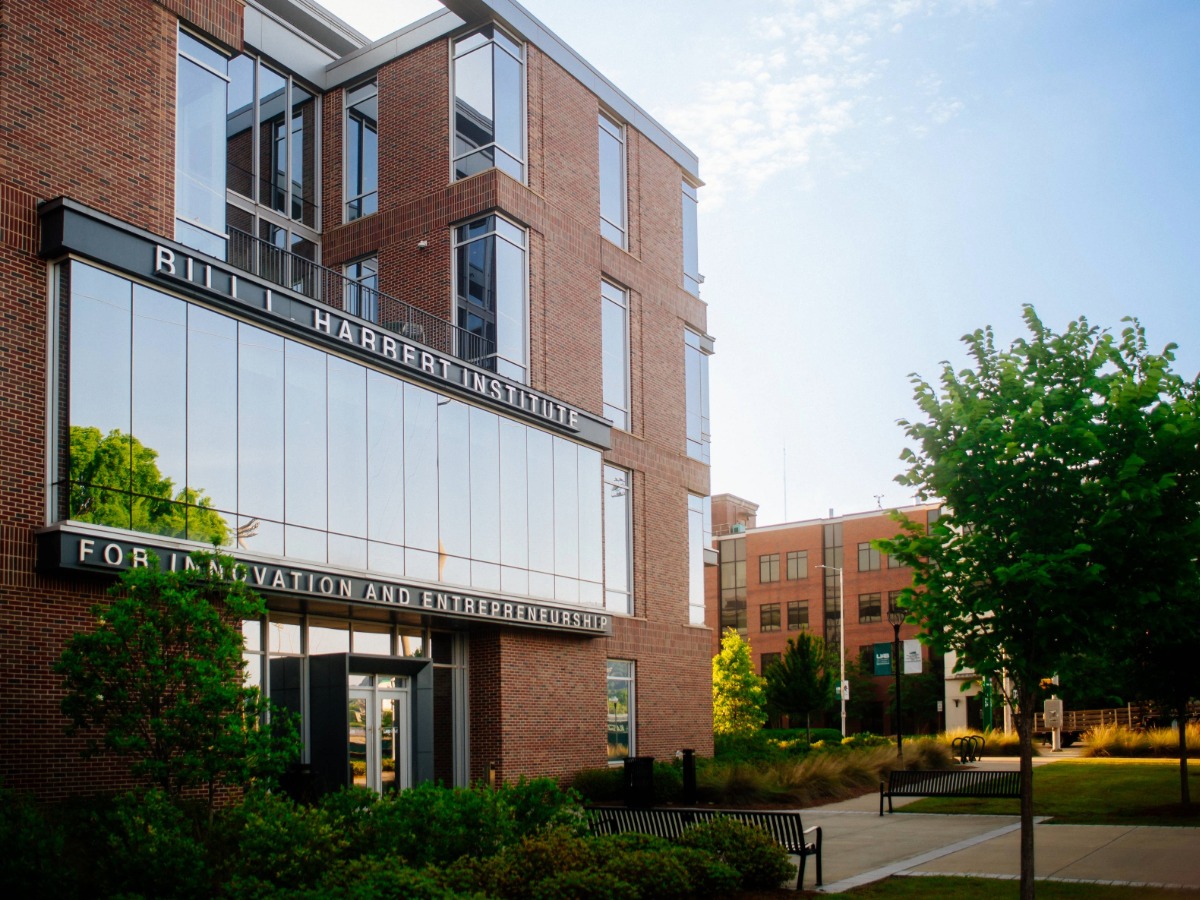
In recognition of Healthy Vision Month, the Bill L. Harbert Institute for Entrepreneurship and Innovation is highlighting UAB innovations aimed at advancing research and expanding tools for vision care.
Targeting myopia progression in children
Rafael Grytz, Ph.D. , Dennis Endowed Professor of Glaucoma Research in the Department of Ophthalmology and Visual Sciences at UAB, founded Electric Indigo, a company developing light-emitting eyewear designed to slow the progression of myopia, or nearsightedness, in children.
Inspired by years of myopia research at UAB, Grytz’s work focuses on how light influences eye development. The eyewear emits a short wavelength of indigo light, similar to wavelengths found in the sunlight that are often missing indoors but may play an important role in healthy eye growth.
“It’s a short wavelength light that is missing indoors that seems to be an important stimulus for normal eye growth, and that wavelength exists abundantly in sunlight,” Grytz said. “The eyewear is designed to bring this important stimulus back to children, even when they are indoors.”
Unlike traditional glasses or contacts that correct vision, the technology is designed to address the underlying progression of myopia by reintroducing specific light stimulation. Children could wear the glasses during everyday activities like homework or screen time, with the light activated for a short daily treatment period without disrupting routines.
In collaboration with Richard Land, Ph.D., director of the Visual Systems Group at Cincinnati Children’s Hospital Medical Center, Grytz helped establish the µ-optic spectral sensitivity curve, a tool used to evaluate how different wavelengths of light, particularly violet, indigo, and blue, influence eye development.
The findings are currently based on preclinical studies, with early results supporting the role of short-wavelength light in regulating eye growth. Human clinical trials remain in early stages and are expected to take several years to determine effectiveness.
Electric Indigo partnered with Hardware Park to develop the technology and has received support through a National Institutes of Health Phase I SBIR grant to advance safety and feasibility studies.
Expanding tools for vision research
 Massimo Fazio, Ph.D., associate professor in the Department of Ophthalmology and Visual Sciences, founded Fast Prototyping Software Solutions, a company developing technologies designed to improve vision research workflows, clinical imaging analysis and biomechanics research.
Fazio’s work spans both hardware and software development for ophthalmology research. On the hardware side, he helped develop custom systems used to study how eye tissue in donor eyes respond to pressure, helping researchers better understand diseases such as glaucoma. On the software side, he has developed tools for biomechanics analysis, clinical imaging data processing and retinal analysis using Optical Coherence Tomography (OCT), which produces detailed 3D scans of the retina.
More recently, Fazio has focused on software designed to address challenges in research workflows, product development, and clinical data use. One platform developed through Fast Prototyping Software Solutions unifies multiple imaging analysis algorithms into a single workflow, allowing researchers to integrate processing modules written in different programming languages through a graphical interface to simplify and accelerate data analysis.
The technologies developed through Fast Prototyping Software Solutions are currently at different stages of development. Some began as research tools designed to answer basic scientific questions, while others are moving closer to routine use in clinical data processing and software workflows. Fazio said his current focus is helping transition research concepts into practical tools that can be used by clinicians and vision researchers.
Fazio said his interest in vision research began during his master’s studies in mechanical engineering after discussions with an ophthalmologist about how intraocular pressure affects retinal tissue.
“That discussion turned into a project, which later became the focus of my thesis,” Fazio said. “What excites me most about the future of vision care is the push toward earlier detection, better measurement and more personalized care. “Better imaging, better analysis and better software should help clinicians spot problems sooner and make more confident decisions.”
One of the most promising developments in his research has been collaboration with Legacy of Hope that allows researchers to study donor eye imaging and better understand how glaucoma affects the retina.
Fazio hopes that continued advances in imaging computation and clinical care will help reduce barriers between collecting data and turning it into practical tools for patient care.
“These tools need to become more accurate, easier to use and more widely available, so clinicians and patients benefit,” Fazio said.
To learn more about each invention, contact the researchers at
As published by the Bill L. Harbert Institute for Entrepreneurship and Innovation.