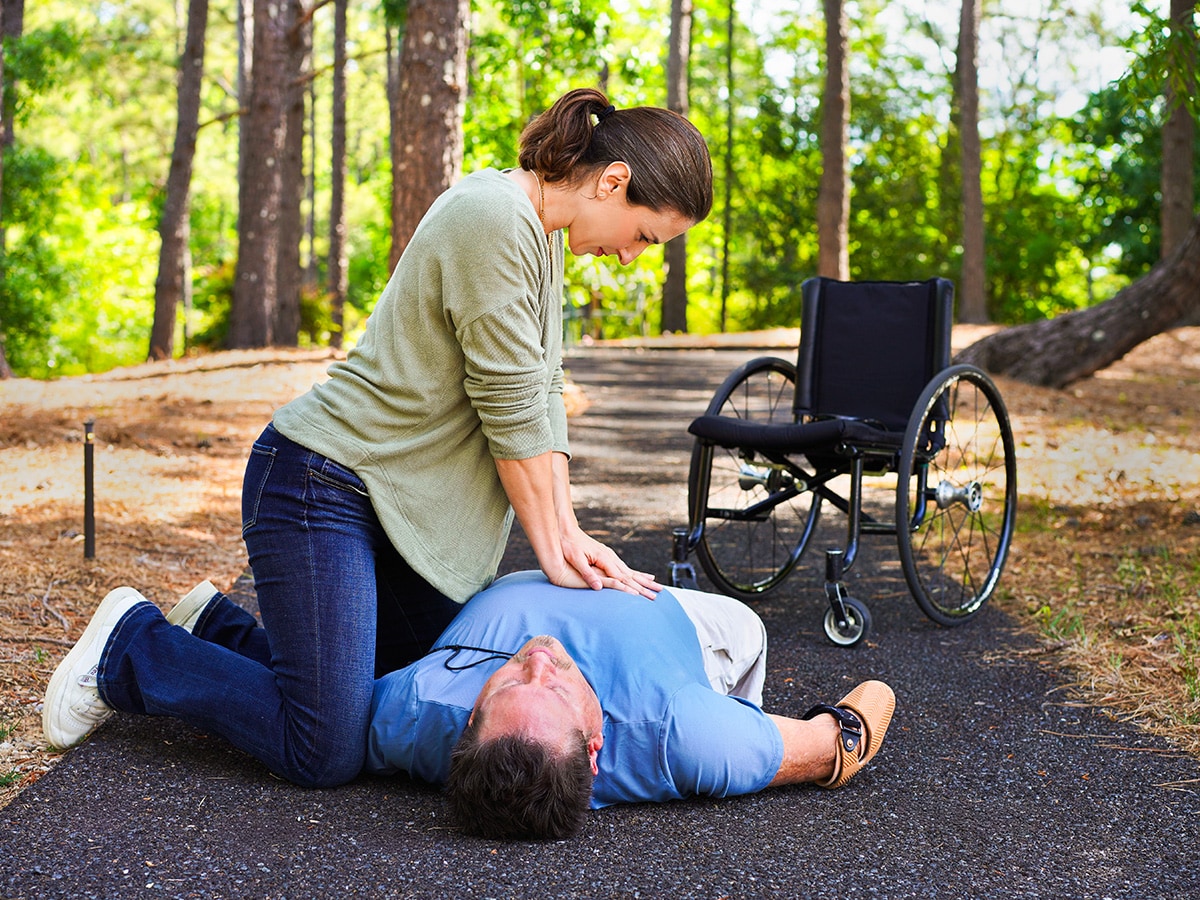
 UAB's Sports and Exercise Medicine Clinic has developed the first adaptive CPR training in the nation A new adaptive CPR training video and accompanying tools designed for medical professionals and others who provide sideline coverage for adaptive athletes addresses a previously unmet need in emergency preparedness for adaptive sports. The University of Alabama at Birmingham Sports and Exercise Medicine Clinic has developed the nation’s first training video on performing CPR and defibrillation on athletes with disabilities.
These resources, created in partnership with the Lakeshore Foundation, provide detailed instruction on delivering lifesaving care both in and out of a wheelchair. No nationally recognized training resource previously existed to guide responders on emergency care for this population.
“Shifting the focus of sports and exercise medicine toward groups like para-athletes and providing the right training tools is essential for ensuring these teams are prepared to respond effectively in emergency situations,” said Irfan Asif, M.D., chair of the Department of Family and Community Medicine and team physician for USA Wheelchair Rugby. “Sudden cardiac arrest is the leading cause of death on the playing field. I was surprised at the lack of available training resources to guide sideline medical providers on correctly administering lifesaving CPR to athletes who require certain adaptations.”
A Paralympian and inclusion specialist at the National Center on Health, Physical Activity and Disability, Bob Lujano echoed the importance of addressing the unique health concerns of people with disabilities, who are three times more likely to experience secondary health concerns such as obesity, diabetes, cancer and heart disease.
“Because of so many vast disability types, it can be difficult for trainers or health care professionals to be aware of the many issues that derive from having a physical disability,” Lujano said. “This can make treatment options limited for para-athletes.”
While CPR training is broadly standardized, performing effective chest compressions and emergency procedures on athletes in wheelchairs requires tailored approaches, modified position strategies or adaptive equipment. Wheelchair users may experience unique cardiovascular risks based on disability type, training load, autonomic function and secondary medical conditions.
This milestone aligns with the department’s broader leadership through the Para-Athlete Research for Wellness, Injury Prevention and Sports Medicine Excellence, or PARA-WISE, Registry. The multi-institutional collaboration was designed to build the first nationwide network dedicated to tracking para-athlete injuries, wellness and training patterns. PARA-WISE utilizes online questionnaires over a three-month period to collect longitudinal data on injuries, illness, training load and quality of life — essential data for developing sport-specific prevention strategies.
“Historically, many injuries among athletes with disabilities go unreported in traditional hospital or emergency department data, making it difficult for clinicians to design prevention and response protocols,” said Asif, the study’s co-principal investigator.
“PARA-WISE is addressing this gap by creating a nationwide network of adaptive athlete injury data, informed by critical insight and by the guidance of an advisory council composed of world-class para-athletes.”
The UAB Department of Family and Community Medicine’s innovative adaptive CPR training and the PARA-WISE project share a common goal of improving safety and evidence-based care for athletes with disabilities.