 A rise in research funding within UAB’s Department of Family and Community Medicine highlights its expanding research impact.The University of Alabama at Birmingham Department of Family and Community Medicine has achieved a historic milestone, climbing to No. 13 nationally in National Institutes of Health research funding, according to the newly released 2025 Blue Ridge Rankings.
This marks the department’s highest position ever and reflects a surge in research growth over the past four years.
“These rankings reflect the strength of our mission and the momentum created by teams working with shared purpose,” said UAB Marnix E. Heersink School of Medicine Dean Anupam Agarwal, M.D. “The rankings highlight the power of collaboration and the growing impact of research centered on innovation and community.”
In addition to the department’s rise, the Heersink School of Medicine maintained its overall BRIMR ranking of No. 28, with $256 million in NIH funding reported by BRIMR. BRIMR reports NIH funding attributed specifically to medical schools, while NIH RePORTER tracks total NIH support to entire institutions. Using NIH RePORTER data, UAB ranks 32nd nationally among all organizations, with $303 million in NIH funding.
“Rankings and funding are useful measures of the magnitude of our research at UAB,” said Chris Brown, Ph.D., vice president for Research. “But it is the impact on people’s lives that is the real reason we do this and continue to strive for growth.”
A transformative research strategy
The Department of Family and Community Medicine’s research mission centers on improving prevention and management of chronic conditions through integrated, patient-centered and community-engaged science. This strategy supports the five-point aim by working to:
- Improve population health
- Improve patient experience
- Improve provider experience
- Reduce costs
- Reduce health disparities
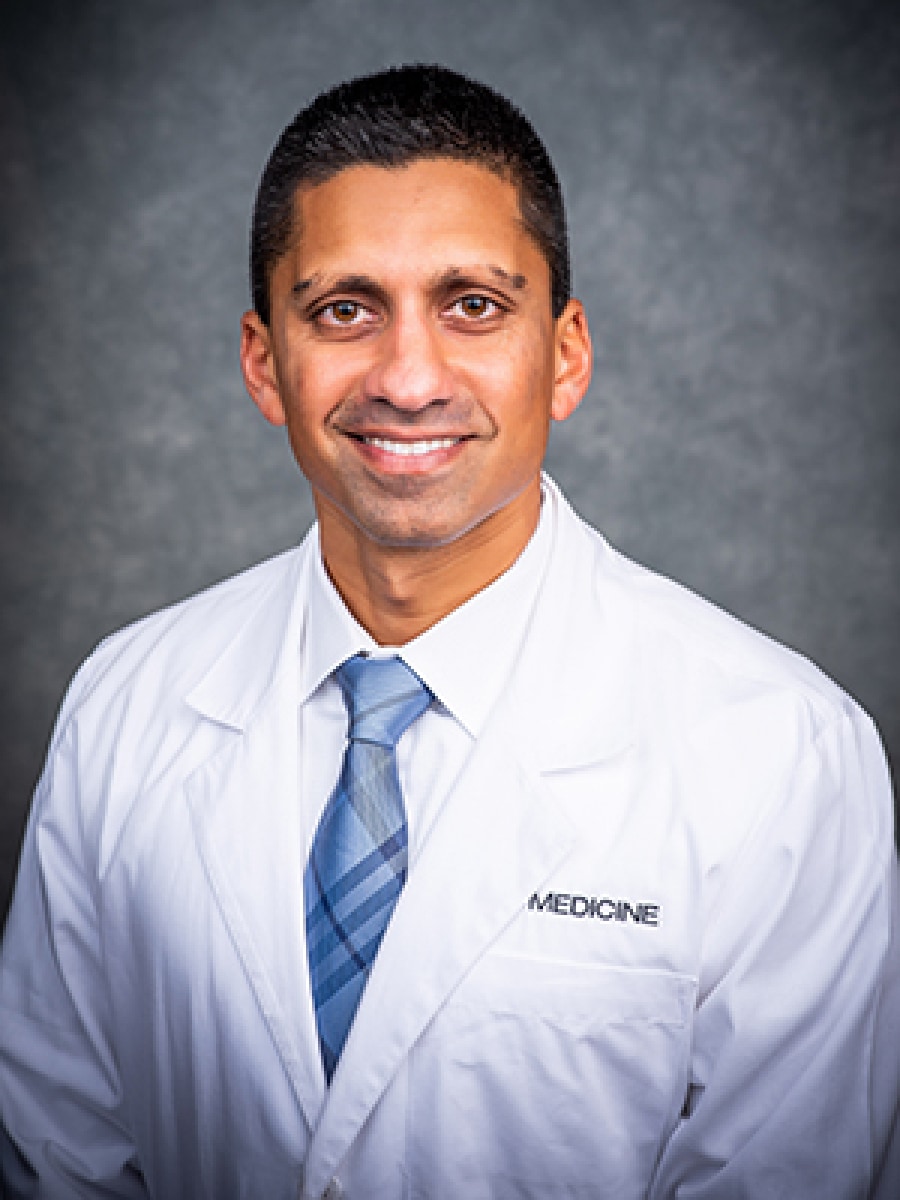 Irfan M. Asif, professor and chair of the department and associate dean for Primary Care and Rural HealthIn four years, the department has expanded its research infrastructure to a robust enterprise of eight faculty investigators and 25 research staff and learners. The team now manages 12 active extramural grants — eight of them from the NIH — compared to only two grants total in 2022.
“Our rise to No. 13 is more than a ranking — it is a testament to the dedication, teamwork and shared belief in what our department can accomplish,” said Irfan M. Asif, M.D., professor and chair of the department and associate dean for Primary Care and Rural Health. “This achievement shows what is possible when primary care research is built around partnership, innovation and service to communities.”
Asif says much of this growth has taken place under the leadership of Vice Chair for Research Tapan Mehta, Ph.D.
“For a young research team, this trajectory is nothing short of exceptional,” Asif said. “Securing funding from NIH and other sources at this scale would not have been possible without Dr. Mehta’s leadership, innovation and collaborative spirit — and the hard work of every member of our department.”
Impact reaching communities across Alabama
Beyond national recognition, this expansion in research funding carries deep implications for Alabama communities, many of which experience some of the nation’s most challenging health outcomes.
Each grant represents resources flowing directly into the state to help prevent disease and improve access to care.
In Selma, for example, the department’s work through the Primary Care HEART-NET and the Alabama Practice-Based Research Network has broadened access to services including:
- Remote patient monitoring
- Online weight-control programs
- Hearing screenings
- Diabetes management and health coaching
- On-site diabetic retinopathy screening
The department’s work also extends into emerging and specialized populations. Through the Para-Athlete Research for Wellness, Injury Prevention and Sports Medicine Excellence Registry, or PARA-WISE Registry, investigators are conducting a feasibility study to build the infrastructure for a nationwide para‑athlete injury surveillance network, laying the groundwork for sustainable injury‑prevention programs tailored specifically to para‑athletes. Locally, faculty are leading UAB’s first randomized quality improvement initiative — Fitness, Lifestyle and Optimal Wellness, or FLOW — designed to optimize enrollment and engagement in evidence‑based wellness programming.
“This is what it looks like when research serves real people,” Asif said. “Our teams are meeting communities where they are, addressing real-world health challenges and improving the way primary care is delivered throughout Alabama.”
Several Heersink School of Medicine departments and divisions ranked among the Top 25 nationally in the latest Blue Ridge Institute for Medical Research rankings, including:
- Anesthesiology and Perioperative Medicine(No. 10)
- Obstetrics and Gynecology(No. 12)
- Pathology(No. 12)
- Family and Community Medicine(No. 13)
- Biomedical Engineering(No. 14)
- Microbiology(No. 15)
- Urology(No. 17)
- Dermatology(No. 19)
- Cell, Developmental and Integrative Biology(listed as Anatomy/Cell Biology, No. 20)
- Neurology(No. 22)
- Physical Medicine and Rehabilitation(No. 22)
- Department of Medicine(No. 24)
Across UAB’s health-related schools, several secured prominent national positions in the BRIMR rankings:
- School of Health Professions(No. 9)
- School of Nursing(No. 11)
- School of Dentistry(No. 15)