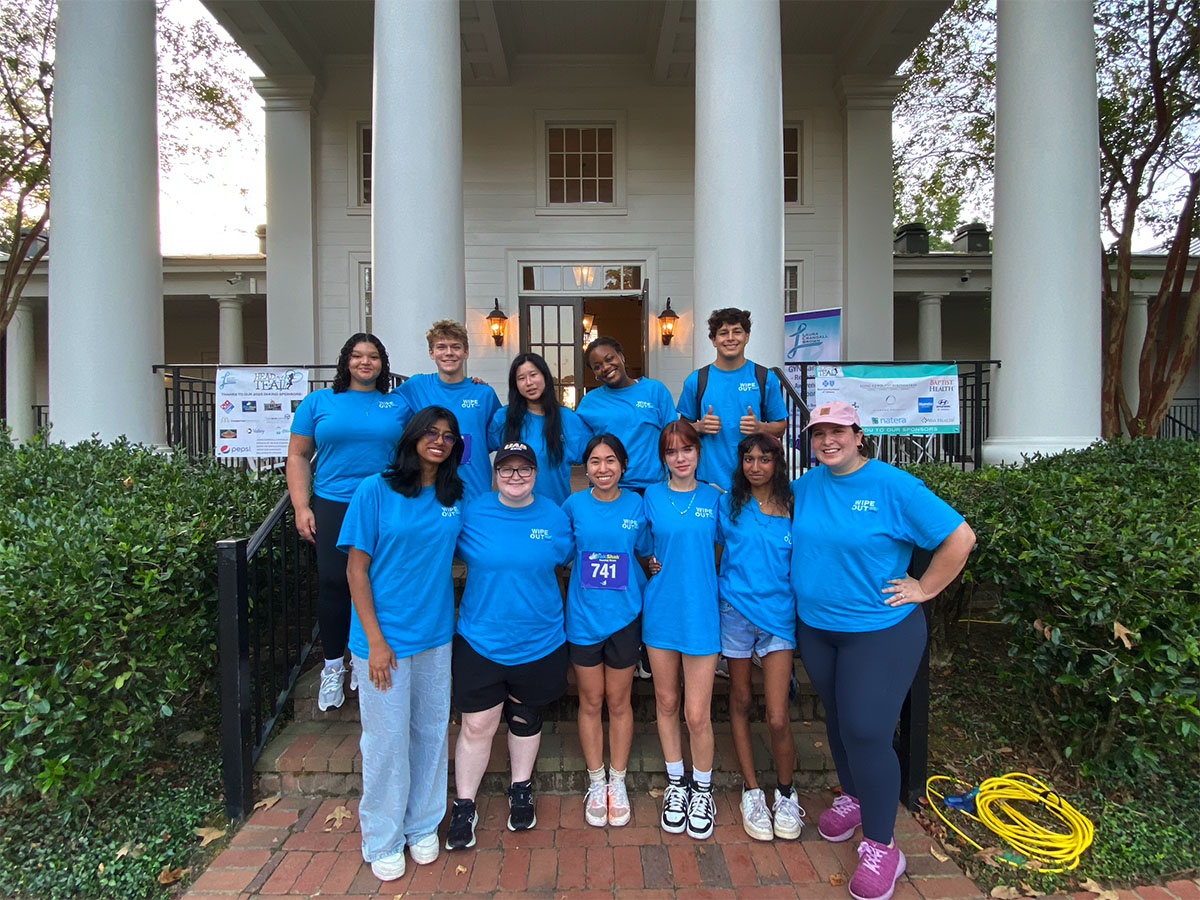
 UAB experts, medical students and undergraduate students are dedicated to raising awareness of cervical cancer and promoting information on prevention, diagnosis and treatment.Cervical cancer is a common gynecologic cancer that begins in the cervix and develops slowly, starting with abnormal changes in cervical cells. Human papillomavirus, known as HPV, is a common virus that is responsible for most cervical cancer cases. Experts at the University of Alabama at Birmingham Department of Obstetrics and Gynecology and medical students at the UAB Heersink School of Medicine are dedicated to raising awareness of cervical cancer and promoting information on prevention, diagnosis and treatment.
In 2023, OPERATION WIPE OUT — a statewide plan to eliminate cervical cancer as a public health problem in Alabama — was launched by the Alabama state health officer as a collaboration effort of many partners across the state, including the UAB O'Neal Cancer Center, the Alabama Department of Public Health, Rotary Club of Birmingham and others. Alabama is the only state in the United States with such a plan. It is based on three pillars: HPV vaccination, cervical cancer screening, and adherence to follow-up and treatment in the event of abnormal results.
In 2025, UAB peer wellness ambassadors and medical students in the obstetrics and gynecology student-run interest group launched OPERATION WIPE OUT UAB, which is part of the larger OPERATION WIPE OUT initiative. In collaboration with the UAB Student Health and Wellness Center, these students lead initiatives to raise cervical cancer awareness, promote HPV vaccination and screening among UAB students, and empower them to advocate for their own health and the well-being of others.
To date, OPERATION WIPE OUT has over 40 active partners implementing activities toward cervical cancer elimination in their communities. A number of evidence-based resources have been created to increase awareness and education that are available, leading to increased access to HPV vaccination, screening and follow-up/treatment. Alabama high school students play a role in cervical cancer elimination. In Chambers County, in partnership with UAB and Rotary Club of LaFayette, high school students implemented an awareness campaign. They achieved 81 percent HPV vaccination at LaFayette High School and 65 percent at Valley High School and developed a toolkit for other school systems across the state.
The UAB Division of Gynecologic Oncology is made up of a multidisciplinary team of specialty physicians, nurses and consultants that serves as a major referral center for patients with gynecologic cancers in Alabama and throughout the Southeast. It is nationally recognized for its extensive portfolio of funded basic and translational research in gynecologic cancer, as well as its expertise in cervical cancer prevention and treatment. Every patient’s treatment plan is personalized for them and coordinated by cervical cancer experts. Patients benefit from the latest surgical techniques and radiation oncology treatments; access to clinical trials working to discover new, safe and effective treatments; and targeted therapies backed by UAB’s precision medicine program.
In collaboration with Johns Hopkins, GYN/ONC is the only NCI-funded Cervical Cancer Special Program of Research Excellence. Its excellence in education and research has distinguished the division as a national leader in gynecologic cancer.
Access to screening and HPV vaccination
Three major steps in preventing cervical cancer are HPV vaccination, cervical cancer screening and adherence to follow-up in the event of abnormal cervical cancer screening results.
UAB students can make appointments for cervical cancer screenings and HPV vaccinations at the UAB Student Health and Wellness Center, while faculty and staff can access these services at the UAB Employee Clinic at The Kirklin Clinic.
For those outside the UAB community, cervical cancer screenings and HPV vaccinations are available through women’s well visits, primary care providers and local health departments.
Teresa Boitano, M.D., assistant professor in the Department of Obstetrics and Gynecology, recommends that women between the ages of 21 and 65 get screened every three to five years. Because early-stage cervical cancer often has no symptoms, regular screening is critical for detection and prevention.
Boitano notes that HPV vaccination protects against cervical and other HPV-related cancers and is recommended for children and adults ages 9 to 26. She also emphasizes that adults up to age 45 can receive the vaccine, making it one of the most effective tools to prevent cervical cancer.
Prevention without barriers
Many individuals across Alabama may not realize that HPV vaccination and cervical cancer screenings are often fully covered by insurance.
“With many insurance plans, the individual has to pay a certain amount toward health care services out of pocket before the insurance begins coverage,” said Isabel Scarinci, Ph.D., MPH, professor in the Department of Obstetrics and Gynecology and director for the Division of Global and Rural Health. “HPV vaccination and cervical cancer screening are considered preventive services, and health insurance plans are required to cover them at no cost to the patient as long as they are provided by an in-network health care provider.”
This makes getting screened or vaccinated easier, helping people across Alabama take an important step toward preventing cervical cancer.
To learn more about the resources available to protect an individual’s health, visit the uab.edu/obgyn or operationwipeout.org or explore OPERATION WIPE OUT at UAB for information on campus events, prevention and resources.