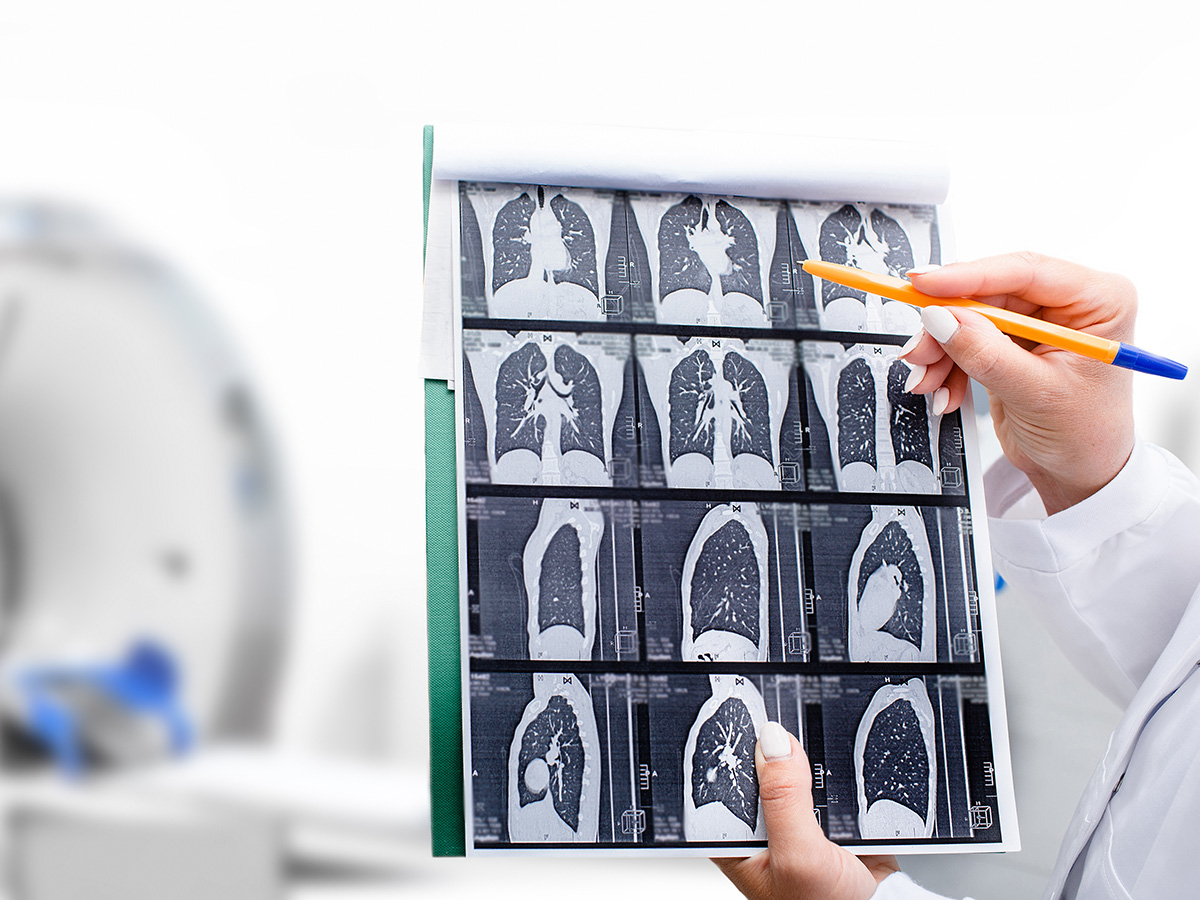
 Lung cancer is the deadliest form of cancer in the United States. This is not due to a lack of treatment options, but because the disease is usually found too late. Early detection through lung cancer screening can lead to better outcomes and save lives.
Krystle Pew, M.D., assistant professor in the University of Alabama at Birmingham Marnix E. Heersink School of Medicine’s Division of Pulmonary, Allergy and Critical Care Medicine, explains the importance of screening and who may qualify.
“The biggest risk factor for lung cancer is smoking cigarettes,” Pew said. “If you are a smoker, talk to your doctor about getting screened. Ninety-five percent of people who are eligible to be screened for lung cancer do not get screened.”
Symptoms
Lung cancer occurs when normal cells in the lungs become abnormal and begin multiplying without control. These cells can form pulmonary nodules or spots in the lungs that may develop into tumors.
While warning signs are often minimal, some symptoms can be early indicators, including a cough that will not go away, shortness of breath and difficulty breathing with activity. Because these symptoms can be subtle, screening plays a crucial role in catching cancer early.
“Lung cancer is sneaky. It usually does not show up in bloodwork or cause significant pain until tumors are large enough to affect the airways, ribs or lining of the lungs,” Pew added. “By the time symptoms become obvious, the disease may already be advanced.”
Screenings
People may qualify for lung cancer screening if they are between the ages of 50 and 80 and have a significant smoking history. Doctors typically look for at least a 20 pack-year history — such as smoking a pack a day for 20 years, or two packs a day for 10 years. Screening is recommended for adults who currently smoke or who have quit within the past 15 years.
The Birmingham Health District established in 2019 prohibits smoking on public property, including the UAB campus. Read more about the Health District here.
Health care providers will ask about the type of tobacco used, how long the patient smoked and whether they are still smoking. This detailed history helps determine whether screening is appropriate and ensures individuals at the highest risk get the care they need.
Lung cancer screening uses a low-dose CT scan, not a standard chest X-ray. This type of imaging provides a high-resolution picture of the lungs and surrounding areas, making it possible to find small nodules or abnormal changes long before symptoms appear.
“Finding lung cancer early gives us a much better chance of treating it successfully,” Pew said. “Screening is quick, painless, noninvasive and most importantly, it can save lives.”
Treatment options
If lung cancer is detected, treatment depends on the stage and location of the cancer. Early-stage disease may be treated with surgery to remove the tumor. Other options include targeted radiation, chemotherapy or a combination of the two. Immunotherapy continues to advance care by helping the immune system recognize and attack cancer cells.
“All of these treatments are far more effective when lung cancer is caught early,” Pew said.
While therapies continue to improve, prevention remains the strongest line of defense. Stopping smoking dramatically lowers lung cancer risk and leads to better long-term lung health. Check out UAB Medicine’s resources for smoking cessation at uabmedicine.org/smoking-cessation.