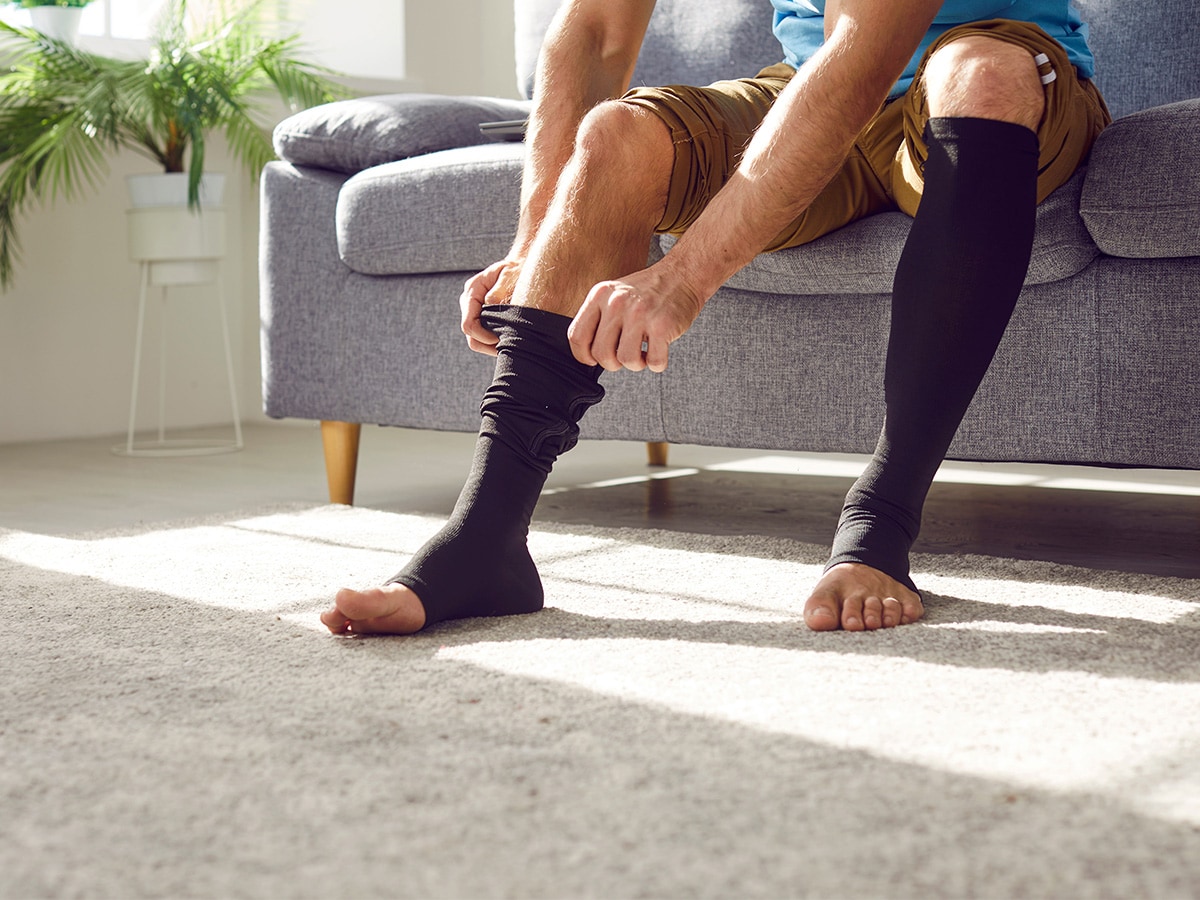
 Compression stockings can support circulation, reduce mild swelling, and help during travel or long days on one’s feet; but a healthcare provider should evaluate persistent leg swelling.From long flights to long shifts, compression stockings have become a go-to solution for tired, achy legs. While the trend has grown on social media and everyday wellness routines, experts at the University of Alabama at Birmingham say the utility of compression stockings is more nuanced.
Marc Passman, M.D., professor of vascular surgery and director of the UAB Vein Clinic, says compression stockings can be helpful, but their scope of effectiveness depends on why someone is using them.
How compression stockings work
Compression stockings are designed to support circulation in the legs.
Medical-grade compression stockings apply graduated pressure, meaning they are tighter at the ankle and gradually loosen up the leg. This design helps blood and fluid move upward toward the heart instead of pooling in the lower leg.
Passman says an easy way to visualize it is to think about standing in water.
“There’s more pressure at your feet than higher up your body,” Passman said. “That’s essentially how a properly designed compression stocking works.”
For compression stockings to work properly, they should extend over the foot and typically reach at least just below the knee, though some patients may benefit from thigh-high or full-length styles depending on one’s needs.
In addition to providing comfort, compression stockings support the body’s natural circulation system.
“Nothing replaces mobility,” Passman said. “Compression can help, but it works best alongside movement.”
The calf muscles play a key role in pushing blood back toward the heart. When movement is limited during travel or long periods of sitting, blood flow slows and fluid begins collecting in the lower legs.
“Compression stockings help augment that system,” Passman said. “They help blood move more efficiently and reduce the amount of fluid that leaks into the surrounding tissue.”
Compression stockings are often recommended for long-distance travel because sitting for hours at a time can increase the risk of circulation problems.
Who can benefit
According to Passman, compression stockings can be a practical, everyday tool for many people.
They are commonly used by:
- People who stand for long periods, such as nurses, teachers and retail workers
- Travelers on long flights or car rides
- Individuals who experience mild, occasional leg swelling
- Athletes looking for muscle support and recovery
“For someone who is on their feet all day, that extra support can make a meaningful difference,” Passman said. “They can also help prevent fluid buildup during the day, especially when worn early in the morning before swelling starts.”
Not all compression stockings are created equal
One of the biggest sources of confusion is the wide range of products on the market. While many over-the-counter options provide general support, medical-grade stockings are specifically designed and measured to deliver consistent pressure.
“If a stocking has a true pressure rating, that’s usually a sign it’s meeting a medical standard,” Passman said.
Lower-cost options may still feel snug, but they may not provide the same level of coordinated compression or durability over time.
What the limitations are
Compression stockings are often marketed as a quick fix, but experts emphasize that they are just one piece of the puzzle.
According to Passman, compression stockings do not:
- Replace regular movement
- Cure the underlying disease
- Work the same for every person
Compression stockings may feel tight at first, which can discourage people from wearing them consistently.
“They can feel different, especially in the beginning,” Passman said. “But that doesn’t mean they’re causing harm. They’re doing what they’re designed to do.”
When swelling is a warning sign
While compression stockings can help manage mild symptoms, experts caution against relying on them as a one-size-fits-all solution. Persistent or worsening swelling may signal an underlying health issue.
“If someone is experiencing swelling every day, that’s when it’s important to see a healthcare provider,” Passman said.
Leg swelling can be linked to a range of conditions, including:
- Heart or kidney disease
- Hormonal changes
- Medication side effects
- Venous or lymphatic disorders
- Pregnancy
In these cases, compression may still be part of treatment, but it should be guided by a healthcare professional.
“Stockings address the end result,” Passman said. “They don’t necessarily treat the underlying cause.”
Passman recommends simple habits for people without chronic conditions that can go a long way in preventing leg discomfort:
- Move regularly, especially during long travel
- Avoid prolonged sitting or standing without breaks
- Maintain balanced hydration (avoiding both dehydration and excess)
- Watch salt intake, which can contribute to fluid retention
“Nothing replaces mobility,” Passman said. “Compression can help, but it works best alongside movement.”