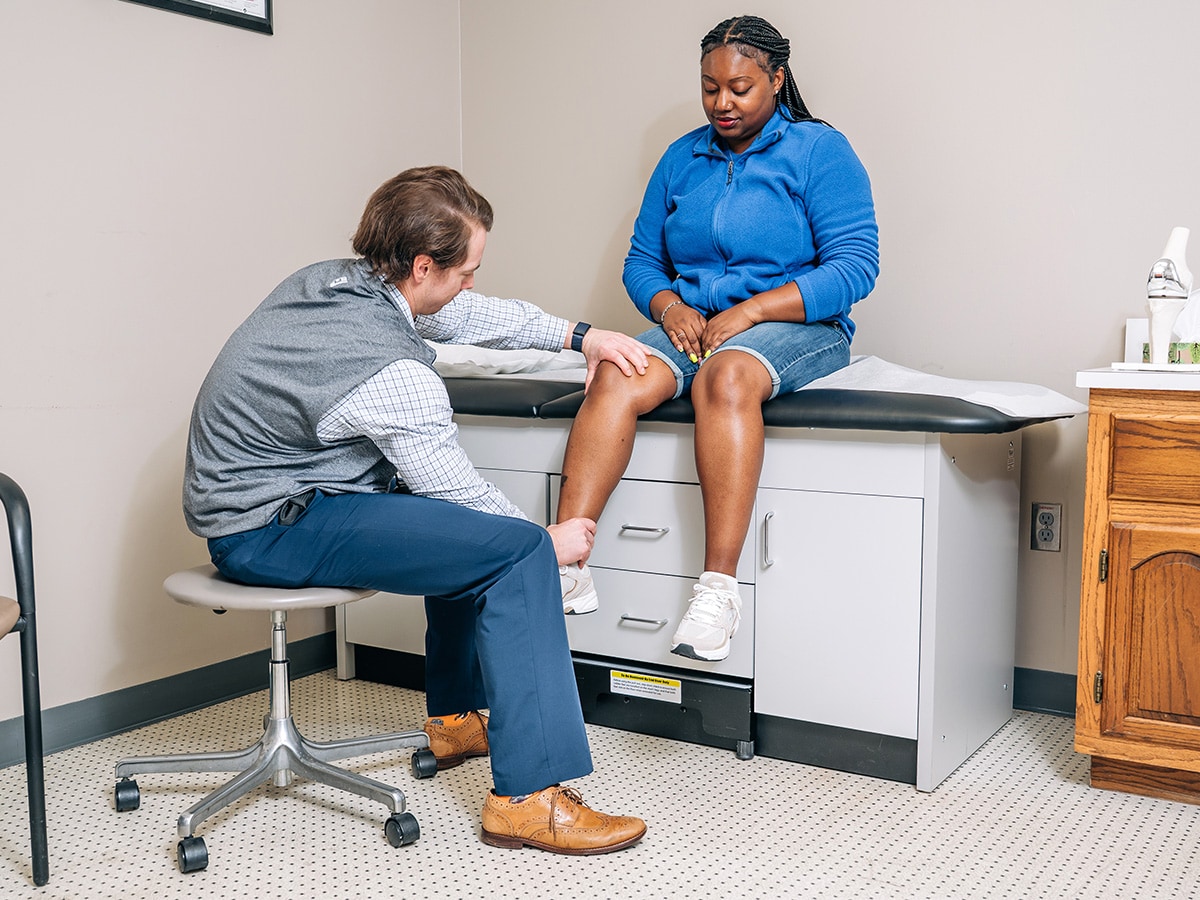
 Venous thromboembolism, including deep vein thrombosis and pulmonary embolism, affects up to 900,000 Americans annually. According to the Centers for Disease Control and Prevention, venous thromboembolism, including deep vein thrombosis where blood clots form in deep veins and pulmonary embolism in which those clots travel to the lungs, affects as many as 900,000 Americans each year, and more than a third of cases follow a recent hospital stay.
Around 60,000 to 100,000 Americans die of VTE annually, with sudden death being the first symptom in about a quarter of pulmonary embolism cases, highlighting the importance of recognizing risk factors early.
University of Alabama at Birmingham experts Mustafa Ahmed, M.D., interventional cardiologist and professor in the Division of Cardiovascular Disease, and Derek Russell, M.D., pulmonary and critical care physician and associate professor in the Division of Pulmonary, Allergy and Critical Care Medicine, emphasize that, while the development of blood clots is common among the general population, educational awareness of the condition could be the defining difference between minor treatment and life-threatening circumstances.
What is a blood clot?
Blood clots can form as a result of a blood vessels being damaged, which can originate from severe impact or injury to the body, as well as individual factors such as genetics, medical conditions or surgery.
Superficial vein clots affect the veins at the top of the skin and, if preventively caught, can be treated before progressing to the body’s deep veins. Conversely, deep vein clots are considered more severe, as there is a higher risk of the clot’s traveling to the lungs, which can become life-threatening and cause pulmonary embolism.
The first signs of DVT usually begin with noticing swelling, pain or unusual coloration or temperature in the leg, thigh or pelvis. While deep vein clots most commonly form in the lower extremities, they can also develop in the arms and other upper-extremity veins and may travel through the bloodstream to other parts of the body.
Ahmed describes the travel of a blood clot, whether developed in the lower or upper extremities, as one large continuation throughout the body.
“Imagine your vessels like a stream that is draining. You have tributaries that go into the larger streams that then go into the sea, and all of it is draining into the same place. It is the same with the venous system of the body,” Ahmed said. “The smaller veins get connected to bigger veins, then get connected to the main one, which leads back to the heart on a continuous path.”
What is the difference between a blood clot and a bruise?
Most people, especially if unaware of the symptoms of a blood clot, may assume that a bruise is a result of the condition.
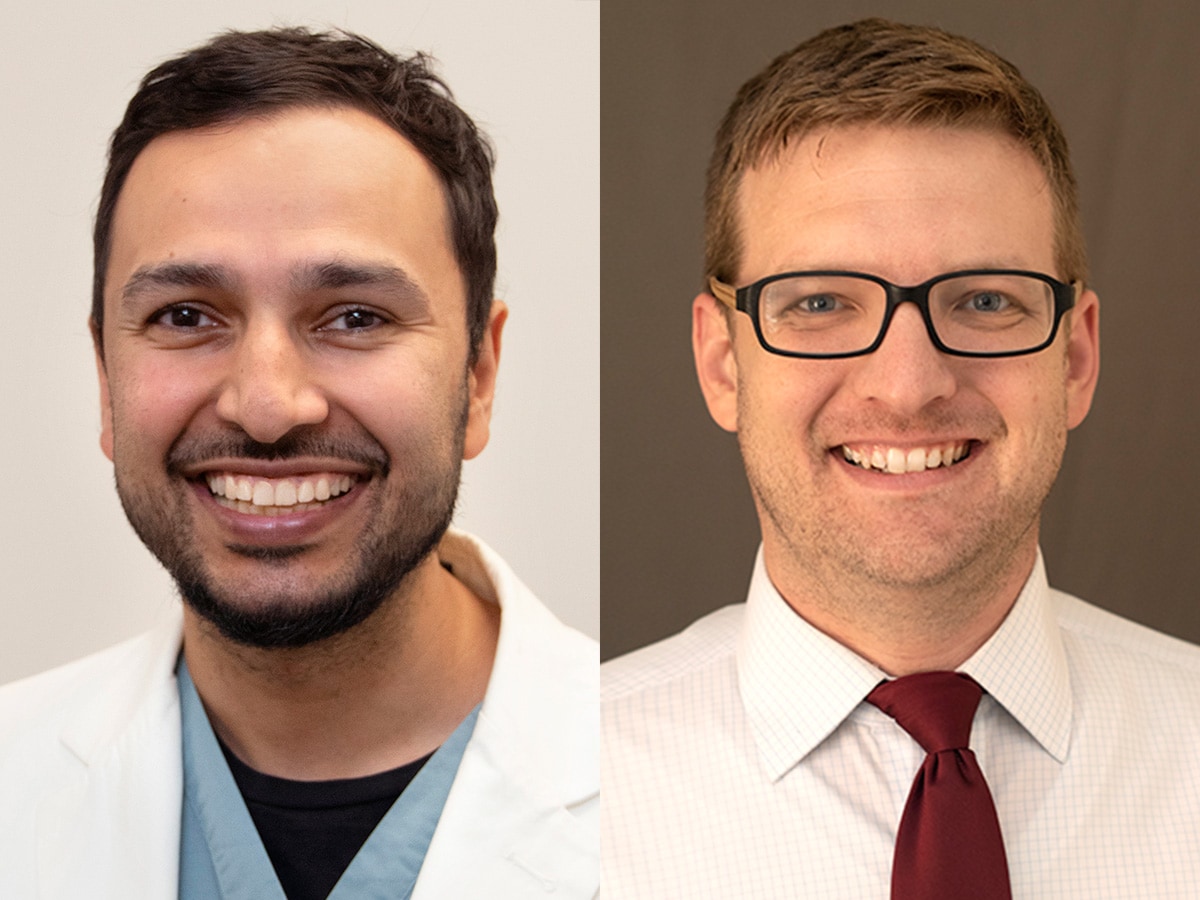 Mustafa Ahmed, M.D., and Derek Russell, M.D.“You can get something that looks like a bruise from a blood clot in the superficial vein where the skin will change color and feel swollen, but they’re different things,” Russell said. “A bruise or what we would call an ecchymosis is where blood has left the veins and is out in the tissues, turning purple and giving us pain. A clot is different. The blood is still inside the vessel, but it has solidified where it shouldn’t have.”
One way to distinguish a typical bruise from a more concerning condition is to consider whether it is accompanied by other symptoms commonly associated with a blood clot.
What are the warning signs of a blood clot?
“Be observant if one leg is more swollen than the other because our legs are more prone to swell up as we age. Also, if they are not symmetrical, that can be a warning sign of a clot impeding the drainage of one leg more than the other,” Russell said. “That is one early warning sign, but sometimes many people do not notice when it’s in the leg, and in that case, people may notice pain in their chest, especially with deep breaths or general shortness of breath. If you ever have chest pain, sudden trouble breathing, lightheadedness or fainting, seek emergency care right away. This is very treatable, but it can become dangerous quickly.”
Trouble breathing, shortness of breath or chest pain can be experienced once a blood clot has traveled to the lungs, which should be addressed as soon as possible with a physician or through emergency care.
“When the clot gets into that deep venous system, that’s where it’s a straight shot into the right side of the heart. The right side of the heart is weaker, and its job is to pump blood with every heartbeat through the lungs,” Russell said. “Unfortunately, there is a direct pathway from the deep veins up into the right side of the heart. If a clot goes up and lodges in the lung, that hurts your breathing and oxygen levels, which can be too much for that right side of the heart to handle. It’s similar to a clog in a pipe. That kind of pressure can significantly overwhelm the heart.”
Given that symptoms such as swelling or discomfort in the leg can be mild or mistaken for another medical concern, many people may not recognize them as warning signs of a blood clot, further emphasizing the need for greater awareness of this condition.
“Most of these clots once treated can go pretty quickly and can disappear. If not, they can travel, and the initial effects can be gone, meaning you could feel pretty good,” Ahmed said. “Afterward, you might almost feel back to normal. Many people may have these and do not even know it initially.”
Am I at risk of developing a blood clot?
Factors such as genetics, age, lifestyle behaviors or medical conditions can impact one’s risk of developing a blood clot.
Immobility due to hospitalization or lifestyle behaviors causes the blood in the legs to be stagnant, which affects the gradual, natural flow of blood within the entire body. Russell says, if you are in a position where you may be sitting or in the same place for an extended period of time such as a plane ride, it is important to move around, stretch or massage your legs, or wear compression stockings to improve blood flow.
Russell outlines medical factors that can make blood more prone to clotting:
- Cancer
- Pregnancy
- Birth control containing estrogen
- Obesity
- Surgery
- Diabetes
- Previous blood clots
- Family history
Lifestyle behaviors or circumstances such as smoking, participating in impact sports or experiencing a car accident can result in the veins’ being more prone to enduring damage leading to blood clotting.
If you are experiencing symptoms that could indicate a blood clot, particularly if they are accompanied by one or more of these risk factors, it is worth discussing them with your physician to rule out a clot or determine the appropriate next steps.
How are blood clots treated?
Blood clots can be diagnosed through an ultrasound of the legs, a computed tomography scan of the chest or a blood test called a D-dimer, and then can be subsequently treated with blood thinners. Ahmed says patients are typically treated with blood thinners for three to six months or longer, depending on the individual’s needs.
“Blood thinner allows your body to dissolve your own clot, while it stops the clot from getting bigger,” Ahmed said. “If we’re treating people with blood thinner, it is likely to take care of the clot completely and will stop other clots from forming, which is a much safer outcome for patients.”
It is important to note that blood thinner treatment can cause a patient to experience excess bleeding both internally and externally, in comparison to someone who is not on the medication. Ahmed says patients who are on blood thinners should not participate in risky activities such as high-impact sports, activities that can forcefully impact the body or smoking, in order to receive the best outcomes while on the medication.
Russell says larger, more life-threatening clots in the lungs may be treated with clot-dissolving medication or catheter-based procedures for removal.
“This is a very treatable condition with very good long-term outcomes,” Ahmed said. “The majority of people we treat for blood clots go on to live completely normal lives and get back to exactly what they want to do.”