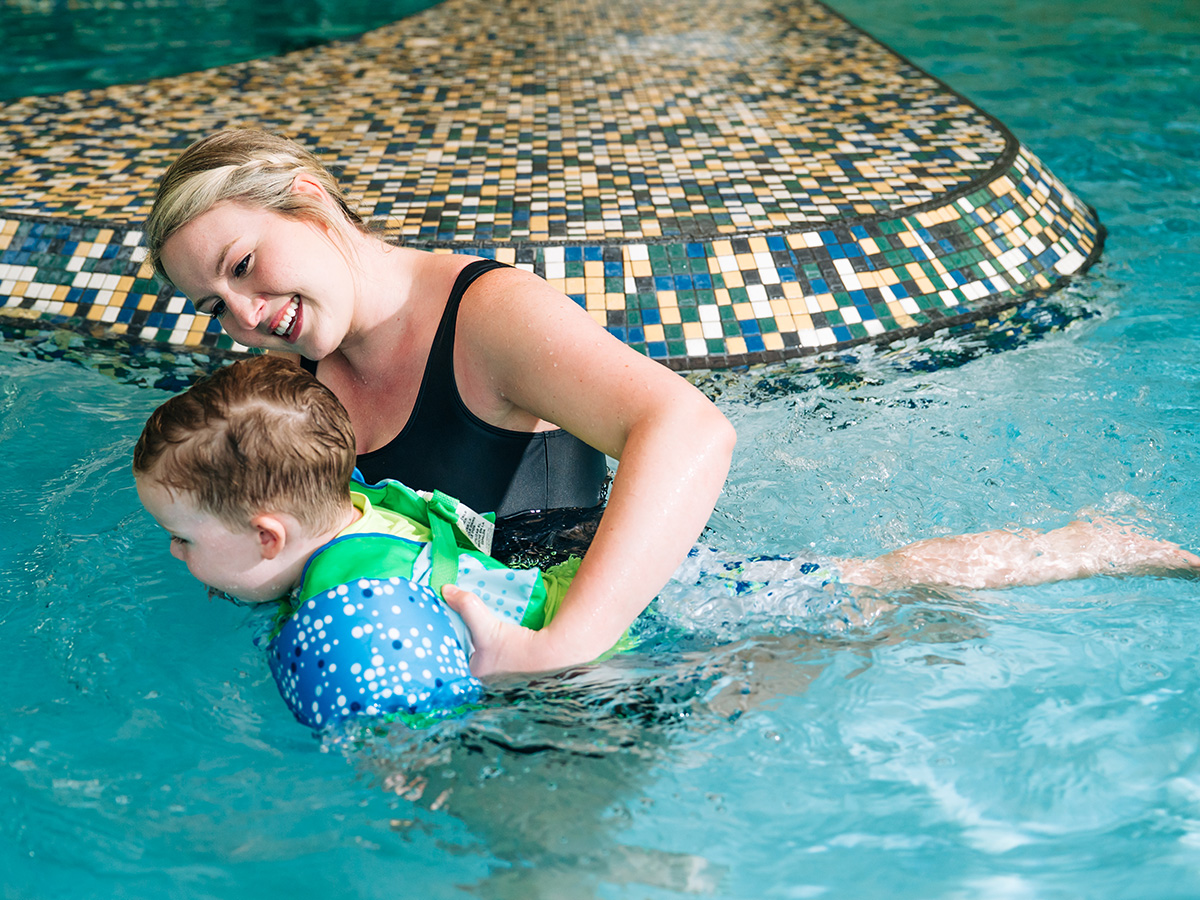
 Drowning is the leading cause of death for children ages 1 to 4, making prevention one of the most important steps families can take during warmer months. As temperatures rise and families head to pools, lakes and beaches, pediatricians at the University of Alabama at Birmingham and Children’s of Alabama are reminding parents that water safety starts long before children step into the water. Drowning is the leading cause of death for children ages 1 to 4, making prevention one of the most important steps families can take during warmer months.
Hugh Cheek, M.D., assistant professor at the UAB Department of Pediatrics, says many drowning incidents happen quietly and unexpectedly, often during moments when children are not actively swimming.
“Children are naturally curious, and water can be incredibly appealing to them without their understanding the danger,” Cheek said. “The YMCA has a saying: ‘The world is 71 percent water, and children are 100 percent curious.’”
Drowning prevention starts before swim time
Although drowning can happen at any age, young children are especially vulnerable. Many incidents occur at home and during “non-swimming times,” when families may not expect children to be near water. Infants and young children should never be left unsupervised around bathtubs, pools or other water sources, even for seconds. Children with autism or those prone to wandering may be especially drawn to water, making communication with neighbors and extended family who live near water especially important.
“In the same way families secure firearms, bodies of water should also be secured,” Cheek said.
Certain medical conditions can also increase drowning risk. Children with epilepsy, especially those whose seizures are not well controlled, should never swim or bathe alone. Older children with epilepsy may consider showering instead of bathing for added safety. Some heart rhythm disorders, including long QT syndrome and Brugada syndrome, may also increase the risk of cardiac events while swimming.
“If there is a strong family history, parents should talk with their pediatrician about appropriate screening or a cardiology referral,” Cheek said.
What supervision should really look like
Many parents picture drowning as loud splashing or calls for help, but Cheek says drowning is often silent.
“Effective supervision looks like undistracted supervision,” Cheek said. “That means putting distractions, like devices or books, away and remaining fully engaged.”
Cheek emphasizes that incidents are more likely to happen during “non-swimming times,” when adults may briefly look away or assume children are somewhere else. If a child suddenly goes missing or becomes unusually quiet, caregivers should immediately check the nearest water source first, including bathtubs.
For young children and beginning swimmers, Cheek recommends “touch supervision,” meaning a capable, sober and attentive adult always remains within arm’s reach.
Create layers of water safety
Creating layers of protection is one of the most effective ways to reduce drowning risk. Cheek recommends families focus on several key prevention strategies:
- Install proper barriers around water. Follow the “rule of fours” for pool fencing: a four-sided fence that is at least 4 feet tall, with no more than 4 inches between slats, and self-closing gates positioned out of a child’s reach. Safety measures should extend to hot tubs, spas and above-ground pools.
- Consider swim lessons early. The American Academy of Pediatrics recommends considering swim lessons as early as age 1, with more advanced instruction after age 4.
- Use U.S. Coast Guard-approved life jackets. Arm floaties, boards and inflatable devices should never replace properly fitted life jackets, especially around open water or while boating.
“Swim lessons are helpful not just for teaching skills, but for reinforcing age-appropriate water safety,” Cheek said.
Under Alabama law, children younger than 8 must wear a properly secured U.S. Coast Guard-approved life jacket while boating.
“Floaties were never meant to replace a U.S. Coast Guard-approved life jacket,” Cheek said.
How to respond during an emergency
Because emergencies around water can happen unexpectedly, knowing what to do matters. If a child is struggling in the water, caregivers should first make sure it is safe to enter and use flotation support when possible. If another adult is nearby, calling for help should happen immediately. Even if a child appears to recover quickly after a submersion event, medical care may still be necessary.
“Any child who requires any form of resuscitation should be evaluated by an emergency physician,” Cheek said.
Cheek also encourages parents and caregivers, especially pool owners, to become CPR- and AED-certified.
“Rescue breaths can be especially important during drowning events, but quality chest compressions should never be minimized,” Cheek said.
Families interested in CPR and AED training can contact organizations such as the local Red Cross or YMCA.
Common misconceptions
One common misconception parents may hear is the term “dry drowning,” often used online to describe delayed symptoms after swimming. Cheek says this is not a recognized medical term.
“Creating layers of protection and staying attentive can save lives,” Cheek said.
“If a child coughs, gags or chokes from routine swimming or splashing but does not have a submersion event, it is very unlikely they will develop serious symptoms,” Cheek said. “If symptoms develop after a drowning event, they usually happen immediately or within hours.”
Although no single prevention strategy eliminates risk, Cheek says preparation, supervision and education can make a meaningful difference.
“Creating layers of protection and staying attentive can save lives,” Cheek said.