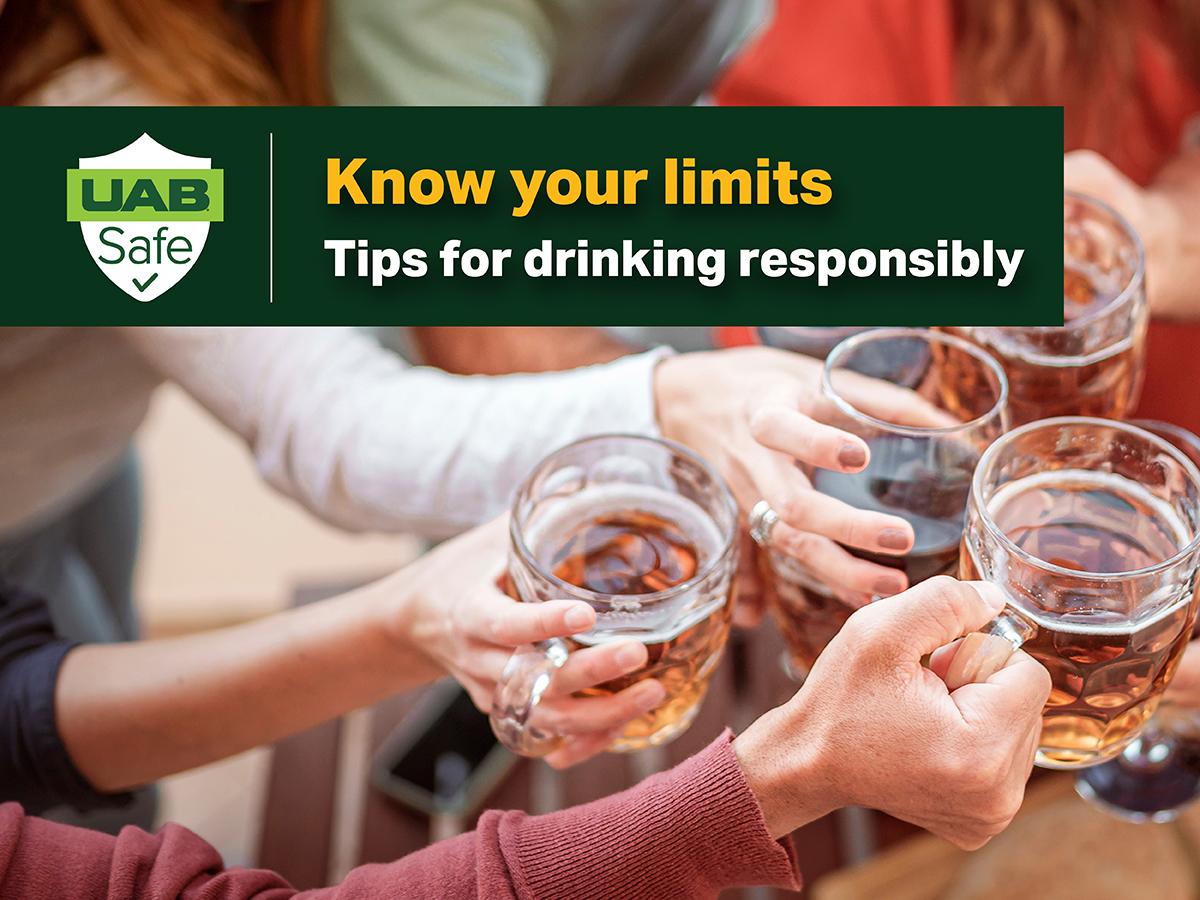
 Knowing the safe limits of alcohol consumption can help keep spring break safe.Spring break brings sun, travel and a chance to relax with friends. It can also lead to drinking more than intended. Knowing the safe limits of alcohol consumption is essential for keeping the break safe.
Peter Hendricks, Ph.D., professor in the University of Alabama at Birmingham Department of Psychiatry and Behavioral Neurobiology, and Kevin Madden, doctoral candidate in the UAB Medical/Clinical Psychology Ph.D. program, provide suggestions on how to drink responsibly during the break.
In a study from the National Library of Medicine, approximately 70 percent of college students reported drinking during spring break. The study later mentioned that 23.6 percent drank on five or more days of the break.
“It’s the social pressure outweighing personal judgment that can lead to binge drinking over spring break,” Madden said. “People are in environments where they might be consuming alcohol more quickly than the liver can process it.”
Understanding alcohol
The National Institute on Alcohol Abuse and Alcoholism defines binge drinking as a pattern of drinking alcohol that brings blood alcohol concentration to 0.08 or higher. Moderate drinking is one drink per day for women and two drinks per day for men. A standard drink is a 12-ounce beer, an 8-ounce malt liquor, a 5-ounce glass of wine or a 1.5-ounce shot of liquor.
Excessive alcohol consumption can cause various health issues, including high blood pressure, cancer, learning and memory problems, and mental health problems. Hendricks says it can also lead to other damaging risks.
Dangers of binge drinking
Overdosing on alcohol happens when the liver cannot keep up with the rate of alcohol being consumed.
“The liver can metabolize only about one drink per hour, so rapid drinking overwhelms this process,” Hendricks said. “Alcohol continues absorbing from the stomach or intestines into the bloodstream even after someone stops drinking, causing blood alcohol concentration to rise dangerously high.”
Signs of alcohol poisoning can include confusion, vomiting, seizures, slow breathing, irregular breathing and hypothermia; but even small increases in a person’s blood-alcohol content can affect coordination and judgment. If a person’s BAC gets high, blackouts or amnesia can occur.
“This can lead to things like car crashes or falls or leave a person vulnerable to violence,” Hendricks said. “Alcohol is ingrained in our culture, and binge drinking is perceived as lighthearted and fun. It’s crucial to communicate the dire risks of binge drinking.”
During spring break, popular vacation spots such as beaches require extra safety monitoring.
“Drinking can lead to motor impairment, so staying out of the water if you’ve been drinking is important,” Madden said. “Dehydration from increased sun exposure and higher temperatures can also be very dangerous and affect a person’s alcohol tolerance.”
Hendricks recommends avoiding swimming, boating or other water activities if drinking.
Minimize the risk
Hendricks says there are a few strategies avoid binge drinking and consuming alcohol responsibly:
- Alternate each alcoholic beverage with a glass of water.
- Eat a full meal before drinking occasions.
- Sip drinks slowly; avoid taking shots or chugging.
- Do not mix alcohol with other drugs.
- Use a designated driver or alternative transit options, such as public transit.
- Do not accept drinks from strangers.
Driving
Alcohol use can impair thinking, reasoning and muscle coordination — all of which are required to operate a vehicle safely. According to the Alabama Department of Transportation, nearly half of all fatal crashes involve impaired drivers. Daniel Cox, M.D., UAB trauma medical director, reminds people to never drive while impaired, as it can lead to legal ramifications and serious injury and death.
“Drinking and driving can be deadly,” Cox said. “If you are planning to drink alcohol, plan a safe ride home in advance. Use a rideshare service, or select a designated driver ahead of time who will not drink alcohol.”
Where to find support
UAB offers several options for employees, students and local residents to manage substance-abuse issues. The Employee Assistance and Counseling Center, Student Counseling Services, and UAB’s Community Counseling Clinic offer various resources to support those in need.
The UAB Medicine Addiction Recovery Program also offers treatment and family and support services for high-risk patients.