Sudden cardiac arrest Sudden cardiac arrest is a life-threatening condition in which the heart stops beating after its normal electrical signals are disrupted. can happen unexpectedly, affecting children, teens and adults who may seem healthy just moments before collapsing. Through patient care, education and statewide partnerships, the University of Alabama at BirminghamDepartment of Pediatrics and Children’s of Alabama are working to improve awareness and preparedness across Alabama.
Sudden cardiac arrest is a life-threatening condition in which the heart stops beating after its normal electrical signals are disrupted. Without immediate intervention, SCA can quickly become sudden cardiac death.
Austin Kane, M.D., assistant professor in the UAB Division of Pediatric Cardiology and co-director of Alabama LifeStart— a program created by Children’s of Alabama that equips schools across the state with AEDs and provides guidance to help create heart-safe campuses —treats children with heart rhythm disorders and supports families impacted by SCA.
SCA is not the same as a heart attack. During a heart attack, blood flow to the heart muscle is blocked. In SCA, an abnormal heart rhythm prevents the heart from pumping blood effectively.
“When cardiac arrest occurs, a person suddenly loses consciousness and becomes unresponsive,” Kane said. “In more than half of cases, it looks like a seizure, which can delay lifesaving care if people don’t recognize what’s happening. Those experiences make it clear how important it is to prepare communities, because we often don’t know who will be affected until it happens.”
 Knowing the signs can save a life
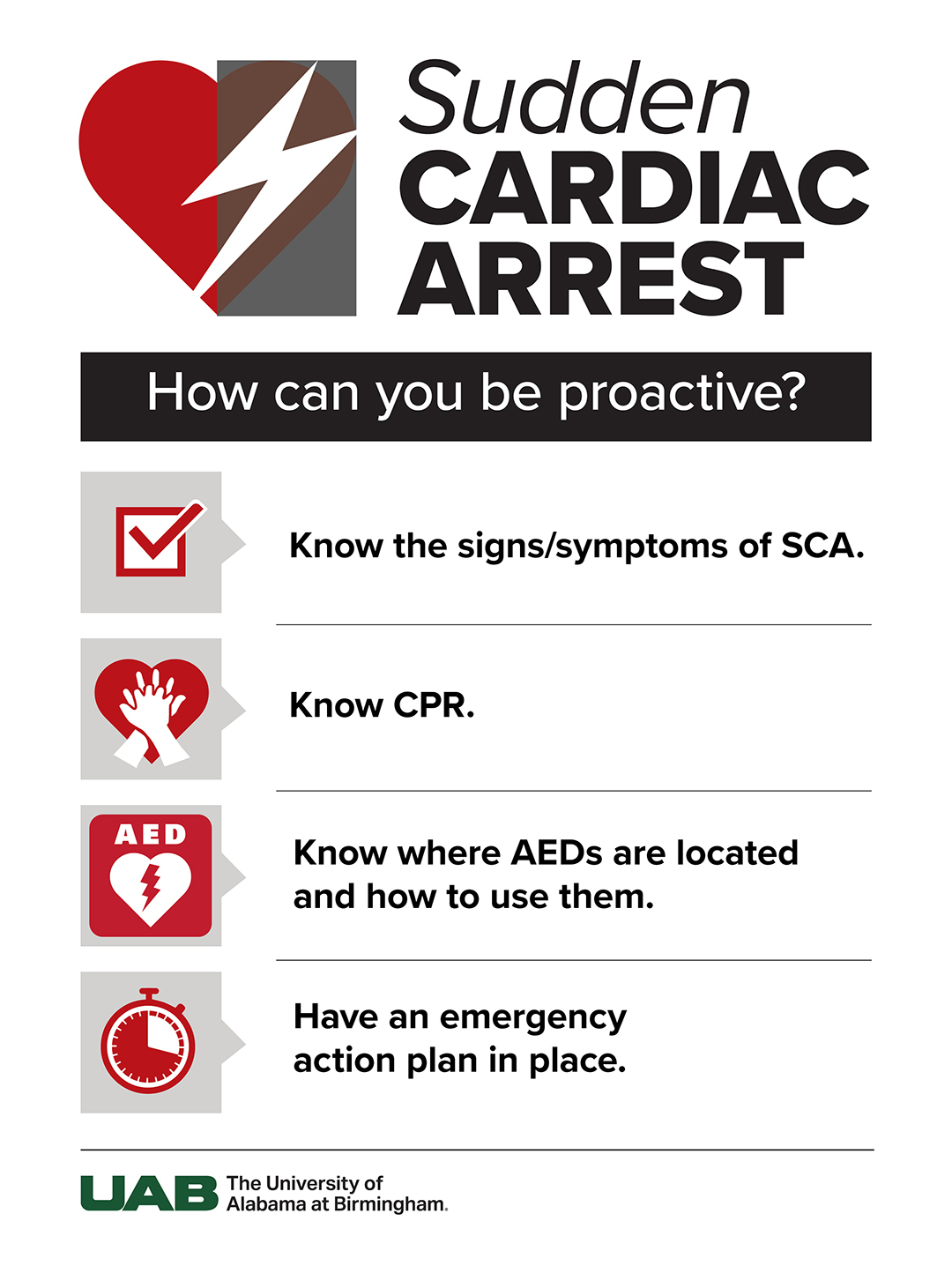
Recognizing the signs of SCA is critical to responding quickly. Survival rates decrease with each passing minute without intervention; but early CPR and use of an automated external defibrillator, or AED, can significantly improve survival.
Common signs of SCA:
- Sudden collapse
- Loss of consciousness
- Unresponsiveness
- Gasping breaths or absence of breathing
- No detectable pulse
- Seizure-like movements
If these signs are present, immediately call 911, begin CPR and use an AED if one is available. When CPR and an AED are used early, survival rates can increase to as much as 50 percent.
Why preparedness matters
Despite progress, Kane says SCA remains widely misunderstood.
“Many people assume cardiac arrest only happens to older adults,” Kane said. “But children and young people can be affected as well.”
Each year, more than 23,000 children experience cardiac arrest outside of the hospital, according to national data. Nearly 40 percent of pediatric cases are linked to sports and physical activity, underscoring the importance of education, early recognition, and access to lifesaving tools in environments where children live, learn and play.
Family history is an important risk factor. Kane encourages families to seek medical evaluation if a close relative under age 40 experienced sudden cardiac arrest, sudden cardiac death or death without an explanation.
For individuals and communities looking to take action, Kane emphasizes that lifesaving response does not require formal certification.
“A certificate doesn’t save a life,” Kane said. “Two hands pushing hard and fast on the chest can.”
Community members can support sudden cardiac death prevention by learning CPR, becoming familiar with AED locations, and encouraging preparedness in schools and recreational spaces.
The UAB Department of Pediatrics and Children’s of Alabama continue their commitment to education, advocacy and prevention across Alabama.
“If there’s one message to remember, it’s call 911, start chest compressions and use an AED. Call, push, shock,” Kane said.