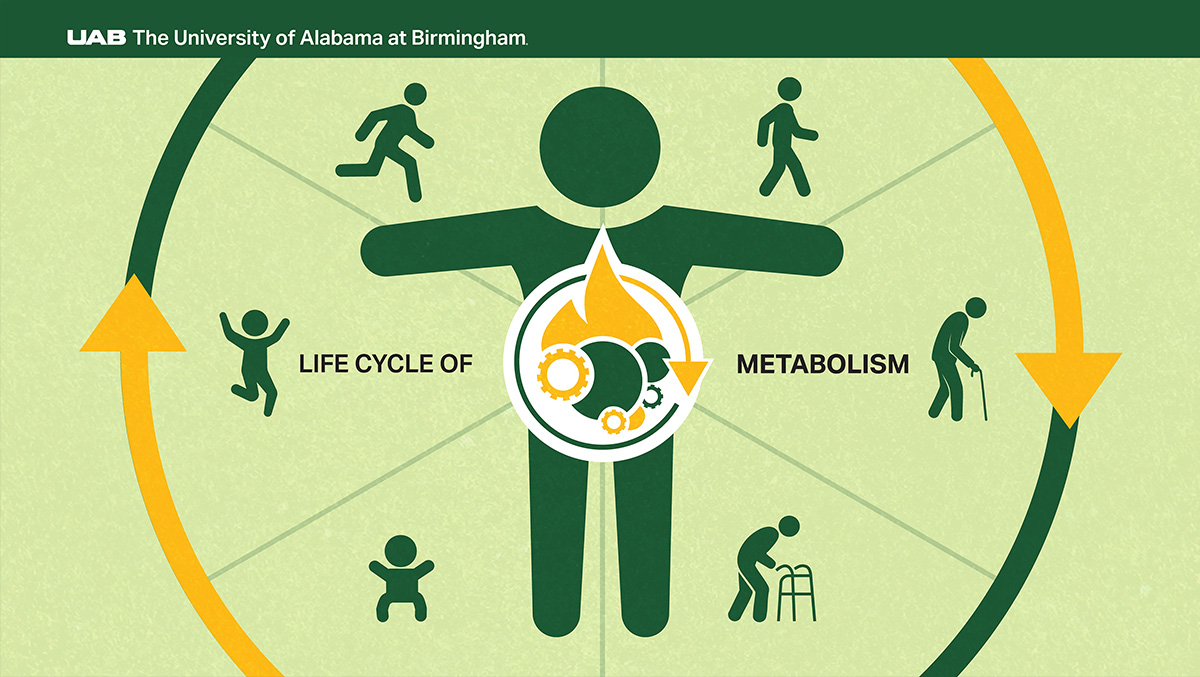
 UAB experts discuss the life cycle of the metabolism, ranging from before birth to older adulthood, and provide tips on metabolic health for a lifetime.When most people hear the word “metabolism,” what usually comes to mind is how fast someone can burn calories. Research proves that metabolism is much more than that. Science shows that metabolism begins developing before birth, changes dramatically during puberty and older adulthood, and can be influenced throughout a person’s life.
“The metabolism is the body’s internal operating system,” said Ambika Ashraf, M.D., professor in the Division of Pediatric Endocrinology and Diabetes and the Ralph Froshin Endowed Chair in Pediatric Endocrinology at the University of Alabama at Birmingham. “It is the body’s engine, the system that converts food into energy, builds organs, regulates hormones, supports brain development and keeps every cell functioning.”
In other words, metabolism has a profound impact on a person’s overall health.
Metabolism begins before birth
A baby’s metabolic heath does not start after delivery occurs, but while in the womb. During pregnancy, a baby’s organs are forming and developing, including the pancreas, which regulates blood sugar, and the liver, which manages fats and energy.
Factors that can impact the developing fetus include obesity, unmanaged diabetes, excessive weight gain or high stress. Epigenetics, or the study of changes in gene expression without altering the DNA sequence, is largely at play before birth.
“Think of genes as a library of instructions. Epigenetics decides which pages are read and how often,” said Ashraf, who serves as director of the Pediatric Lipid Disorders Clinic and director of the Metabolic Bone Disease Clinic. “During pregnancy, epigenetic signals are sensitive to factors like nutrition, blood sugar levels, inflammation and environmental factors.”
If a baby is exposed to high maternal blood sugar or excess nutrients in utero, epigenetic changes may lead to increased fat storage, alter insulin function and predispose the baby to obesity or Type 2 diabetes. A lack of nutrition or prematurity could also alter metabolic pathways and increase long-term risk.
“Improving maternal health before and during pregnancy is one of the post powerful ways to prevent future metabolic disease,” Ashraf said.
The most important metabolic intervention may begin even before pregnancy. This can look like supporting women in achieving a healthy weight before conception, optimizing blood sugar control in women with diabetes, providing access to prenatal care and promoting healthy maternal nutrition.
By improving maternal metabolic health, the next generation’s overall health is influenced.
“Small improvements can have a ripple effect across generations,” Ashraf said.
Ashraf recommends that women implement these strategies to support a future child’s metabolic health:
- Ensuring sufficient micronutrients, including iron, iodine, choline, folate and vitamin D
- Managing inflammation through whole-food nutrition and physical activity
- Reducing exposure to tobacco smoke and environmental toxins
- Prioritizing stress reduction and sleep
Early childhood
The first 1,000 days of life, from conception to age 2, are a period of extraordinary growth, according to Ashraf. During this time, the brain, immune system and metabolism continue to be shaped, and nutrition matters greatly.
Ashraf says examples of early-life nutritional patterns that may influence long-term metabolic health include breastfeeding, when possible, to improve insulin sensitivity and lower obesity risk, delayed introduction of added sugars, responsive feeding practices that allow children to recognize hunger and fullness cues, early exposure to diverse whole foods, and avoiding sugar-sweetened beverages in infancy and toddlerhood.
Children exposed early to highly processed foods and sweetened drinks may develop taste preferences that shape lifelong dietary habits. Early nutrition does not determine metabolic density, but it can tilt the trajectory toward resilience or risk.
The metabolism in early childhood remains flexible. It responds to environmental factors, which can be protective, but can amplify risks if unhealthy patterns are established during this time.
Childhood
Rates of childhood obesity have risen dramatically in recent decades. “This is not simply about weight. It is about what excess body fat does to the body,” Ashraf said.
Fat tissue is metabolically active and produces inflammatory chemicals that disrupt a normal metabolism. Children with obesity are increasingly being diagnosed with high triglycerides, fatty liver disease, high blood pressure and Type 2 diabetes. Some adolescents show early signs of kidney disease or nerve damage within years of diagnosis.
“Metabolic disease rates vary across racial and ethnic groups in the United States. These differences are more driven by structural and environmental factors than by biology alone. Communities with limited access to healthy food, safe recreation spaces, preventive health care and economic opportunity face a higher risk of obesity and Type 2 diabetes,” Ashraf said. “Chronic stress related to socioeconomic instability also affects metabolic regulation through hormonal pathways.”
Addressing metabolic health at a population level means improving the environments in which families live, work and raise children. Access to safe play spaces, affordable healthy foods, stable housing and preventive health care all influence a child’s metabolic health.
While organ damage can begin during adolescence and factors like genetics and social determinants of health play a role, families can take steps to support metabolic health. Ashraf encourages families to create sustainable habits instead of restrictive diets, which will lead to better metabolic heath for a lifetime.
Families can take steps to support metabolic health at all ages. Ashraf recommends:
- Eating balanced meals with fruits, vegetables, lean proteins and whole grains
- Limiting sugary beverages and highly processed snacks
- Promoting daily physical activity
- Supporting regular sleep schedules
- Reducing screen time
- Prioritizing mental and emotional well-being
Puberty
During puberty, estrogen and testosterone play important roles in each gender’s sudden metabolic changes. Despite the differences that arise, both hormones are present in both genders and work together to support bone development and glucose regulation.
Estrogen encourages the female body to store more fat in the hips and thighs, supports insulin sensitivity, and contributes to a lower resting metabolic rate.
“Because estrogen promotes fat storage more than muscle growth, this leads to an increase in body fat during puberty for women,” Ashraf said.
Testosterone boosts male muscle development, and because muscle burns more calories than fat, this leads to an increase in metabolic rate. Testosterone changes result in boys having a lower body fat percentage.
These hormonal differences that arise during puberty account for those with higher testosterone requiring higher calories during puberty, while those with higher estrogen experience metabolic changes due to hormone cycling, which influences energy levels.
In teenagers, visceral fat is concerning because it increases the risk of early Type 2 diabetes, fatty liver disease and hypertension. Visceral fat is metabolically active fat that surrounds organs like the liver, intestines and pancreas.
“Even modest lifestyle changes can significantly lower liver fat and improve insulin sensitivity,” Ashraf said. “The goal is to improve metabolic health, not just the number on the scale.”
Adulthood
“It can be a challenge for many young adults to transition from their adolescent energy needs to those of adulthood, particularly in light of lifestyle changes that accompany this time period,” said Caroline Cohen, Ph.D., a dietitian in UAB’s Department of Family and Community Medicine. She recommends seeking out education that focuses on preventing chronic disease through optimizing lifestyle habits.
Metabolism stays roughly the same throughout adulthood, typically from ages 20 through 60. The metabolism is less flexible in adulthood than during childhood. Adults usually cannot recover from skipping sleep, severe illness or physical stress as quickly as children. It takes adults longer to build muscle in response to resistance exercise training.
Pregnancy is a time during which adult women experience significant metabolic changes. Women’s resting metabolic rate increases around 20 percent during pregnancy due to increased body size and fat free mass.
The most common metabolic concerns adults face include insulin resistance, prediabetes or Type 2 diabetes, metabolic syndrome, and thyroid disease.
Cohen suggests that all adults eat a whole foods diet, get regular exercise and prioritize adequate sleep to maintain a healthy metabolism. A higher-protein diet can contribute to increasing overall metabolic rate through the thermic effect of food, which is the amount of energy needed to digest and absorb nutrients from food.
Older adulthood
As adults move into their 60s and beyond, the body becomes less adaptable.
“Metabolism in an older body does not switch as easily between fuel sources, and the body does not recover as quickly from stress,” said Robert Mankowski, Ph.D., associate professor in the Division of Geriatrics, Gerontology and Palliative Care and co-leader of clinical research and administration in the Center for Exercise Medicine.
Mankowski encourages older individuals to preserve muscle to help maintain metabolic resistance. He recommends:
- Strength training
- Consuming high-quality protein
- Prioritizing sleep
- Avoiding long periods of inactivity
Because men start off with more muscle mass, they tend to lose muscle gradually. Women experience a major change around menopause. As estrogen levels decline, it often leads to weight distribution shifting and more fat around the abdomen. Mankowski says this visceral fat is more strongly linked to diabetes and heart disease. Hormonal changes can affect the muscle and bone, which can make older women more vulnerable to frailty.
Despite these differences, both men and women become less metabolically flexible with age. When severe illness occurs, both males and females can experience significant muscle loss. “Metabolism in aging is not just slower, but also less resilient,” Mankowski said.
Common metabolic challenges older adults face can include insulin resistance, Type 2 diabetes, increased abdominal fat, hormonal shift and progressive muscle loss. One of the most important challenges for older adults is recovery after a health event, because during illness, the body breaks down muscle quickly. This can lead to weakness, fatigue and reduced mobility long after the original illness.
The most important strategy to maintain metabolic health at an older age is to preserve muscle. Even starting strength training later in life can make a difference. Mankowski recommends that older adults strength train an average of three days per week. This allows time for micro-damage to muscles to heal between exercise sessions.
With the right lifestyle habits, older adults can maintain strength, resilience and quality of life while aging and facing disease. “While change is inevitable, decline is not the final destination,” Mankowski said.