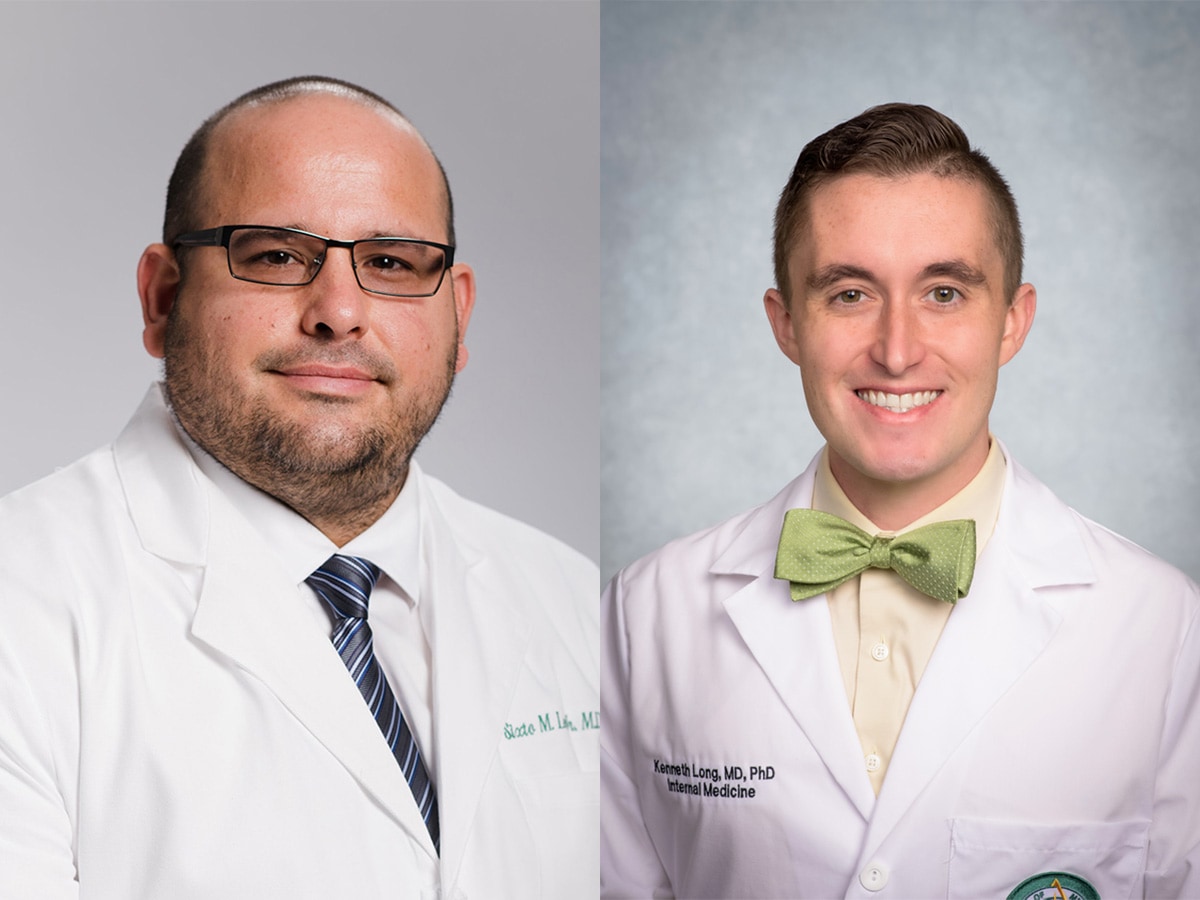
 Sixto Leal, M.D., Ph.D., and Kenneth Long, M.D. Hospital-acquired infections can lead to serious illness or death, especially in patients with weakened immune systems or other critical medical conditions. Clostridioides difficile, or C. diff, is a serious gastrointestinal infection that can progress rapidly and lead to life-threatening complications if not recognized and treated. Diagnosis remains challenging because many individuals carry C. diff in their gastrointestinal tract without developing the disease, known as colonization. Current diagnostic tests are imperfect and may either fail to identify patients with true infection or detect C. diff in individuals with colonized bacteria.
These limitations can lead to missed opportunities for timely treatment in progressing patients or overdiagnosis and unnecessary antibiotic treatment in patients without true C. diff disease. Unnecessary treatment carries its own risks, including disruption of the gut microbiome, adverse drug effects and additional antibiotic exposure.
Sixto M. Leal Jr., M.D., Ph.D., Jay M. McDonald Endowed Professor, director of the Division of Laboratory Medicine in the Department of Pathology at the University of Alabama at Birmingham, and Kenneth Long, M.D., assistant professor in the Division of Infectious Diseases in the UAB Department of Medicine, recently conducted a study demonstrating that a novel RNA-based molecular test can distinguish patients with active C. diff infection from those who carry the bacteria without active disease.
“Our research team evaluated the test using 239 patient samples,” Leal said. “We found that this test was more accurate and could detect smaller amounts of bacteria than several commonly used alternative lab tests.”
Long, who was previously a postdoctoral fellow in Leal’s laboratory, said, “With the current diagnostics we have, we frequently have to use our clinical judgment to determine if a mismatch between a diagnostic result and clinical presentation represents an imperfect test or the potential that something else is going on. A test we could have more confidence in would significantly improve our ability to care for patients at risk for this infection.”
Current antigen tests for C. diff lack adequate sensitivity, while current DNA-based nucleic acid amplification tests lack the ability to distinguish active infections from asymptomatic carriage, which can lead to either underdiagnosis or inappropriate treatment, respectively.
Unlike DNA, however, RNA is expressed only by metabolically active bacteria, which provides natural advantages to distinguish active infection.
The RNA test outperformed all comparable tests and exhibited higher sensitivity, showing 100 percent accuracy in organism identification, as compared to 88.2 percent accuracy when using the DNA test.
“This new test substantially improves the diagnosis of C. difficile infection,” Leal said. “Similar approaches may help diagnose other infections caused by spore-forming bacteria and fungi, which we look forward to working on next.”
The study, titled “A Novel RNA Nucleic Acid Amplification Test More Accurately Distinguishes Active Clostridioides difficile Infection from Colonization,” was supported by the UAB Faculty Development Grant Program, the UAB Center for Clinical and Translational Science, and the National Institutes of Health-funded Antimicrobial Resistance Leadership Group.