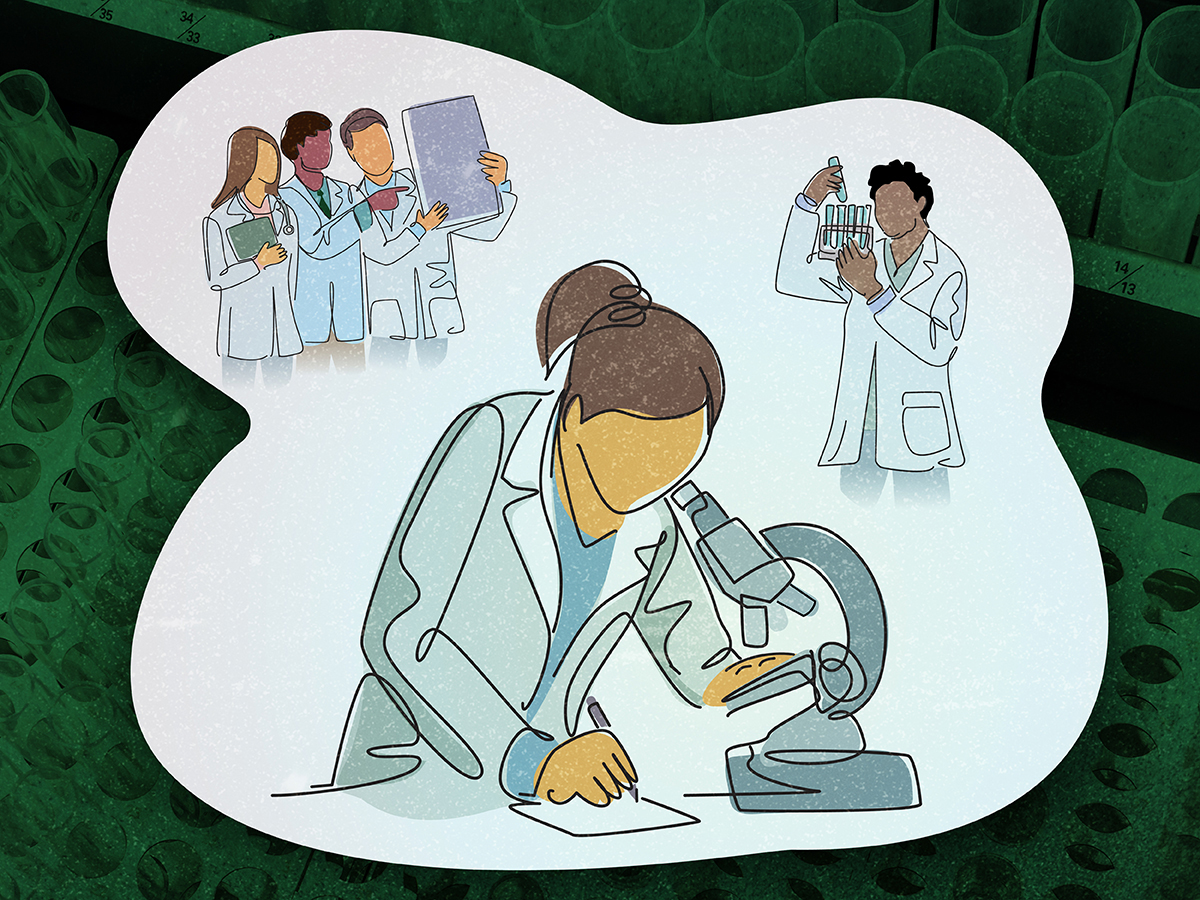
 Everyone benefits from clinical trials. They are the only way for new treatments to find their way into everyday practice, and they are often the best way for a sick patient to get better.
Many of the most exciting new treatments come out of pharmaceutical companies, which have a strong financial incentive to choose capable partners for their trials. They are looking for sites with expert clinicians who know how to run trials, large numbers of potential patients to enroll in those studies and a research administration structure that can move at industry pace.
UAB excels in all three areas. Through its Research Strategic Initiative, the institution has focused heavily on improving processes so that its principal investigators and their teams can do clinical trials more efficiently. Over the past decade, industry-sponsored clinical trials at UAB have grown significantly, and the Research Strategic Initiative identified further growth in industry-sponsored clinical trials as a key goal.
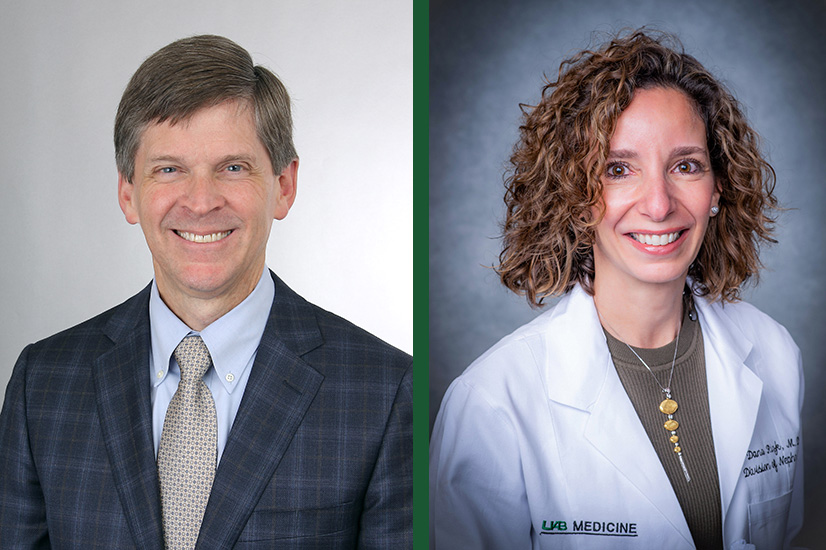 David Kimberlin, M.D., and Dana Rizk, M.D.That means, “in addition to making things run better, if we want to continue growth, we need more people doing trials,” said David Kimberlin, M.D., vice president of Clinical Trials in UAB’s Academic Research Office for Clinical Trials within the Office of Research.
Time, mentorship and training
In December 2025, as part of the Research Strategic Initiative and the ARO-CT, UAB launched the Clinical Trialist Development Program. Thanks to an investment of $2 million from the Alabama State Legislature, the program can offer participants protected time to develop their trials skills. They also receive one-on-one mentoring from a successful colleague in their field, near-peer mentoring from other program participants, an understanding of the resources available to them at UAB and specialized training in what it takes to succeed in industry-sponsored trials.
Participant: Lauren Luther, Ph.D.
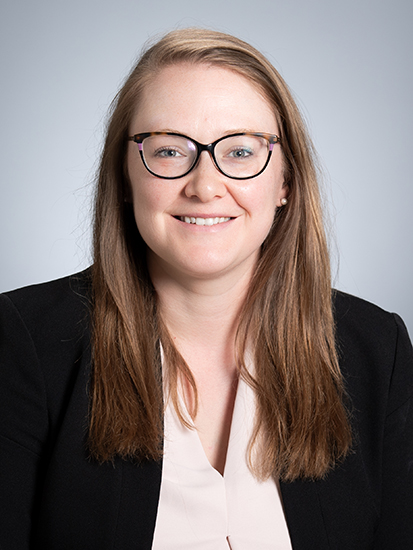 Luther, an assistant professor in the Department of Psychology, has previous experience with in-person psychotherapy trials for adults with severe mental illness. That work highlighted the need for new ways to overcome barriers to care and help support people as they try to implement in-person therapeutic skills into their daily lives. Luther’s subsequent research has explored the potential for digital therapeutics in this area.
“Because digital therapeutics require substantial up-front development and infrastructure, the CTDP provided critical dedicated time needed to advance my projects and pursue related industry and federal funding opportunities,” she said.
“As I am a newer faculty member at UAB, the opportunity to learn from experienced clinical trial researchers and connect with other junior investigators made the program an ideal fit.” Luther’s mentor is Adrienne Lahti, M.D., chair of the Department of Psychiatry and Behavioral Neurobiology.
“Beyond the protected research time, one of the greatest benefits has been the supportive community the program has created,” Luther said. “Dr. Kimberlin and Dr. Rizk have also been incredibly supportive, providing guidance and a forum to troubleshoot challenges as they arise. They have also introduced us to a variety of institutional resources and services, many of which I was previously unaware of.”
“You can’t learn this on the fly,” said Dana Rizk, M.D., associate dean for Clinical Trials in the UAB Heersink School of Medicine. “You need to have time and mentorship, along with specific professional skills, and that’s how we designed this program.”
In its first seven months, the CTDP has already filled its 32 available slots with bright early- and mid-career faculty from seven schools and colleges across campus.
“The response has been tremendous,” Rizk said. “I knew that, if we offered young faculty members the bandwidth to do clinical trials, they would be excited. But I thought that getting 32 applicants in a year would be a challenge. Could people rally that quickly, identify mentors and get the promise of support from their departments?” Instead, they did it in seven months, which Rizk says is a testament both to the applicants and their units. “I give them kudos,” she said. “The departments and schools had to engage in this process and be supportive, and they have done that.”
How the program works
The CTDP was modeled in part after the NIH “K” career development awards, Kimberlin explains, but compressed into a two-year structure rather than five years. “We believe that is enough time for clinicians to develop the skills and build out a pipeline of trials to be successful,” he said.
Participants receive two years of 20 percent protected effort to develop their clinical trials portfolio. The first year is supported by CTDP and the second by the participants’ departments or schools. Eligible faculty are assistant or associate professors who have participated in at least one industry-sponsored clinical trial as a principal investigator, site principal investigator, sub-investigator or equivalent. They also must identify a mentor who will meet with them regularly and provide biannual progress reports to the CTDP leadership during the program.
Successful applicants have a wide range of interests. In fact, “having a specialized niche of expertise is a key to attracting interest from industry sponsors in today’s highly competitive environment,” Rizk said.
There are some commonalities that Kimberlin has observed. “Many of us who do clinical trials really enjoy clinical care, and this scratches that same itch,” he said. “When you are talking to a patient or family and offering them participation in a trial and describing what a trial does, it gives you that same good feeling you get in taking care of patients.”
Participant: Mohammad Zain Hashmi, M.D.
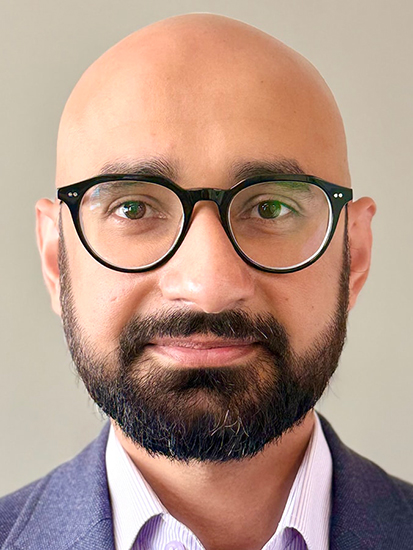 Hashmi, an assistant professor in the Division of Trauma and Acute Care Surgery, has previously served as a site principal investigator on industry- and Department of Defense-sponsored trials.
“Over the past several years, my work has focused on identifying gaps in trauma care delivery and developing solutions across the continuum of injury care,” Hashmi said.
Those solutions include prehospital interventions for severely injured patients and telehealth-enabled trauma care. “The next critical step is the rigorous design and execution of clinical trials — including the operational leadership required to successfully conduct industry-sponsored studies,” Hashmi said.
Transitioning to independent principal investigator status “requires deeper expertise in areas such as regulatory oversight, sponsor engagement, budgeting and contracting, and trial operations,” Hashmi said. “The CTDP provides the infrastructure and mentorship needed to develop these competencies.” Hashmi’s mentor is Jan Jansen, MBBS, Ph.D., professor in the Division of Trauma and Acute Care Surgery, who has extensive experience in the design and conduct of injury trials.
The CTDP “provides a highly supportive and collegial environment, with a strong emphasis on identifying and addressing practical barriers that limit faculty engagement in clinical trials,” Hashmi added. “There is a clear focus on building the infrastructure and skill set needed to expand clinical trials portfolios in a meaningful and sustainable way.”
Members of the cohort gather with Kimberlin and Rizk in quarterly in-person sessions that allow them to share their work, give each other insight into how clinical trials work in different spaces around campus and identify barriers they may have run into. “If we hear about similar barriers from multiple people, we know there are issues that we need to address,” Rizk said. “David and I, with our positions, can bring it forward and find solutions.”
A university-wide program
The CTDP faculty roster includes participants from a wide range of fields. “We have representatives from each of the seven schools and colleges at UAB that do clinical trials,” Kimberlin said. “This program is a university-wide program, and the people who have been selected demonstrate that.” (See a full list of CTDP faculty and their department/division affiliations.)
One advantage of this mix of backgrounds is the opportunity for “cross-pollination,” Kimberlin added. “At our first meeting, a faculty member from the College of Arts and Sciences presented her research, which does overlap with things going on in the School of Medicine, but from a very different way of thinking. We are all learning from each other, and that means we are all going to grow.”
Growing impact
As UAB trains more trialists, the CTDP will track their impact on the number of industry-sponsored trials conducted, trial enrollment and expenditures from trials. But more than just quantity, program leaders aim to see the breadth of trials at UAB expand into new areas. “I would like to see them bring in multiple clinical trials that we would not be doing otherwise,” Kimberlin said.
Once investigators establish themselves in a particular niche, they can also begin to play larger roles in studies, Rizk adds. “You start getting engagement earlier, so you can contribute scientifically,” she said. “The company asks you, ‘Is this feasible? Should we be thinking about trial design this way?’ They come to you for expert opinion.” Eventually, as has happened in both Rizk’s and Kimberlin’s careers, “you may end up serving as a national leader for the trial and ensuring its success, or you might be on its scientific steering committee,” Rizk said. “That is how to really expand your impact. Our goal with CTDP is to develop the next generation of clinical trialists.”
“We want to be able to say, ‘We helped light a fire in these individuals,’” Kimberlin said, “and to see how that benefits them, benefits UAB, and benefits the people of Alabama and beyond.”