-
Basic Elements
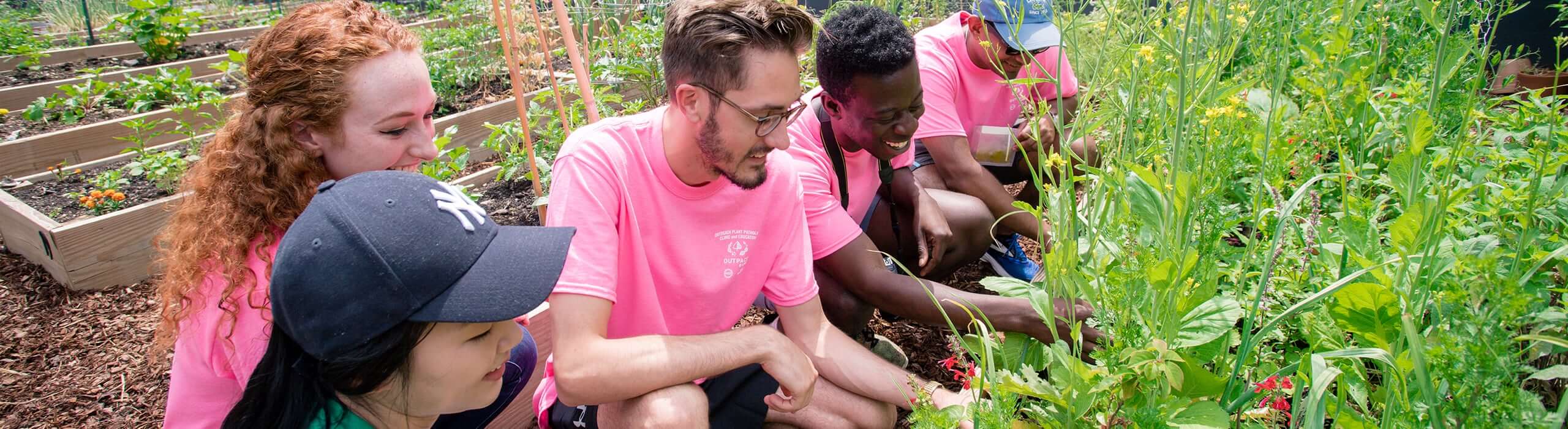
- Relevant service with a community partner: the community placement is related to course content, and vice versa.
- Community-campus partnerships that are mutually beneficial.
- Students engage in structured reflection throughout the course experience.
- Public dissemination of the work, preferably including a celebration or demonstration with the community partner.
- classroom or online discussions
- structured written reflections
- journaling
- critical reflection papers
- final papers
- class presentations
A high-quality service learning course incorporates these fundamentals:
Service learning courses can be found in the UAB course catalog with the "service learning" attribute. Apply for the service learning designation for your course.
A course syllabus incorporating service learning should include service learning objectives, the expected number of service hours, integration strategies for linking classroom and service experiences, and the percentage of the grade that these activities will represent. Critical reflection is vital for students so that they can relate their service experience to the course content.
Integration strategies include:
-
Choosing and Collaborating with Community Partners
To ensure relevant and meaningful service as part of a service-learning course, suitable community partners and projects must be carefully considered. The best service learning instructors develop and foster relationships with community partners. Review the list of Highlighted Community Partners for a number of excellent community organizations. This list is not a complete list, but it serves as a good starting point.
Whenever possible, instructors should make the initial call to a community partner to ensure that the agency has suitable and timely opportunities for students that meet course objectives and expectations. Faculty members are encouraged to collaborate with the partner: visit the service sites, educate yourself about the organization and its mission, and talk to the partner about possible student and organization learning goals to gain a better understanding of how the service experience will relate to course topics.
After the initial contact has been made with the community partner, students can be encouraged to contact the community partner in a timely and professional manner to discuss potential service. A student should be transparent with the community partner about time constraints and any concerns around transportation or scheduling issues.
Contact
This email address is being protected from spambots. You need JavaScript enabled to view it. to ask about having an AmeriCorps VISTA from our office act as a Service-Learning Coordinator for your course. -
Using Standard Forms for Service Learning
Faculty members teaching a service learning course may use the
 service learning agreement form if they deem it necessary. This agreement serves as a good framework of agreement between the faculty member, partner, and students. After the community partner, faculty member, and student(s) have signed the form, send it to the Office of Service Learning and Undergraduate Research.
Optional forms to use are the:
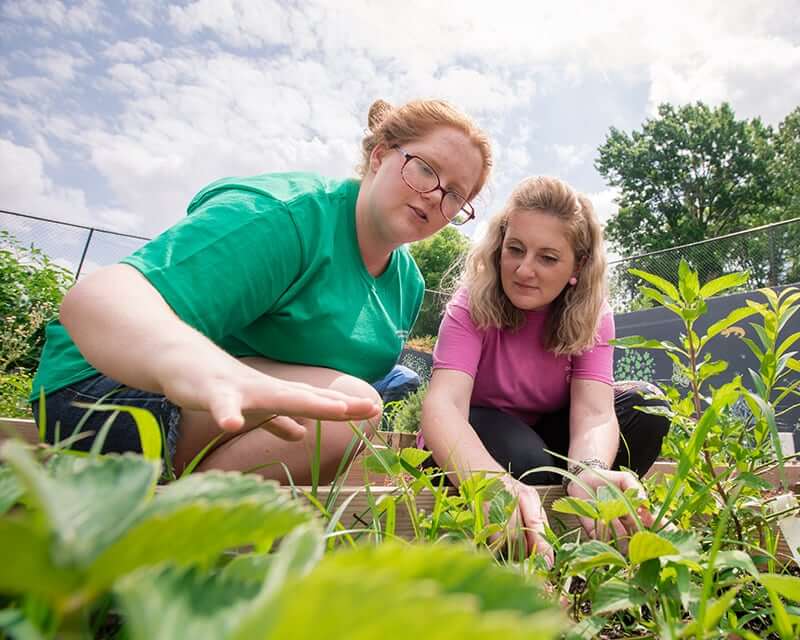 Service Learning connects your students to non-profit partners, giving UAB students the opportunity to apply classroom knowledge and make a real difference in the local and global community. Students will see the real world impact of social issues like poverty, climate change, and educational inequities. It is one thing to know these problems exist and another to experience them first-hand. Through these experiences, our students gain empathy, cultural awareness, and — almost without exception — a passion for helping others and working for change.
Service Learning provides an amazing opportunity for faculty members to be creative while engaging their students on an entirely new level. This is the space where teaching, research, and service meet.
The UAB-Donaldson Lecture Series is a 30+-year-old innovative collaboration between UAB and the Alabama Department of Corrections William E. Donaldson Correctional Facility. Donaldson is a maximum-security men’s prison in rural Jefferson County that largely houses inmates with life sentences or those classified as violent repeat offenders. UAB-affiliated faculty and staff members give talks at the prison on the first and third Tuesdays of the month from September through May.
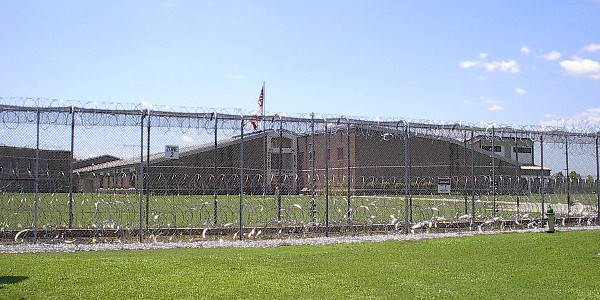 Alabama has the fifth highest incarceration rate in the country. Donaldson is one of 15 prisons in Alabama and one of only two maximum security facilities. In total, over 30,000 individuals are incarcerated in Alabama prisons on any given day. Perpetual overcrowding and the limited number of educational opportunities have serious consequences within the facilities. Depression and loneliness are cited by the men as the hardest part of their time inside, driven, in part, from the lack of opportunities available to them.
The success and longevity of this series is due to the continued interest and support from Donaldson and the Alabama Department of Corrections, the generosity and support from UAB’s volunteer faculty and staff, and the courtesy, enthusiasm, and inquisitiveness of the Donaldson inmates. The series has led to the creation of a book discussion group, an acting workshop, and new partnerships with classes at UAB.
When it is time for me to go, I say, “I wish that there was more that we at UAB could offer to you.” A young man on the front row looks me in the eye and says, “Ma’am, you show us that there is another way to live.” — Amy Hutson Chatham, Director
Interested in Giving a Talk?
Talks are usually given at Donaldson on the first and third Tuesdays of the month at 6:30pm from September through May. The best volunteer lecturers push aside any stereotypes about maximum-security inmates and talk to them like ordinary people. A potential lecturer is encouraged to select a topic about which she/he is passionate and knowledgeable. Volunteers are required to submit to a background check and undergo brief training.
The call for lecturers is open. For more information or to sign up for a lecture, please contact UAB Service Learning.
About the Series
The UAB-Donaldson lecture series was born from a professor-student relationship. The following resources give you a look inside the program.
- The Prison’s Professors by Beth Shelburne
- Lectures Behind Bars by Ashley Creek
- Life Sentences by Jo Lynne Orr
- Professor's prison outreach teaches the freedom of words by Marie Sutton
- Milton's Captive Audience: Teaching Paradise Lost in a Maximum Security Prison by Alison Chapman
- The Dhamma Brothers documentary
Donaldson Lecture Series Past and Present Directors
- 2021-present: Gareth Jones, director of the Office of Service Learning and Undergraduate Research
- 2016-2021: Amy Hutson Chatham, previous director of the Office of Service Learning and Undergraduate Research
- 2011-2016: Libba Vaughn, previous director of the Office of Service Learning and Undergraduate Research
- 2007-2011: Alison Chapman, professor and chair of the UAB Department of English
- 2004-2007: Michael Sloane, director of the University Honors Program and an associate professor in Departments of Psychology and Ophthalmology
- 1988-2004: Ada Long, founder of the series and founder and former director of the University Honors Program
 UAB’s Faculty Fellows in Service Learning and Faculty Fellows in Undergraduate Research programs are one-year fellowships designed to accelerate the work of faculty members and course instructors eager to develop exemplary curricular approaches to education. The programs aim to integrate the philosophy, pedagogy, and process of service-learning and course-based undergraduate research into the UAB academic environment.
Our goal is to provide a venue for faculty members and course instructors to design a new course or to modify an existing course to include a service-learning or a course-based undergraduate research experience (CURE) component. The programs are structured around a year-long series of workshops (a total of six) designed to help faculty develop a strong background in service learning or undergraduate research pedagogies. The workshops explore theories, implementation, and assessment, and how to integrate these methodologies into courses across the disciplines.
The deadline for applications is July 1, 2026.
Program Details
-
Benefits of Participation
For faculty members and course instructors accepted into the program, the fellowship allows for an intellectual venue in which participants can exchange ideas with an academically diverse group and learn from the experiences of others in the program. Participants will leave the program with a revised course syllabus and the tools and resources needed to successfully implement a service-learning course. Additionally, participants will benefit from connections to community partners and membership in a university-wide academic engaged scholarship network.
Participating faculty members and course instructors will be provided with topic-specific readings and materials in advance of each workshop and have one-on-one assistance identifying additional discipline-specific resources and model courses in service-learning.
Financially, the fellowship provides a $1,500 service-learning or undergraduate research enhancement professional development funding to each fellow to support course development and research. Funds can be used for teaching/research materials, hourly help by students or additional support staff, related travel, or other appropriate uses at the determination of the fellow and his or her department chair and dean.
-
Expectations
The Fellows programs will meet on six Fridays from 12:30 - 3:00 p.m.
The seminar dates are:
- The Faculty Fellows in Service Learning workshops are typically held the first Fridays of September, October, November, January, February, and March.
- The Faculty Fellows in Undergraduate Research workshops are typically held the second Fridays of September, October, November, January, February, and March.
Participants are held responsible for attending all sessions and at least one individual meeting held in early December. If applying, it is essential that you are able to attend all of the meetings. If you have a class conflict or anticipate that you may be attending conferences or other meetings, please apply at another time when you will be able to make these meetings a priority. The best possible experience takes place when all of the participants of the program attend and discuss the topics presented.
-
Eligibility and Selection Process
The Faculty Fellows in Service Learning and the Faculty Fellows in Undergraduate Research programs are open to UAB employees involved in teaching (tenured and tenure-track faculty, professional and administrative educational staff, and adjunct/lecturer instructors) from any department on campus. Priority will be given to those teaching undergraduate courses, but faculty teaching graduate or professional courses may apply.
Applicants will be selected based on the quality of their personal statements, the potential sustainability of the course(s) they propose, and the support they have from their school/college and academic department.
Past Participants
-
Service Learning
-
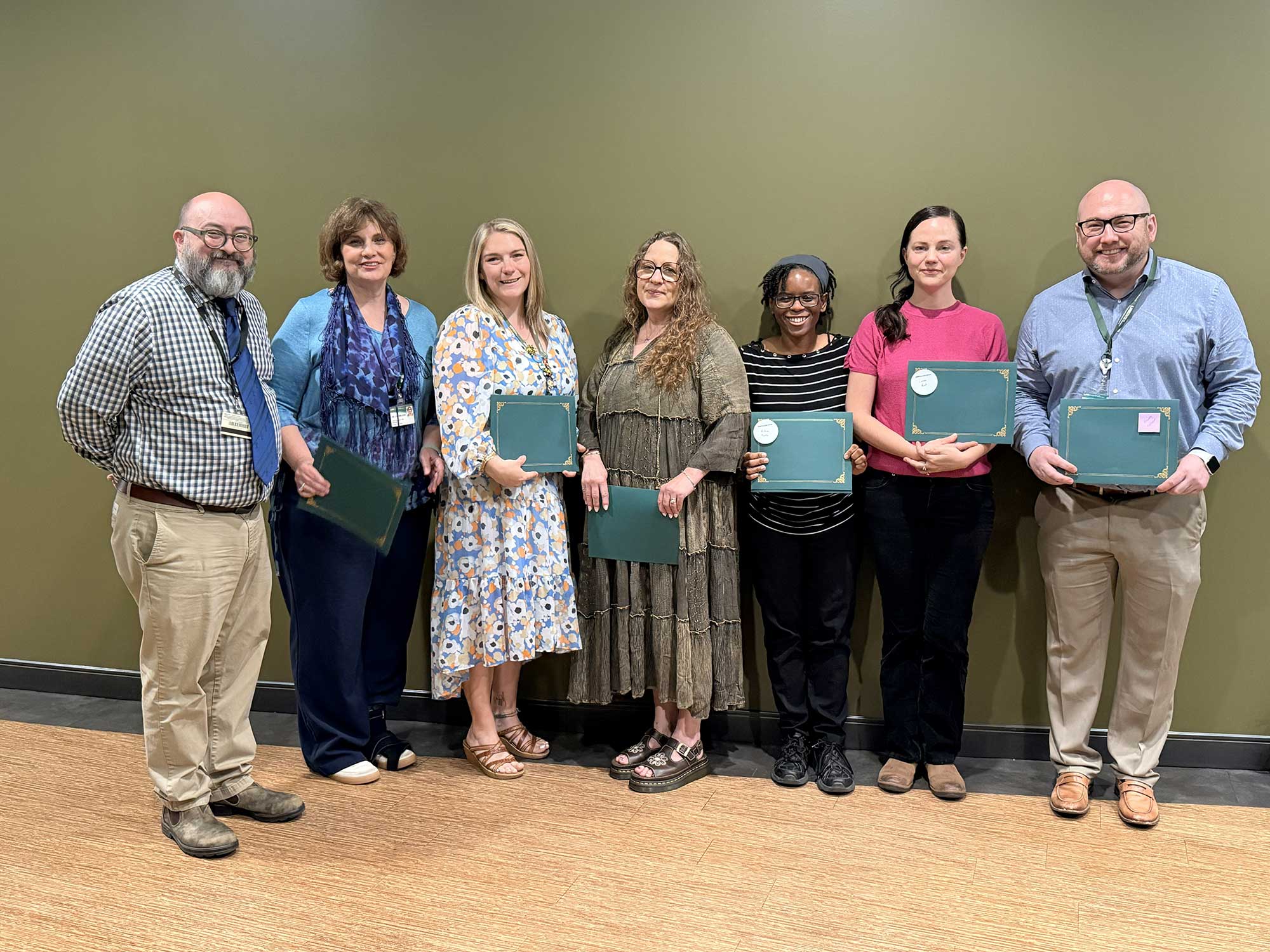
- Sally Anne Perz, English, College of Arts and Sciences
- Timothy Ashe, Jr., World Languages and Literatures, Arts and Sciences
- Britney Murphy, History, College of Arts and Sciences
- Lauren Rast, Physics, College of Arts and Sciences
- Jordin Lane, Health Behavior, Public Health
- Krista Chambless, World Languages and Literatures, College of Arts and Sciences
-
The Faculty Fellows program did not run this year.
-

- Kathryn Corvey, Health Policy & Organization, School of Public Health
- Camerron M Crowder, Neurobiology, College of Arts & Sciences
- Anna Helova, DrPH, MA, MBA, MPH, Health Policy & Organization, School of Public Health
- Mary Ann Bodine Al-Sharif, Human Studies, School of Education
-
- Carolina Rodriguez Tsouroukdissian, World Languages and Literatures
- Michelle Wooten, Physics, College of Arts and Sciences
- Megan Brooker, Sociology, College of Arts and Sciences
- Mica Hughes-Harrell, Wellness Department/Community Health and Human Services, College of Education
- Charly Verstraet, World Languages and Literatures, College of Arts & Sciences
- Elizabeth Fisher, Music, College of Arts & Sciences
- Sarah MacCarthy and Josh Bruce, Health Behavior, School of Public Health
- Kathryn Morgan and Barry McNealy, African-American Studies Program, College of Arts & Sciences
- Yumi Takamiya, World Languages and Literatures, College of Arts & Sciences
-
- Brandon Blankenship, Criminal Justice, College of Arts & Sciences
- Yvonne Earnshaw, Curriculum and Instruction, School of Education
- Colleen Fisher, Music, College of Arts & Sciences
- Meredith Gartin, Health Policy and Organization, School of Public Health
- Ann Elizabeth Montgomery, Health Behavior, School of Public Health
- Tamika Smith, Health Behavior, School of Public Health
- Emmanuel Odame, Environmental Health Sciences, School of Public Health
- Tracee Synco, Physical Therapy, School of Health Professions
-
The Faculty Fellows program did not run this year.
-
- Samantha Giordano-Mooga, Clinical and Diagnostic Sciences, School of Health Professions
- Ling Ma, Foreign Languages and Literatures, College of Arts and Sciences
- Elizabeth Pellathy, Art and Art History, College of Arts and Sciences
- Nancy Wingo, Instructional Innovation, School of Nursing
-
- Nancy Abney, CIRTL Program Manager, Graduate School
- Sarah E. Culver, Director of Center for Economic Education, School of Business
- Jenelle Hodges, Instructional Design Specialist, School of Education
- Samira Laouzai, Deputy Director/Manager, Division eLearning Services and Professional Studies
- Yookyong Lee, Social Work, College of Arts and Sciences
- Angela Lewis, Political Science, College of Arts and Sciences
- Kelly Morrison, Communication Studies, College of Arts and Sciences
- Pam Paustian, Executive Director, Division of eLearning and Professional Studies
- Whitney Pollio, Nursing, School of Nursing
- Mary Wallace, Vice President for Student Experience, Division of Student Affairs
- Neena Xavier, Department of Clinical and Diagnostic Sciences, School of Health Professions
-
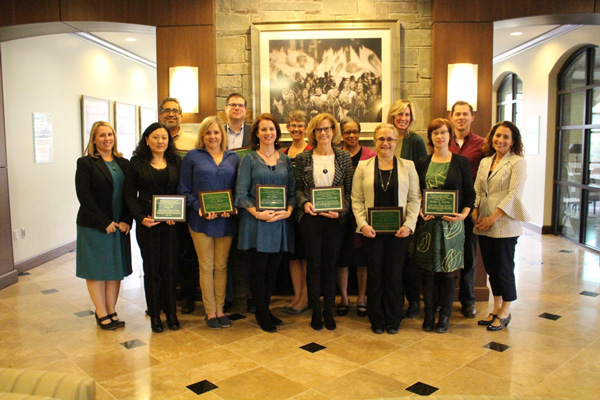
- Krista Casazza, General Pediatrics, Heersink School of Medicine
- Andrew Baer, History, College of Arts and Sciences
- Erika Austin, Biostatistics, School of Public Health
- Robin Lanzi, Health Behavior, School of Public Health
- Laura Debiasi, Nursing, School of Nursing
- Josie Prado, Curriculum Instruction, School of Education
- Marion Wallace, Psych-Child, Heersink School of Medicine
- Ling Ma, World Languages, College of Arts and Sciences
- Stacy Moak, Social Work, College of Arts and Sciences
- Ana Oliveira, Clinical Lab Sciences, School of Health Professions
- Nicole Gravitt, Public Health Student and Academic Affairs, School of Public Health
- Angela Stowe, Counseling Services, Student Affairs
-
- Kristin Johnston Chapleau, Clinical and Diagnostic Sciences, School of Health Professions
- Suzy Davies, Health Behavior, School of Public Health
- Caroline N. Harada, Medicine/Medical Education, Heersink School of Medicine
- Ragib Hasan, Computer and Information Sciences, College of Arts and Sciences
- Jenna LaChenaye, Department of Human Studies, School of Education
- Meena Nabavi, Health Care Organization and Policy, School of Public Health
- Eddie Nabors, Accounting and Finance, Collat School of Business
- Lourdes Sánchez-López, World Languages and Literatures, College of Arts and Sciences
- Abidin Yildirim, Electrical and Computer Engineering, School of Engineering
-
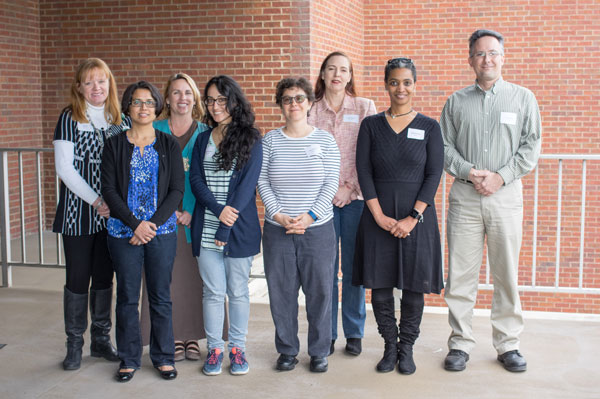
- Amy Badham, Sparkman Center for Global Health, School of Public Health
- Cathleen Cummings, Art and Art History, College of Arts and Sciences
- Annetta Dolowitz, Department of Management, Information Systems & Quantitative Methods, Collat School of Business
- John Thomas Maddox, World Languages and Literatures, College of Arts and Sciences
- Gregory Myers, Office of the Dean, School of Engineering
- Jared Ragland, Art and Art History, College of Arts and Sciences
- Samiksha Raut, Biology, College of Arts and Sciences
- Anamaria Santiago, English, College of Arts and Sciences
- Sallie Shipman, Family, Community and Health Nursing, School of Nursing
- Stephanie Yates, Accounting and Finance, Collat School of Business
- Jennifer Young, English, College of Arts and Sciences
-
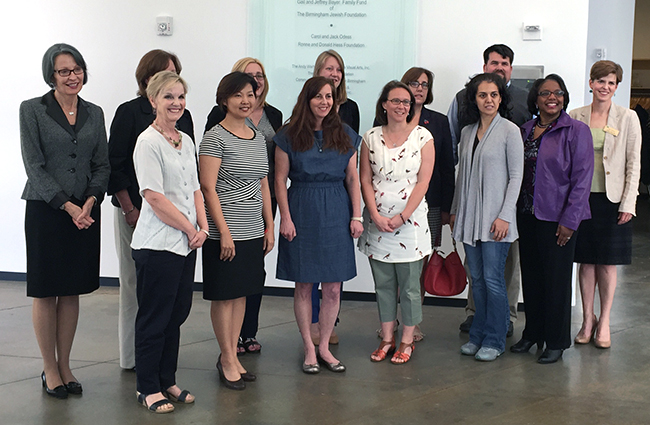
- Bryan Breland, Assistant Professor, Health Services Administration, School of Health Professions
- Henna Budhwani, Assistant Professor, Health Care Organization and Policy / Sparkman Center for Global Health, School of Public Health
- Cecilia Cheon, Instructor, Pediatric Dentistry, School of Dentistry
- Jessica Dallow, Associate Professor, Art and Art History, College of Arts and Sciences
- Cassandra Ellis, Assistant Professor, English, College of Arts and Sciences
- Laurel Hitchcock, Assistant Professor, Social Work, College of Arts and Sciences
- Christina Barger Hurst, Assistant Professor and Interim Program Director, Genetic Counseling Program, School of Health Professions
- Pamela Sterne King, Assistant Professor, History, College of Arts and Sciences
- Tondra Loder-Jackson, Associate Professor, Human Studies, School of Education
- Erika Hille Rinker, Assistant Professor, World Languages and Literatures, College of Arts and Sciences
- Anne Zinski, Assistant Professor, Infectious Diseases, Heersink School of Medicine
-
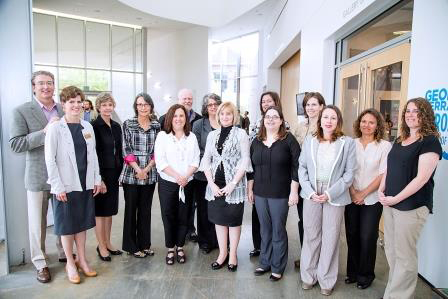
- Douglas Barrett, Assistant Professor, Art & Art History, College of Arts and Sciences
- Katie Buys, Nursing Instructor, Community Health Outcomes & Systems, School of Nursing
- Dale Dickinson, Assistant Professor, Environmental Health Sciences, School of Public Health
- Martha Earwood, Assistant Professor, Justice Sciences, College of Arts and Sciences
- Julia Gohlke, Assistant Professor, Environmental Health Sciences, School of Public Health
- Nichole Lariscy, Assistant Professor, English, College of Arts and Sciences
- Heather Lee, Instructor, Sparkman Center for Global Health, School of Public Health
- Lisa McCormick, Assistant Professor, Health Care Organization and Policy, School of Public Health
- Karolina Mukhtar, Assistant Professor, Biology, College of Arts and Sciences
- Barbara Wech, Associate Professor, Management, Information Systems & Quantitative Methodology, School of Business
- Jaclyn Wells, Assistant Professor & University Writing Center Director, English, College of Arts and Sciences
-
-
Undergraduate Research
-
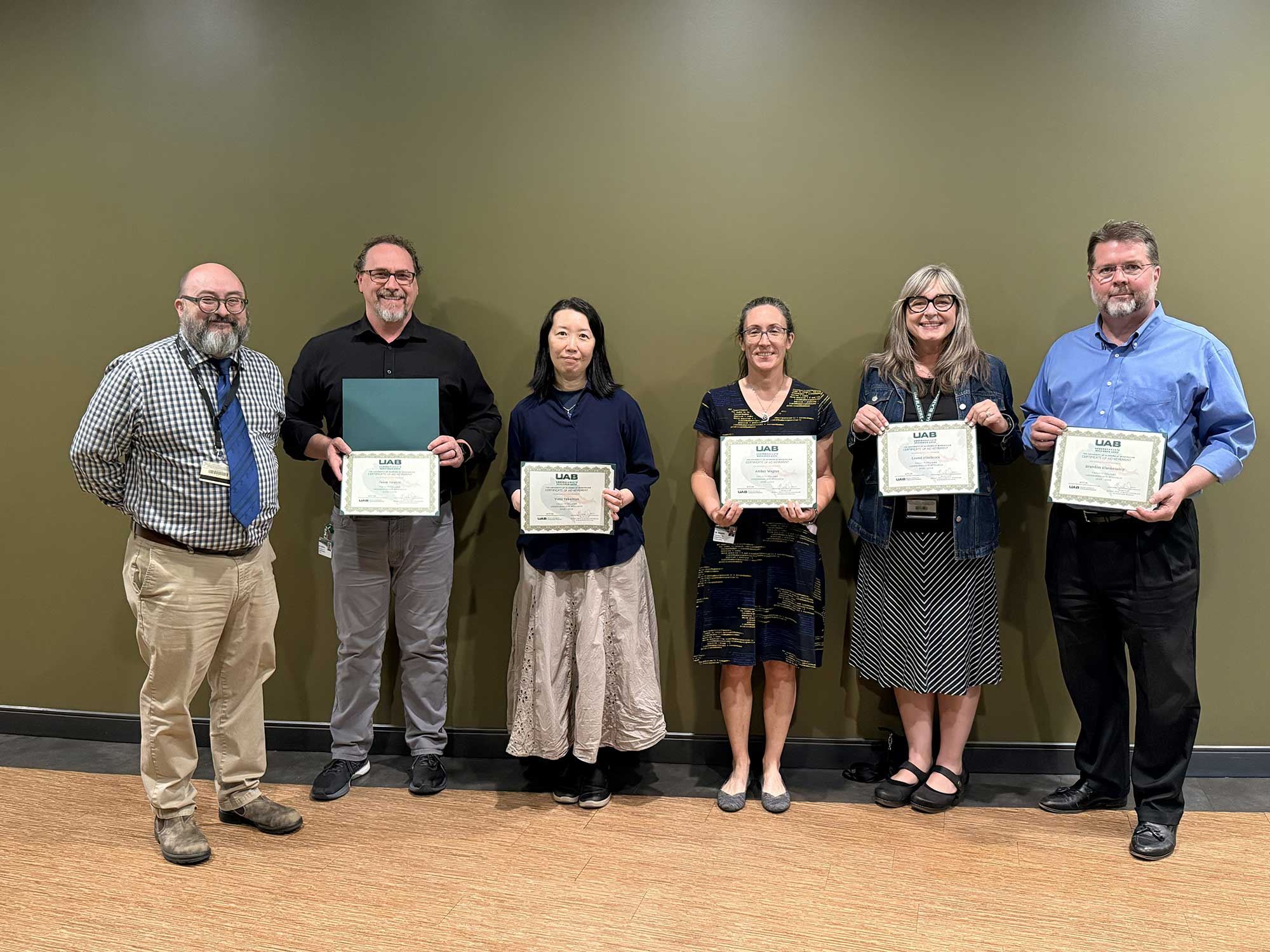
- Brandon Blankenship, Criminal Justice, College of Arts and Sciences
- Jenna Reynolds, World Languages and Literatures, Arts and Sciences
- Yumi Takamiya, World Languages and Literatures, College of Arts and Sciences
- Laurel Iverson Hitchcock, Social Work, College of Arts and Sciences
- Gillum Shane Pitts, Psychology, College of Arts and Sciences
- Jason Heaton, Biology, College of Arts and Sciences
- Amber Wagner, Computer Science, College of Arts and Sciences
- Stacy Moak, Political Science, College of Arts and Sciences
-
The Faculty Fellows program did not run this year.
-
Undergraduate Research Faculty Fellows 2023
- Marliese Thomas, Reference, Instruction, and Scholarly Communications, UAB Libraries
-
Undergraduate Research Faculty Fellows 2022
- Norman Robert Estes II, Clinical and Diagnostic Sciences, School of Health Professions
- Amy Cates, English, College of Arts & Sciences
-
- Jie Gao, Clinical and Diagnostic Sciences, School of Health Professions
- Ariann Nassel, Lister Hill Center for Health Policy, School of Public Health
- Lynn Racette, Ophthalmology, School of Medicine
- Jun Zhang, Chemistry, College of Arts and Sciences
-
The Faculty Fellows program did not run this year.
-
- Stacy Krueger-Hadfield, Biology, College of Arts and Sciences
- Ana Oliveira, Clinical and Diagnostic Sciences, School of Health Professions
- Despina Stavrinos, Psychology, College of Arts and Sciences
-
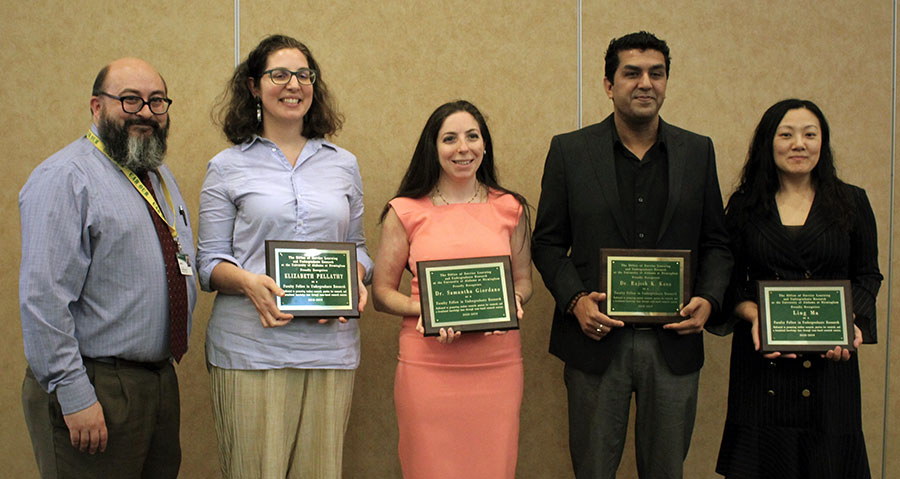
- Cora Causey, Education, School of Education
- Nancy Wingo, Nursing, School of Nursing
- Samantha Giordano-Mooga, Biomedical Sciences, School of Health Professions
- Rajesh Kana, Psychology, College of Arts and Sciences
- Ling Ma, Chinese, College of Arts and Sciences
- Elisabeth Pellathy, Art and Art History, College of Arts and Sciences
Videos
Faculty Fellows in Undergraduate Research are asked to create a short video about the class they are developing and present this at the end of the fellowship. You can watch these in the videos tab.
-
- Fred “Ted” Bertrand, Assistant Dean of SHP Undergraduate and Honors Program, School of Health Professions
- Margaret Johnson, Chemistry, College of Arts and Sciences
- Hyeyoung Lim, Criminal Justice, College of Arts and Sciences
- Denise Monti, Biology, College of Arts and Sciences
- Shahid Muktar, Biology, College of Arts and Sciences
- Heather Patterson, Biology, College of Arts and Sciences
- Samiksha Raut, Biology, College of Arts and Sciences
Videos
Faculty Fellows in Undergraduate Research are asked to create a short video about the class they are developing and present this at the end of the fellowship. You can watch these in the videos tab.
-
Rajesh Kana
(2018-2019)Samantha Giordano
(2018-2019)Nancy Wingo
(2018-2019)Elisabeth Pellathy
(2018-2019)Ling Ma
(2018-2019)Cora Causey
(2018-2019)Heather Patterson (Drosophila)
(2017-2018)Heather Patterson (Ticks)
(2017-2018)Sami Raut
(2017-2018)Shahid Muktar
(2017-2018)Denise Monti
(2017-2018)Margaret Johnson
(2017-2018)Hyeyoung Lim
(2017-2018)Ted Bertand
(2017-2018)
-