April 2026
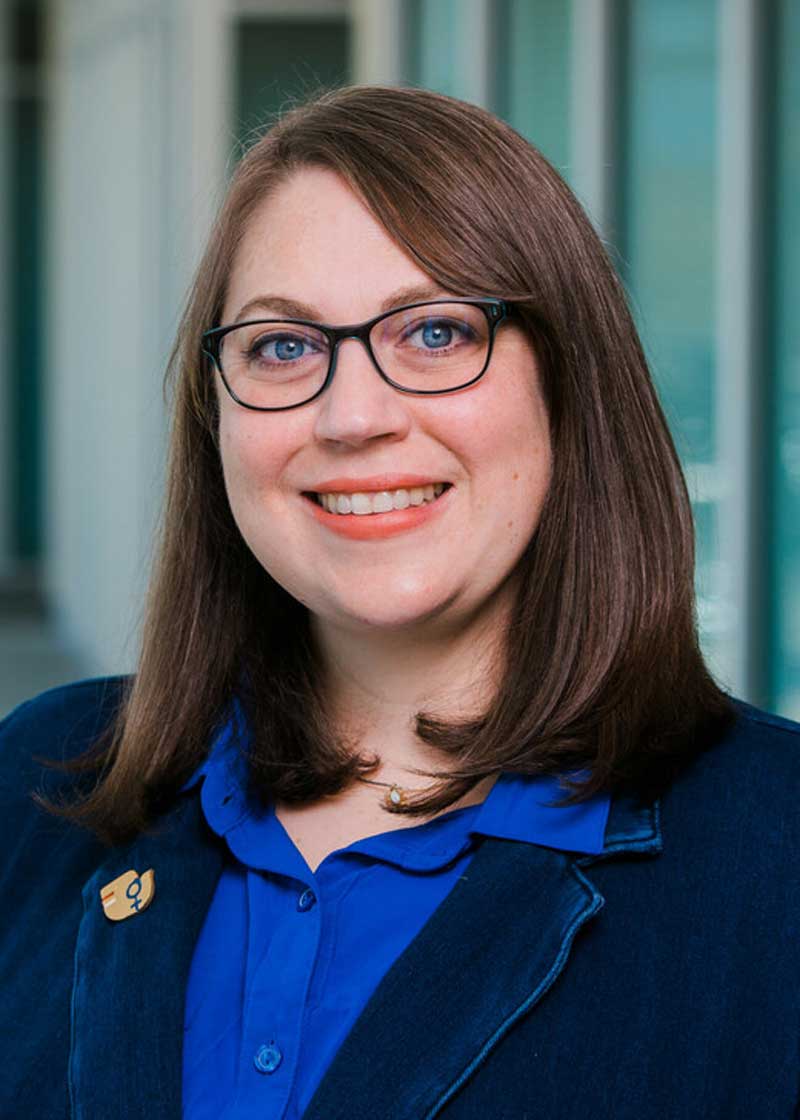
April 2026: Meredith Gartin, PhD gartin@uab.eduAssociate Professor and Program Director of Global Health StudiesHealth Policy & Organization
What brought you to the UAB School of Public Health?
I joined SOPH in Fall 2019 in a teaching-focused role with the Department of Health Policy and the Sparkman Center for Global Health. Prior to that, I was a Visiting Assistant Professor at Ohio University, where I designed and implemented a Master’s Degree in Global Health, coordinated a dozen study abroad, global health programs, and co-led a large international, faculty training program funded by Fulbright.
When I saw the UAB position for a Global Health Assistant Professor, it immediately stood out. It aligned perfectly with my experience in global health education, program development, and study abroad. It truly felt like a role designed for me, and I knew I had to apply!
What is the broad focus of your research?
My research focuses on how global social, political, and environmental forces shape health inequities—and how we can design more effective curriculum and experiential training models to prepare the next generation of global health professionals to address them.
Where did you receive your training and degrees?
I am trained as an anthropologist, with a BA from the University of Georgia and an MA from Auburn University. I earned my PhD in Global Health from Arizona State University as the first graduate of its doctoral program in Global Health—an interdisciplinary program that combined medical anthropology, demography, and health. I completed postdoctoral training through a large National Science Foundation (NSF)-funded initiative focused on building a global network of scholars in urban sustainability. My work examined how globalization and urbanization contribute to both human and environmental health risks. One of the key outcomes of that collaboration, The New Global Urban Realm opens a new website, continues to be widely cited and influential in the field.
What is the most exciting project you are currently working on?
I am currently exploring how experiential learning can better prepare students for careers in global health and human rights. This work is in collaboration with colleagues through the Consortium of Universities for Global Health (CUGH). As global health funding and policy landscapes shift, we are examining how programs can adapt by strengthening applied training opportunities. Specifically, we are conducting a systematic exploration of internships and capstone experiences to better understand how they contribute to workforce readiness—both in the U.S. and internationally.
What is your favorite self-authored manuscript?
My favorite publication was based on my doctoral dissertation and published in the American Journal of Human Biology, Food Deserts and Nutritional Risk in Paraguay opens a new website. This work emerged from a year and half of fieldwork and was among the first studies to document a “food desert” in a low- and middle-income country. At the time, most food desert research focused on the Global North. My work challenged that assumption by demonstrating that similar structural inequalities exist in other contexts. It has been especially rewarding to see the article cited widely and incorporated into multiple systematic reviews over the past decade.
What professional accomplishment are you most proud of so far in your career?
Being selected for the UAB Blazer Way Faculty Award in 2023 is one of my proudest accomplishments. As a faculty member whose work centers on global health education and mentorship, it is especially meaningful to receive an award that is nominated and selected by students.
What makes it particularly significant is that it reflects not just teaching, but how I strive to show up for students and the broader community. It affirms my commitment to modeling the values that guide my work—integrity, engagement, and a student-centered approach to global health education.
What is the coolest training or program you've been a part of, or your favorite conference you've attended?
One of the most meaningful programs that I’ve been part of was EGYPT@OHIO, which I co-designed and implemented during my time as a visiting professor at Ohio University. In collaboration with Dr. Gillian Ice and the Ohio Global Health Initiative and funded by IIE and the Fulbright Program, we invited early-career public health professionals from Egypt to Athens, Ohio for an immersive, in-person faculty training experience. The program focused on building skills in secondary data analysis and online curriculum design, while also fostering meaningful cultural exchange. Our goal was not only to provide technical training, but to cultivate long-term professional relationships and collaborative opportunities.
That goal truly came to life for me. I’ve since continued working with several of the Egyptian faculty through joint publications and have been invited to lead additional trainings in global health curriculum and instruction at several Egyptian institutions. It’s been incredibly rewarding to see those partnerships grow beyond the original program and evolve into sustained international collaboration (and also friendships).
If you weren't in academia, what would your career be?
I would be a violinist. Previously, I performed with professional orchestras, played at weddings and fundraising events, taught violin, etc. My dream was to move to New York, play in the orchestral pits on Broadway, and I like to think that is something I might have pursued at one point in time. Fun Fact: The Phantom of the Opera was the longest running musical on Broadway and when they closed the show, The NY Times published an article about the musicians opens a new website—it’s a hard hustle to be a professional musician in an orchestral pit.