Strategic Plan 2019-2025
Introduction
The University of Alabama at Birmingham’s vision is to embed sustainability as a fundamental value at the university through the development of sustainability literacy, solutions, and leadership. UAB students, faculty, and staff are committed to taking an influential role as responsible stewards of our resources and communities, and to using educational, operational, and research activities to promote global thinking and local action.
UAB’s Sustainability program was developed in 2013 to serve the university, hospital, and surrounding community, using the widely accepted definition of sustainability as “meeting the needs of the present without compromising the ability of future generations to meet their own needs.” In practice, this is achieved by working to holistically incorporate sustainability principles and standards in operations, teaching and learning, research and innovation, and community outreach and education.
UAB is a thriving academic and medical community, situated in a vibrant city, and is an institution uniquely positioned to engage in robust dialogue centered on the questions posed in the pursuit of sustainability. To advance this dialogue, UAB Sustainability and the UAB Operations and Faculty Sustainability Committees conducted a two-year strategic planning process to determine the most important goals, strategies, and outcomes for a sustainable institution by 2025.
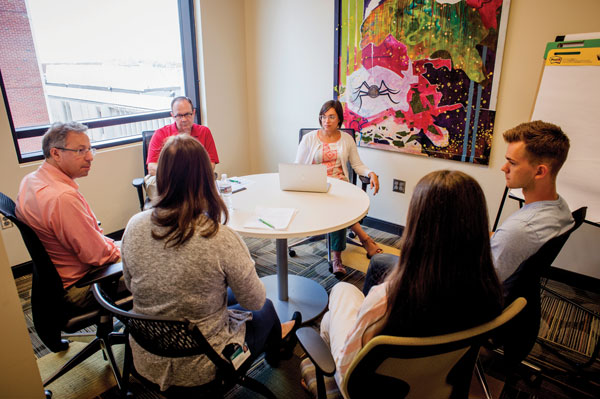
The Center for Educational Accountability assisted in guiding the process that included 13 working groups comprised of 67 members. Two public listening sessions were held, one on campus and one at UAB Hospital, and presentations made to institutional shared governance groups including the Faculty Senate, Staff Council, and Undergraduate Student Government Association. An online survey was distributed to all hospital and campus email addresses, including students, faculty, and staff, and more than 4,000 individuals responded to the survey.
UAB’s Sustainability Strategic Plan for 2025 is the result of the entirety of these meetings, conversations, listening sessions, presentations, and broader dialogue on campus and in the community. The resulting Sustainability Strategic Plan reflects a vision that aligns with the university’s shared values and concisely outlines the goals and strategies we will pursue over the course of the next six years.
Letter from the President
At the University of Alabama at Birmingham, we believe that institutions of higher learning should use their human and technical capacity to improve the quality of life in the communities where they are located and which they serve.
UAB is committed to making a positive impact through exceptional sustainability performance, and the UAB Sustainability Strategic Plan provides the direction for our institution to manage this achievement. The Sustainability Strategic Plan, a document intended to deliver a holistic vision with clear, institution-wide sustainability priorities and goals, was developed in consultation with a wide range of university stakeholders. The goals and strategies are also mindful of current best practices in developing sustainable goals, including inclusive economic growth and environmental and human health. We will work to address these pressing global challenges through local action.
Our institutional leadership demonstrated through this plan will have a profound, positive influence on individuals, communities, businesses, and other institutions of higher education. The plan will provide a road map for building a healthier, more beautiful, and more resilient campus and community.
I fully support our sustainability vision and call upon all members of the university to play their part in achieving the aims and ambitions set out in this plan.
Sincerely,

Objectives











Strategic Plan: Wellbeing and Work

Overarching Aim
To support the links between healthy and sustainable lifestyles and their impacts on work life
Goals
Strategies

- 1.Redefine the current wellness and incentive strategy, and identify member populations with higher disease prevalence and opportunities for improved medication adherence
- 2.Develop targeted interventions for select member populations and document a multi-year strategy to include measurement of outcomes
- 3.Promote campus walking trails, measure their use, and evaluate areas for improvement
- 4.Create a wellness champion strategy and communication network, and engage champions for specific wellness programming
- 5.Conduct biennial employee engagement surveys and develop response-driven initiatives


Strategic Plan: Public Engagement

Overarching Aim
To provide sustainability education and programs for a broad regional, national, and international community
Goals
Strategies
- 1.Develop formal and informal partnerships with area municipalities and other stakeholders to support sustainability and resilience initiatives
- 2.Establish online community-based sustainability courses
- 3.Build a more effective and user-friendly website for the UAB Sustainability program and raise the program’s social media presence to national prominence
- 4.Initiate tracking mechanisms for all new project partnerships to assess overall impact of the program
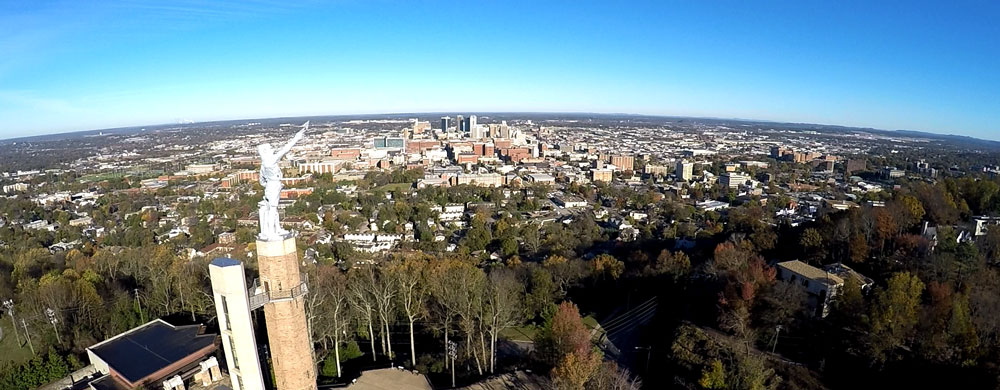
Strategic Plan: Campus Engagement

Overarching Aim
To effectively engage students, faculty, and staff in collaborative pursuit of UAB’s social, environmental, and economic sustainability goals by sharing information and inspiring active participation
Goals
Strategies
- 1.Promote sustainability goals at student and faculty recruitment and orientation programs
- 2.Create a student sustainability leadership program
- 3.Implement the Sustainability Ambassadors program for faculty and staff
- 4.Provide funding for campus engagement in sustainability initiatives through the Sustainability Investment Fund and other similar programs
- 5.Develop an annual seminar for interdisciplinary sustainability topics
Strategic Plan: Purchasing

Overarching Aim
Develop sustainable purchasing practices and protocols to exercise UAB’s purchasing power toward maximizing environmental stewardship, protecting human health, and supporting local and global sustainability
Goals
Strategies
- 1.Connect campus and hospital purchasing programs to develop uniformity in purchasing policy and practice
- 2.Create an institutional information campaign that promotes a culture change to a circular economy model in new transactions
- 3.Publicize successful efforts to procure goods and services that minimize energy use, waste, and social impacts