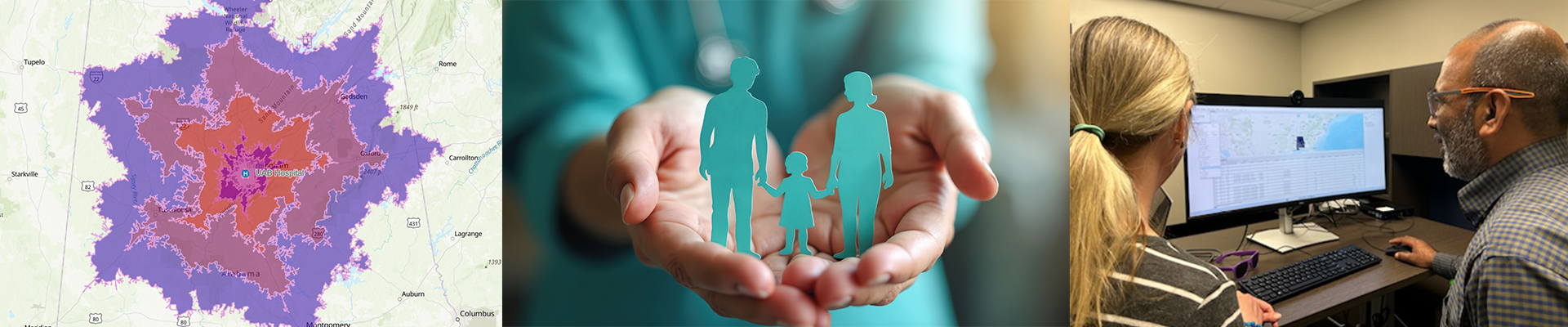
This TIERS+ series provides the conceptual, methodological, and applied skills needed to incorporate elements such as socio-environmental factors into population research. The program focuses on non-medical drivers of health measured at the individual, household, and small-area (neighborhood or community) levels. By the end of the series, participants will be prepared to design studies that quantify how these factors influence disease development, progression, management, and outcomes, as well as evaluate interventions to address their effects.
This series will be conducted in a hybrid format. Four didactic modules will be delivered virtually, occurring monthly on the 4th Wednesday of the month from 12-1 PM (CT) starting Jan. 28, 2026. Two hands-on, in-person workshops will be delivered in Summer 2026 on the campus of the University of Alabama at Birmingham (more info coming soon). Click here to register for all virtual events in this series now
 Session 1: "Concepts, Measures, and Frameworks"
January 28, 2026; 12-1 (CT) PM via Zoom
Presenter: Gabriela Oates, PhD - View Recording Now
Learning Objectives:
- Distinguish between various socio-environmental concepts and use proper terminology
- Understand socio-environmental domains and types of measures
- Select appropriate levels of socio-environmental measures for your study
- Identify research frameworks important in socio-environmental research
- Develop a conceptual model for your research project
_______________________________________________________________________________________________________________________________________________________________________________________________
Session 2:"Individual-level Socio-environmental Measures and Resources"
February 25, 2026; 12-1 (CT) PM via Zoom
Presenter: Elizabeth Baker, PhD - View Recording Now
Learning Objectives:
- Explain the types of individual-level socio-environmental measures
- Identify screening measures for health-related social needs
- Choose a screening tool or data source for your study
- Understand basic principles of survey design
- Use the NIH PhenX Toolkit and the UAB SDOH Toolkit
_______________________________________________________________________________________________________________________________________________________________________________________________
Session 3:"Area-level Socio-environmental Measures and Resources"
March 25, 2026; 12-1 (CT) PM via Zoom
Presenter: Ariann Nassel, MA and Elizabeth Baker, PhD - View Recording Now
Learning Objectives:
- Understand Census geography
- Define what constitutes an area-level socio-environmental measure
- Describe the difference between area-level variables and composite indices
- Select appropriate area-level measures for your research study
- Identify area-level socio-environmental data sources and measures for your study
_______________________________________________________________________________________________________________________________________________________________________________________________
Session 4:"Integrating Socio-environmental measures and patient data"
April 22, 2026; 12-1 (CT) PM via Zoom
Presenter: Lucia Juarez, PhD and Elizabeth Baker, PhD - View Recording Now
Learning Objectives:
- Describe the types of socio-environmental data available in EMR
- Understand the steps for integrating area-level socio-environmental measures with patient data
- Identify appropriate levels of data aggregation and composite measure development
- Select appropriate statistical methods for linked datasets