Dental Sealants for Children: A Simple Way to Prevent Cavities
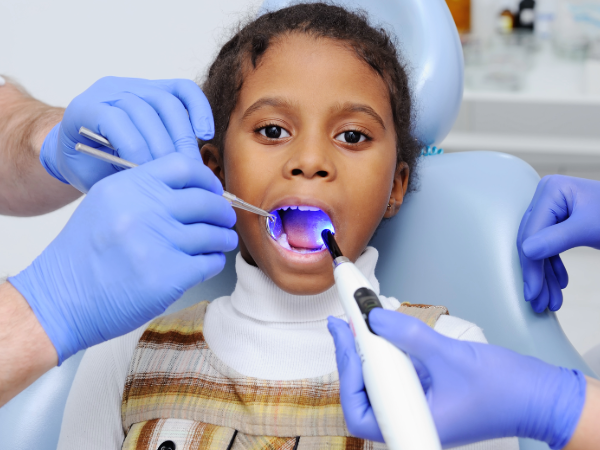 Cavities are one of the most common oral health problems in children, but a quick and painless preventive treatment can provide years of protection.
Dental sealants are thin protective coatings placed on the chewing surfaces of the back teeth, where cavities are most likely to develop. By sealing the deep grooves and pits in molars, sealants help keep food particles and bacteria from collecting in areas that can be difficult to clean with brushing alone.
Cecilia Cheon, D.M.D., M.S., a pediatric dentistry expert and director of the UAB Dentistry Pediatric Dentistry clinic, says sealants are one of the most effective tools available for preventing tooth decay.
“Dental sealants are an effective way to protect children's teeth during the years they are most vulnerable to decay,” Dr. Cheon said. “This is a quick and easy preventive measure that can save families time, money, and discomfort in the long run.”
How dental sealants work
The chewing surfaces of molars contain natural grooves and fissures that can trap food and bacteria. Even with good brushing habits, these areas may be difficult to clean thoroughly.
Dental sealants create a protective barrier over these vulnerable surfaces, helping prevent decay before it starts. Sealants are most commonly placed on permanent molars, but some teenagers and adults at higher risk for cavities may also benefit from treatment.
When children should get dental sealants
Children typically receive sealants shortly after their first permanent molars erupt, usually around age 6.
A second application is often recommended when the second set of permanent molars comes in, typically around age 12.
Applying sealants soon after these teeth erupt helps protect them during years when they may be especially susceptible to tooth decay.
What to expect during the procedure
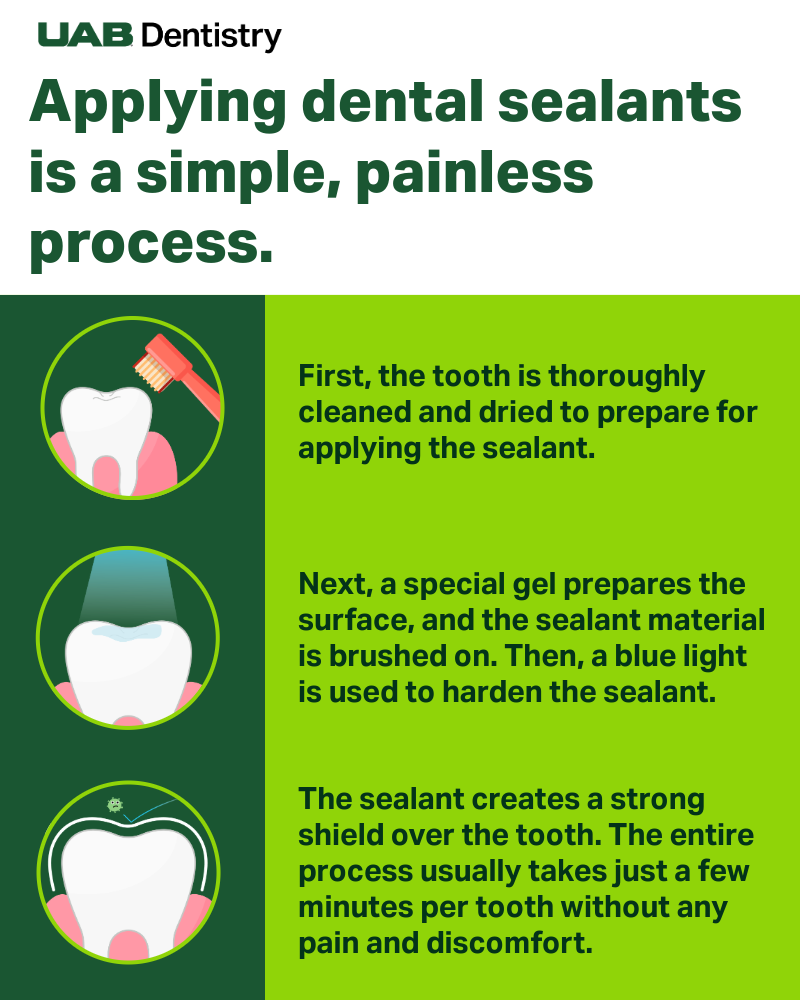 See text alternative for infographic Applying dental sealants is fast, simple, and painless.
After a tooth is cleaned and dried, a special solution is used to prepare the tooth surface. The sealant material is then painted onto the tooth and hardened with a curing light. The process takes only a few minutes per tooth and does not require drilling, injections, or anesthesia.
How effective are dental sealants?
Dental sealants have been shown to significantly reduce the risk of cavities in permanent molars.
With proper care, sealants can remain effective for several years and may last up to nine years. Routine dental visits allow providers to monitor sealants and determine whether repairs or reapplication are needed.
Why regular dental visits still matter
Sealants are an important part of preventive dental care, but they work best when combined with good oral hygiene habits and regular dental checkups.
“Regular dental visits are key not only for monitoring sealants but for maintaining overall oral health,” Dr. Cheon said. “They allow us to catch small problems early before they become bigger issues, and they help reinforce good hygiene habits that protect children's teeth for life."
Routine visits also give dental providers an opportunity to evaluate growing teeth, monitor oral health, and provide guidance tailored to each child's needs.
Understanding insurance coverage
Many dental insurance plans cover sealants for children and teenagers because they are considered a preventive service. Some school-based and community oral health programs also offer sealants at reduced or no cost for eligible families.
Parents should talk with their child's dental provider about whether sealants are appropriate and what coverage options may be available.
Building a foundation for lifelong oral health
Preventing cavities starts with consistent daily habits and regular preventive care.
Brushing twice a day with fluoride toothpaste, limiting sugary snacks and drinks, attending routine dental visits, and considering dental sealants can help protect children's teeth during critical years of development.
Parents are also encouraged to establish a dental home early in life so children can receive ongoing preventive care and build healthy oral hygiene habits that last into adulthood.
About UAB Dentistry Pediatric Dentistry
The UAB Dentistry Pediatric Dentistry provides comprehensive dental care for infants, children, adolescents, and patients with special health care needs. Our team focuses on prevention, education, and creating positive dental experiences that help children develop healthy habits for life.
Book an Appointment: (205) 934-4546
Article Attribution
Written by: Lynne Jarreau
Medically Reviewed by: Kyounga “Cecilia” Cheon, D.M.D., M.S.
More Patient Education
Healthy Teeth for Kids: Oral Health Tips by Age
Why Age 7? UAB Dentistry Experts Explain the Importance of Early Orthodontic Visits