 Mission & Vision
The Pediatric Office for Improvement Science was created to realize improvement in patient outcomes for children across the state of Alabama by connecting departmental resources with divisional stakeholders, sharing opportunities for education and training, and advancing the quality of care using fundamentals of improvement science.
QI Directors

Adolfo Molina, MD, MSHQS

Emily Smitherman, MD
QI Faculty
Physician Quality Officers with the UAB Department of Pediatrics are established leaders in quality improvement informed by formalized training and dedication to improvement within and beyond their subspecialty. Through their engagement with the POISE office they will serve as resources for education and coaching to help advance the academic productivity of quality work across the Department.

Amy Cajacob, MD

Nicholas Cajacob, MD

David Galloway, MD

Samantha Hanna, MD

Meghan Harrison, M.D.

Rachel Kassel, M.D.

Ashley Moellinger, NP

Jeremy Loberger, MD

Jessica Schmitt, MD

Lece Webb, MD
Program Coordinator

Anne Kinyua
QI Resources
-
QI Resources
Below are resources developed at the Institute for Healthcare Improvement (IHI) and control chart templates developed at Cincinnati Children’s (CC). To access IHI resources you will need an account, however it is free to create an account. CC resources access will require a MedHub login. Should you have questions in how to use or access these resources, email us at: POISE@uabmc.edu
-
Control Charts
-
Key Driver Diagram
-
FMEA
-
PDSA Cycle orksheet
-
PPT banded templates
-
-
Education
- Coming Up: QI Writing Workshop
Join POISE for our annual QI Writing Workshop, open to all providers, staff and trainees—whether you have a project or are just getting started.
Learn the structure of a QI manuscript using SQUIRE guidelines, participate in guided writing sessions and leave with a manuscript draft while building a supportive writing community.
Dates: August 5, 12, 19, & 26, 2026
Time: 12:00 PM | Location: Zoom
Led by: Dr. Emily Smitherman
Register at here - Funding Opportunities
-
QI Project Assistance
There are multiple ways to get support from the POISE office. Should you want to engage with both the POISE office and Performance Improvement and gain the perspective of our range of improvement specialists, you can sign up for QI Office Hours below. If you have a specific question or would like ongoing coaching from one of our QI Faculty, please reach out to the POISE office at the contact below.
POISE Co-Directors: POISE@uabmc.edu
-
MOC Part 4
For information related to MOC Part 4 and to submit your project, click the link below: https://www.childrensal.org/maintenance-certification/maintenance-certification-overview
-
QI Biannually
The QI Quarterly was curated to keep leadership informed of our progress, review aspects of the office, and spotlight successes. If you’d like to be added to our distribution list, contact us at: POISE@uabmc.edu
QI Biannually: January: January - June 2026
QI Quarterly Volume 7: 2024 Review
QI Quarterly Volume 4: April - June 2023
QI Quarterly Volume 3: January - March 2023
QI Quarterly Volume 2: October - December 2022
-
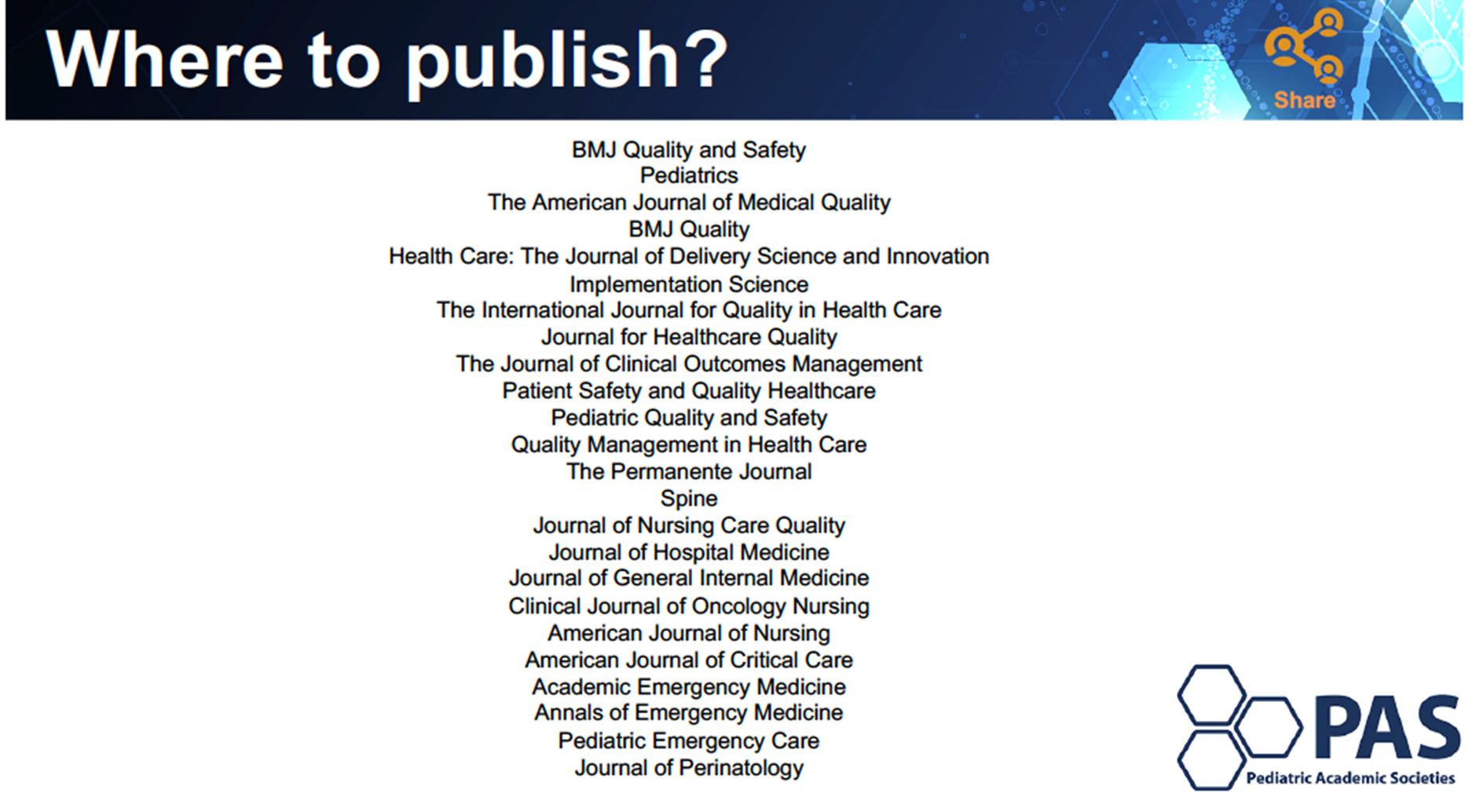
QI Journal List
Past Successes
-
QIing Your QI: A 13-Year Experience of a Pediatric Residency QI Program
QIing Your QI: A 13-Year Experience of a Pediatric Residency QI Program
Project Members: Adolfo Leonel Molina, Michele K. Nichols, Colm P. Travers, Stephanie Berger, Emily A. Smitherman, David P. Galloway, Rachel Kassel, Samuel Gentle, Andrea Kennedy, Chang L. Wu, Susan Walley
About the Initiative: This initiative aimed to strengthen a pediatric residency Quality Improvement (QI) program by improving the rigor and consistency of resident-led QI projects. Using the Model for Improvement, the program implemented phased interventions over 13 years, including structured didactics, mentorship, and enhanced resources to support residents in developing meaningful QI work.SMART Aim: The program aimed to increase the percentage of resident QI projects with clearly defined SMART aims to 90% and increase the use of QI graphs (run charts or SPC charts) to 75% by 2024. -
Improving Unplanned Extubation Rates in a Pediatric Intensive Care Unit
Improving Unplanned Extubation Rates in a Pediatric Intensive Care Unit
Project Members: Christy L. Thomas, Jordan M. Unlap, Caleb R. Watson, Ryan M. Jones, Robert W. Park, Vicki S. Shinick, Nancy M. Tofil, Jordan W. Newman, Jeremy M. Loberger
About the Initiative: This quality improvement initiative aimed to reduce unplanned extubations (UE) in a pediatric intensive care unit, a preventable event associated with increased morbidity and healthcare costs. Through a series of targeted interventions—including implementation of a prevention bundle, standardized practices, and the introduction of a dedicated QI respiratory therapist—the team worked to improve patient safety and reduce harm.
SMART Aim: The goal was to decrease the rate of unplanned extubations per 100 invasive ventilation days by 50% through multiple Plan-Do-Study-Act (PDSA) cycles.
-
Working Toward Viral Suppression and retention in care
Working Toward Viral Suppression and retention in care
Project Members: Claudette Poole, Celia Hutto, Audrey Lloyd, Heather Reylea, Christa Nevin, Sheila Stills, Lori Mills, Lauren Marefka, Nanyamke Foreman, Andy Yousef, Dayna Cook
About the Initiative: The goal in HIV care is to achieve sustained virologic suppression. By natioanl standards, a suppressed viral load is considered a viral load of < 200 copies/mL. Patients who are able to keep their viral load < 200 copies/mL have a much better prognosis and much lower risk of transmission. The factor that is most closely correlated to achieving sustained virologic suppression is remaining engaged in clinical care.
SMART Aim: For virologic suppression: the goal is to increase our percentage of patients with a viral load of < 200 from 81% to above the national percentage of 87% from 10/1/ 2022 to December 1, 2023