The UAB Lung Biology Program provides a cutting-edge and interdisciplinary hub for scientists, clinicians, and the next generation of researchers to accelerate understanding of lung biology through the translation of basic science discoveries into clinical applications.
The Lung Biology Program advances understanding of acute and chronic lung diseases through innovative research. Our mission is to uncover fundamental mechanisms of lung pathology and develop new therapies to improve global respiratory health. We foster a collaborative, multidisciplinary environment that translates basic science into clinical applications. We inspire the next generation of physician-scientists and Ph.D. scientists by integrating basic, translational, and clinical research. Guided by excellence and integrity, our vision is to transform respiratory science and improve lives affected by lung disease.
Program Collaborations
Currently, we have expanded to 56 members from diverse divisions and departments across campus. Figure 1 shows the formal collaborative interactions among program members. In addition, Figure 2 highlights all types of interactions taking place between members.
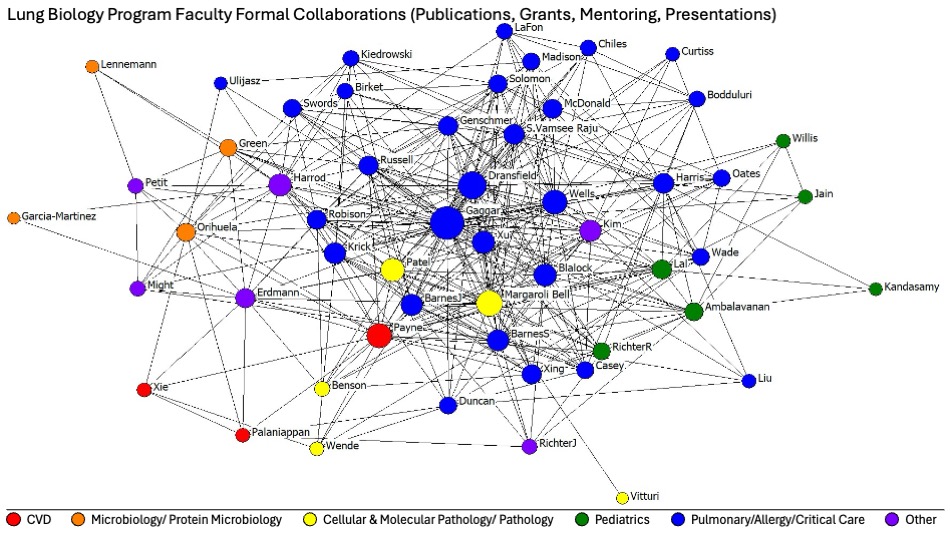 Figure 1. Lung Biology Program Faculty Formal Collaboration (Publication, Grants, Meeting, Presentation)
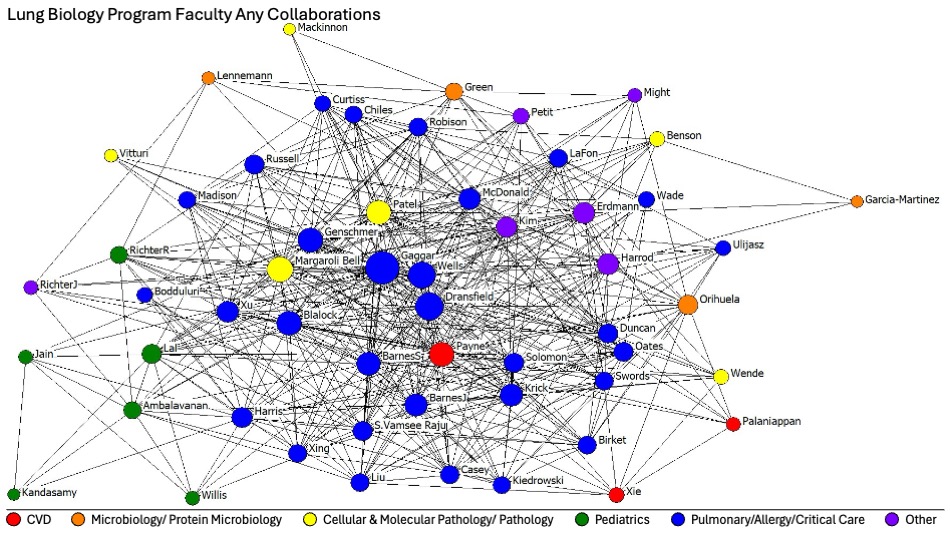 Figure 2. Lung Biology Program Faculty Any Collaboration
Network data were collected via a Qualtrics roster survey, where 56 Lung Biology Program faculty reported formal collaborations, including grants, publications, presentations, and co-mentorships. The responses were used to create a symmetrized social network matrix, which was analyzed with UCINET 6.802 and visualized using NetDraw 2.193. (Updated Aug 2025)
Our significant contributions to pulmonary research are reflected in high-impact publications that advance our understanding of lung disease mechanisms, airway infection, inflammation, and potential therapeutic targets. These collaborative studies highlight the breadth and impact of our research:
-
In the American Journal of Respiratory and Critical Care Medicine (April 2026), our collaborative study, “Self-propagating nature of pathogenic extracellular vesicles associated with smoking and chronic obstructive pulmonary disease”, investigated how pathogenic extracellular vesicles contribute to smoking-related lung disease and COPD.
-
In the Journal of Clinical Investigation (April 2026), “The EGFR regulates bacterial clearance in cystic fibrosis airway neutrophils” examined the role of epidermal growth factor receptor (EGFR) signaling in airway neutrophil function and bacterial clearance in cystic fibrosis.
-
In Nature Communications, we published two studies: One with Dr. Ulijasz's group, "A glyoxal-specific aldehyde signaling axis in Pseudomonas aeruginosa that influences quorum sensing and infection" (July 2025), reveals a new signaling mechanism in Pseudomonas aeruginosa. Another with Dr. Lal's group, "A lactobacilli-based inhaled live biotherapeutic product attenuates pulmonary neutrophilic inflammation" (August 2024), shows potential for inhaled probiotics to reduce lung inflammation.
-
In Cell Reports (August 2024), our collaboration with Dr. Snelgrove’s group, “Airway extracellular LTA4H concentrations are governed by release from liver hepatocytes and changes in lung vascular permeability”, explored how systemic factors and changes in lung vascular permeability influence airway inflammation and disease pathophysiology.
Our Research
The Lung Biology Program comprises a team of scientists focused on pioneering research in Pulmonary Medicine. Key areas of focus include protease and matrix biology, metabolomics and proteomics.
Our research employs a variety of experimental and analytical technologies, utilizing animal models such as the smoke mouse model of COPD, lung bacterial infection mouse model, lung cancer mouse model, and genetically modified mice. We also collect clinical specimens, including bronchoalveolar lavage fluid, biopsy samples, blood, and sputum. Additionally, we utilize on-site metabolomics analysis through the Targeted Metabolomics and Proteomics Lab (TMPL) and NMR analysis through the Structural Biology Lab.
Ongoing Studies
The Lung Biology Program is a team of scientists dedicated to pioneering basic and translational research in Pulmonary Medicine. Our primary focus areas include neutrophilic inflammation, protease impact, matrikines capability, biomarker characterization, and therapeutic targeting.
We utilize various experimental and analytical technologies, developing animal models such as the smoke mouse model of COPD, lung bacterial infection model, lung cancer model, and other genetically modified mice. We also collect clinical specimens, including bronchoalveolar lavage fluid, biopsy samples, blood, and sputum. Additionally, we leverage on-site metabolomics analysis through the Targeted Metabolomics and Proteomics Lab (TMPL) and NMR analysis through the Structural Biology Lab.
Our faculty are primarily based in the Bevill Biomedical Research Building, Community Health Service Building 20th, and Pittman Biomedical Research II. Being centrally located in the UAB Health Sciences complex provides unique opportunities for collaborative research with other basic and clinical investigators.
Neutrophilic Inflammation
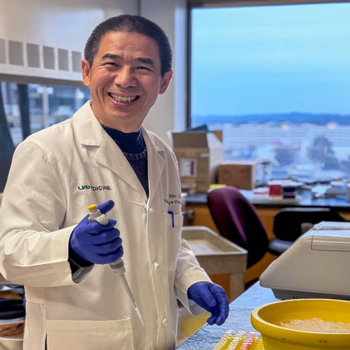
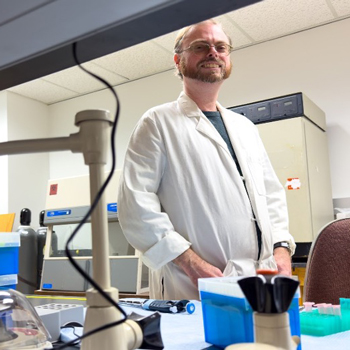
Our research focuses on the roles of neutrophils in chronic lung disease, particularly on unique modulators affecting neutrophilic inflammation and new mechanisms of protease release from these immune cells. We are also exploring how therapeutics impact neutrophil function.
Protease Impact
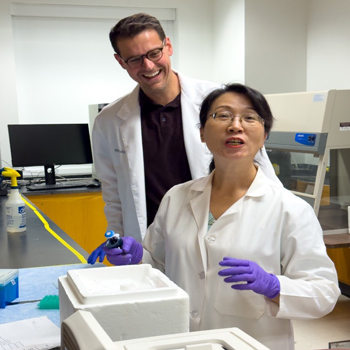
Our research investigates the impact of dysregulated protease activity in chronic lung disease. We characterize elevated protease levels and discover how these enzymes modulate immune regulation and cross-protease activation. These findings are crucial for understanding their role in pulmonary disorders.
Matrikines
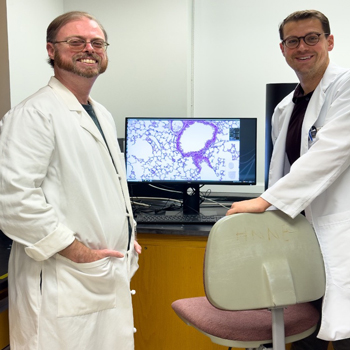
Our research in protease biology has identified a novel collagen-derived fragment, proline-glycine-proline (PGP), derived by a discrete proteolytic cascade, which was capable of signaling neutrophils in chronic lung disease. We recently discovered that this peptide is capable of inducing epithelial dysfunction in asthma and plays a key role in neutrophil activation during acute pulmonary infections.
Biomarkers & Therapeutic Targeting
Beyond our mechanistic studies in protease and neutrophil biology, we are characterizing the pattern of a variety of biomarkers in the progression of lung diseases such as COVID-19, CF, COPD, and IPF. These studies now offer a roadmap for therapeutic targeting in clinical trials.
Any questions? Reach out and let's talk.
We'd be delighted to talk with you about the Lung Biology Program. Contact us for more details.

Miki Jinno, Lung Biology Program Director, Program Director II
UAB Lung Health Center
933 19th Street South, CH19 | Birmingham, AL 35233
Office: (205) 996-1548 | Fax: (205) 975-5666
Send an Email

Rebecca Warnix, Research Financial Administrator
Basic Science Lab
845 19th Street South, BBRB830 | Birmingham, AL 35205
Office: (205) 934-4304
Send an Email