-
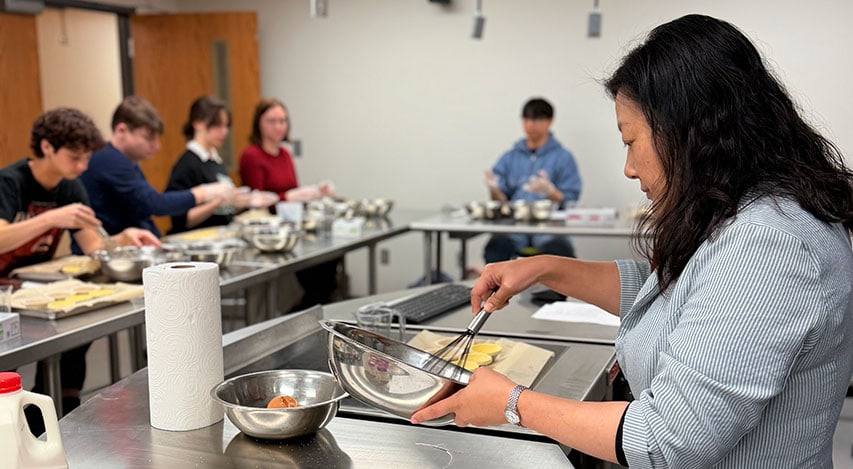
Students learned about different diets and discovered recipes from around the world while whipping up dishes in the Flavors of the World culinary series at UAB.
-
Students learned about different diets and discovered recipes from around the world while whipping up dishes in the Flavors of the World culinary series at UAB.
-
Students learned about different diets and discovered recipes from around the world while whipping up dishes in the Flavors of the World culinary series at UAB.
-
Students learned about different diets and discovered recipes from around the world while whipping up dishes in the Flavors of the World culinary series at UAB.
-
Students learned about different diets and discovered recipes from around the world while whipping up dishes in the Flavors of the World culinary series at UAB.
-
Students learned about different diets and discovered recipes from around the world while whipping up dishes in the Flavors of the World culinary series at UAB.
-
Students learned about different diets and discovered recipes from around the world while whipping up dishes in the Flavors of the World culinary series at UAB.
-
Students learned about different diets and discovered recipes from around the world while whipping up dishes in the Flavors of the World culinary series at UAB.
-
Students learned about different diets and discovered recipes from around the world while whipping up dishes in the Flavors of the World culinary series at UAB.
-
Students learned about different diets and discovered recipes from around the world while whipping up dishes in the Flavors of the World culinary series at UAB.
-
Students learned about different diets and discovered recipes from around the world while whipping up dishes in the Flavors of the World culinary series at UAB.
-
Students learned about different diets and discovered recipes from around the world while whipping up dishes in the Flavors of the World culinary series at UAB.
-
Students learned about different diets and discovered recipes from around the world while whipping up dishes in the Flavors of the World culinary series at UAB.
A global cooking class at the University of Alabama at Birmingham this year had students cooking up a tasty cultural experience.
The Flavors of the World Cooking Series is a collaboration between UAB’s Department of World Languages and Literatures, International Studies, and the Department of Nutrition Sciences. The series is powered by a student engagement grant from the College of Arts and Sciences.
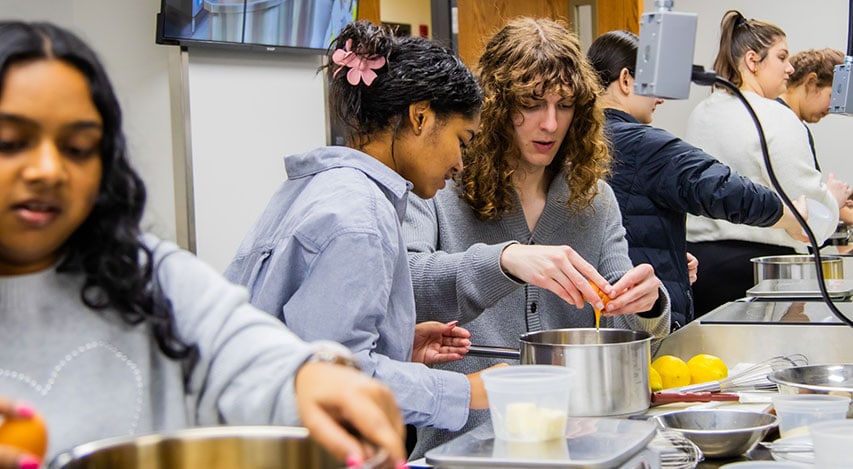
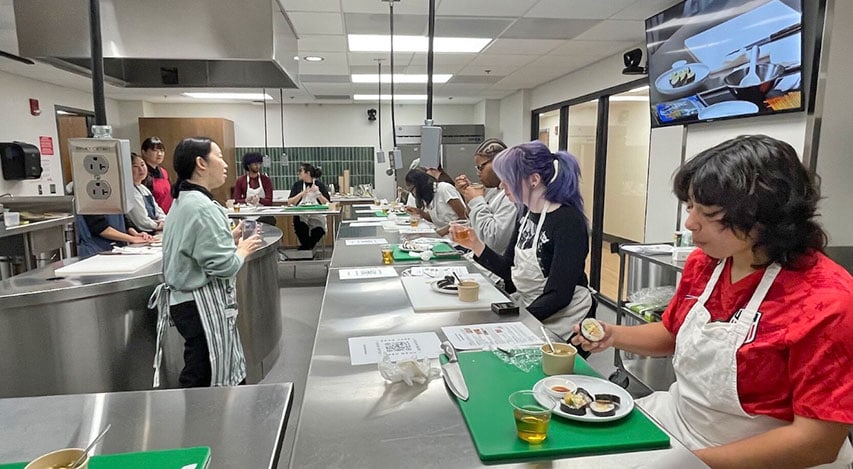
The initiative featured five hands-on culinary workshops, one for each language taught at UAB — Spanish, French, Japanese, German and Chinese. These lessons were open to all students across the university and brought together participants from a variety of academic disciplines: 75 students representing 35 majors. Designed to provide learning opportunities through experience, the lessons connected students with foods’ cultural roots, language, culture and nutrition. Led by World Languages and Literatures faculty, the lessons took place in the Department of Nutrition Sciences’ state-of-the-art teaching kitchen, within the UAB School of Health Professions.
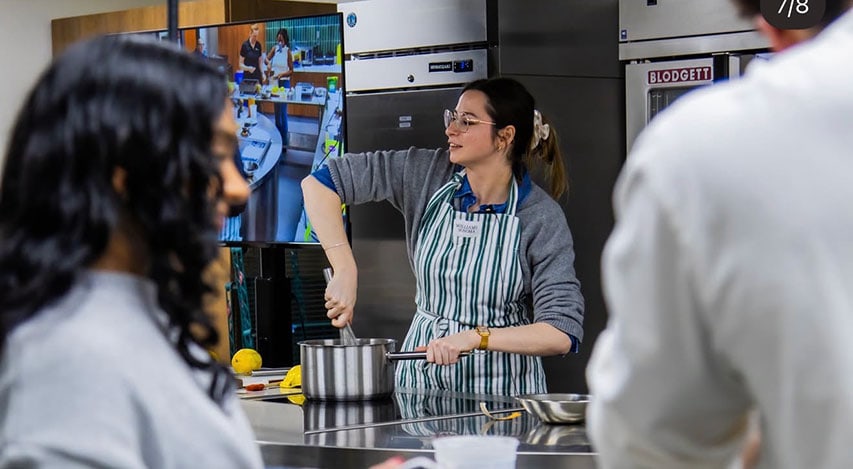
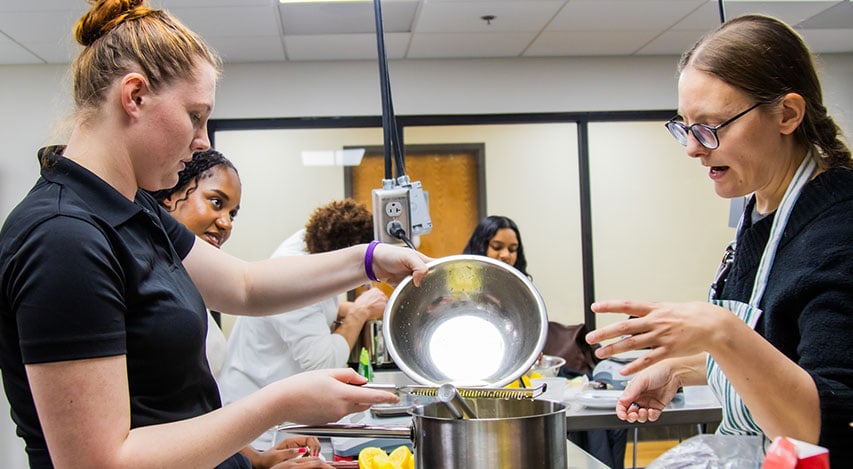
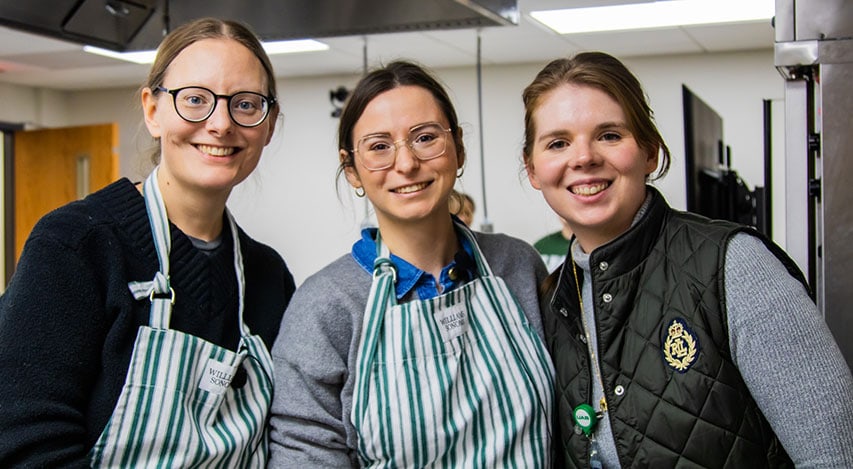
The goal was to help students discover different recipes, and to teach them about different diets, from around the world, says Assistant Professor of French Marie Dufay-Verbié, Ph.D., who led the series and each of the sessions with the help of other faculty.
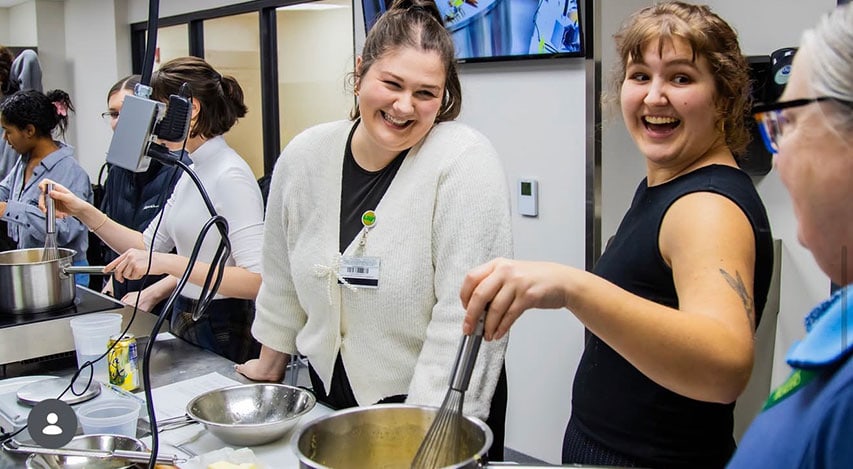
“Through each event, we got to see students connect, collaborate and learn in ways you do not always get in a classroom,” Dufay-Verbié said. “That is especially rewarding. It was such a joy to see everyone cooking, learning and sharing this experience.”
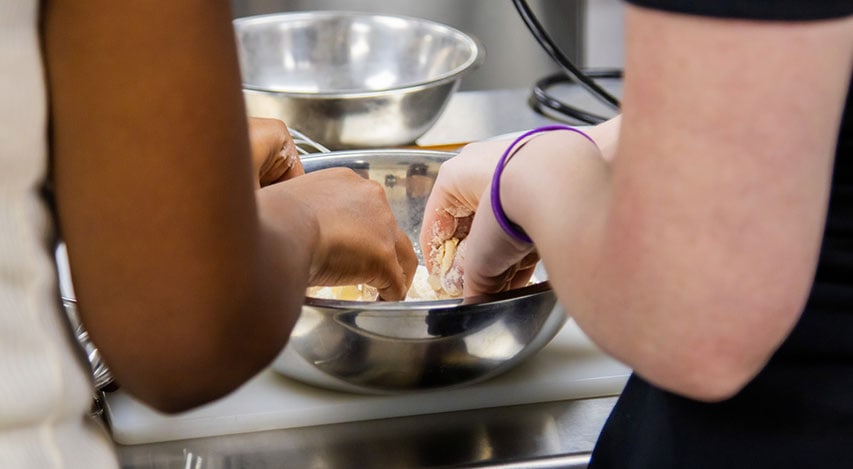
Under the guidance of John K. Moore, Ph.D., professor of Spanish and associate dean in the college, students whipped up a tortilla Española, a Spanish potato omelet. Food is motivating, and an important setting where communication takes place, Moore told students.
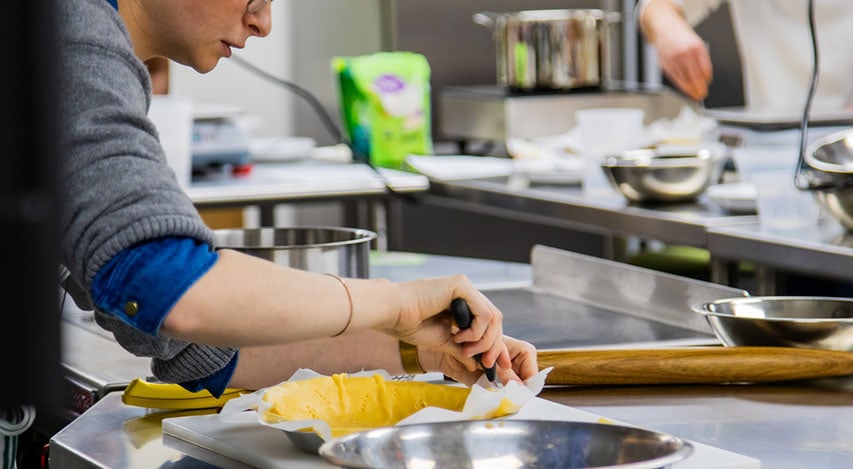
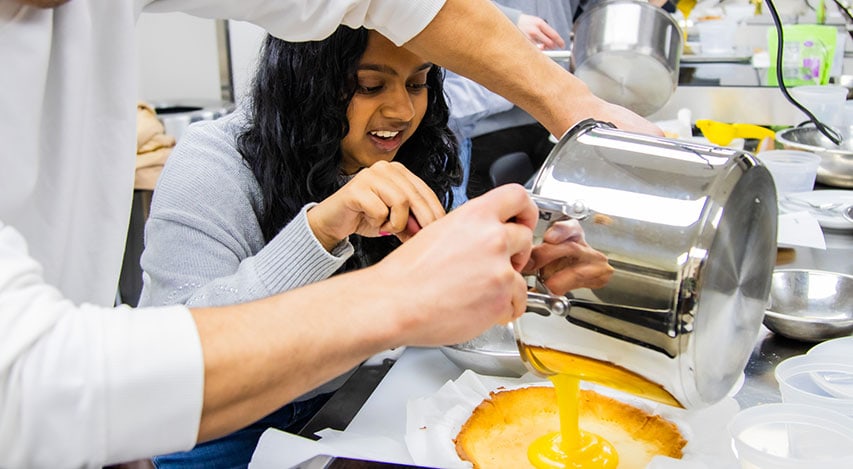
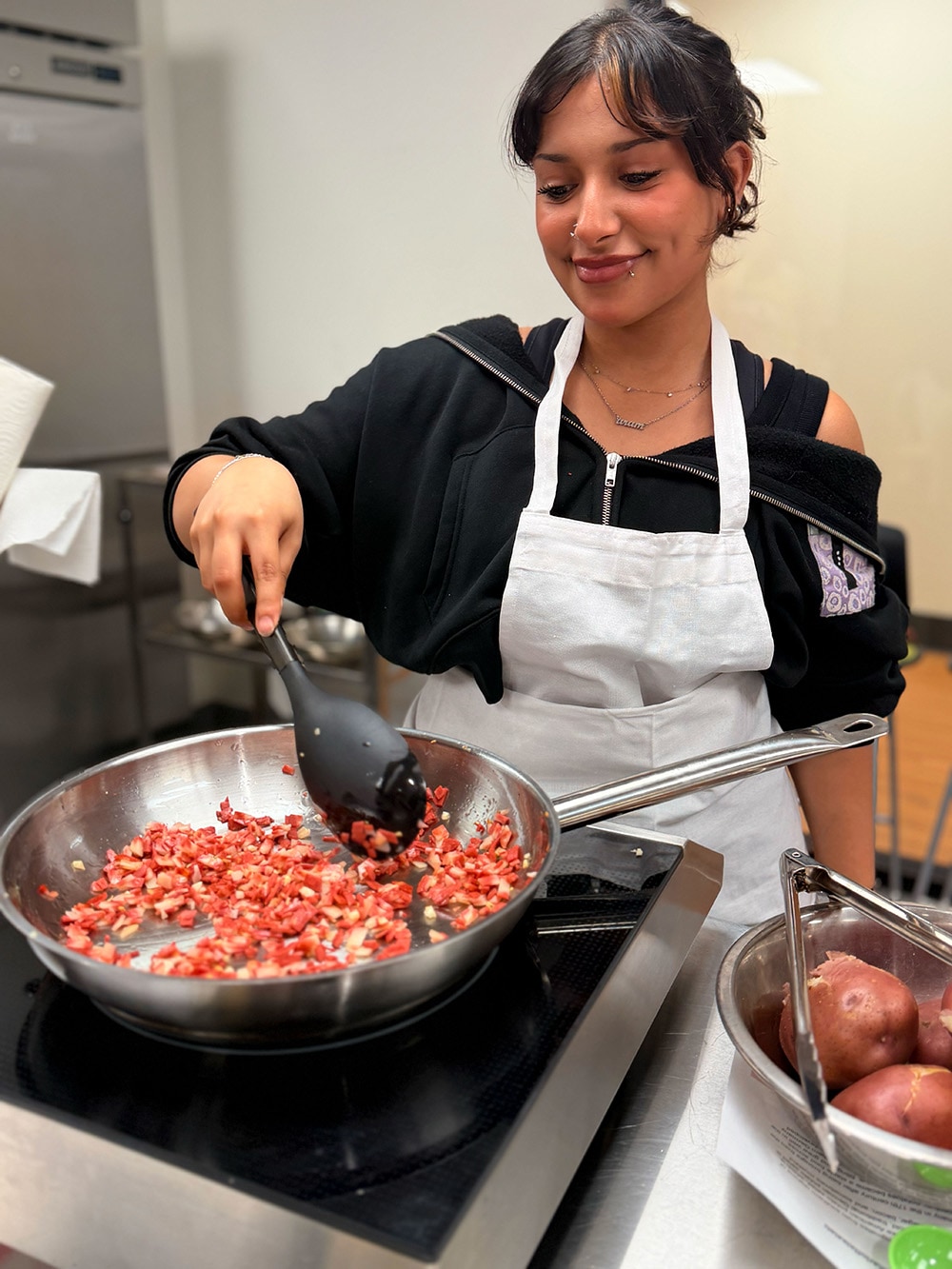 The Flavors of the World Cooking Series featured culinary and cultural lessons for each language taught at UAB: Spanish, French, Japanese, German and Chinese.Next, the group explored French cuisine by baking a classic tarte au citron, or lemon tart, led by Dufay-Verbié with help from Assistant Professor of French Maury Bruhn, Ph.D.
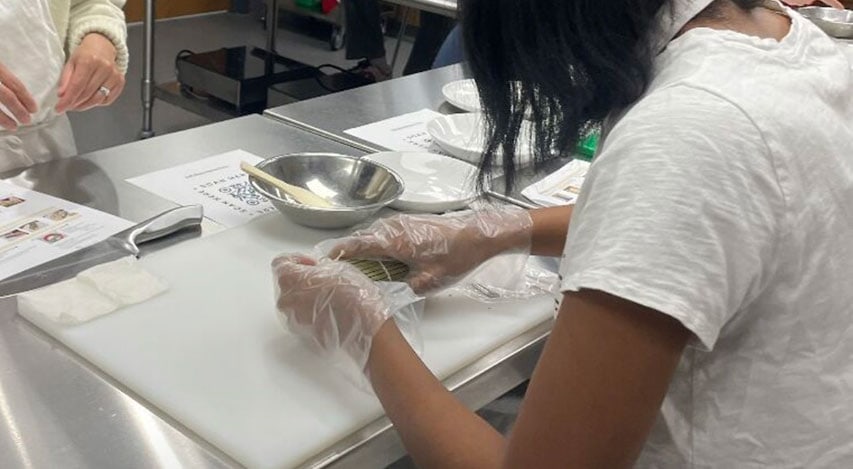
For the third lesson, students took a culinary journey to Japan and learned to prepare traditional sushi rolls, under the guidance of Assistant Professor of Japanese Yumi Takamiya, Ph.D., and members of the local Japanese community.
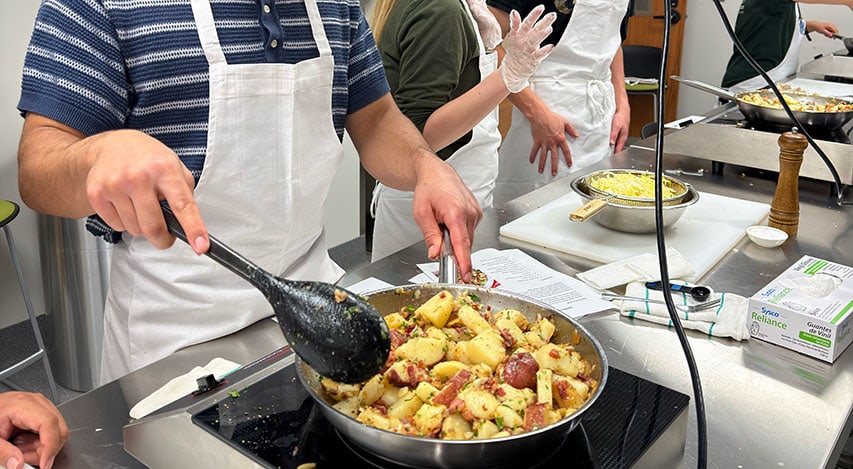
To learn about German food, they prepared a traditional German potato salad (kartoffelsalat) and a cabbage salad (krautsalat), with recipes chosen by UAB Assistant Professor of German Adam Toth, Ph.D.
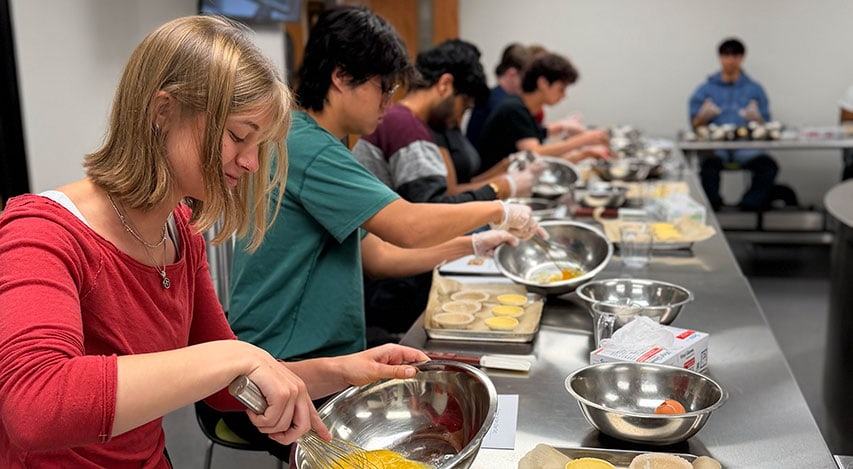
On April 20, the group ended the series with Chinese cuisine and made egg tarts together with Ling Ma, Ph.D., instructor of Chinese.
Developed and carried out during Dufay-Verbié’s first year at the university, the series provided an opportunity to build connections across departments, create new learning spaces for students, and contribute to the broader academic and campus community in a meaningful way. It was strengthened through a formal partnership with the Department of Nutrition Sciences, whose faculty contributed during each session with discussions around health and wellness, as students learned about the nutritional aspects of the dishes they prepared. By bringing together faculty, community members and students in a collaborative environment, the program fostered a holistic learning experience for all students.
Assistant Professor Kelly Berg and Teaching Kitchen Manager Maddison Garcia, both registered dietitians, worked with the group and did all the “behind the scenes” work for the series, Dufay-Verbié says.
“The incredible team in Nutrition Sciences, and their support and enthusiasm, made all these events possible,” she said. “Without their dedication, this whole series would never have happened.”
Student feedback was overwhelmingly positive and meaningful, with 100 percent of students giving top ratings. Students acquired new vocabulary related to ingredients and culinary techniques, while others emphasized a deeper cultural understanding, with one student reflecting that the experience “made me understand more about the people and their culture.”
“Many students expressed appreciation for the authenticity of the sessions, noting that they enjoyed learning how dishes are prepared ‘the way traditional people make it in the region,’” Dufay-Verbié said.