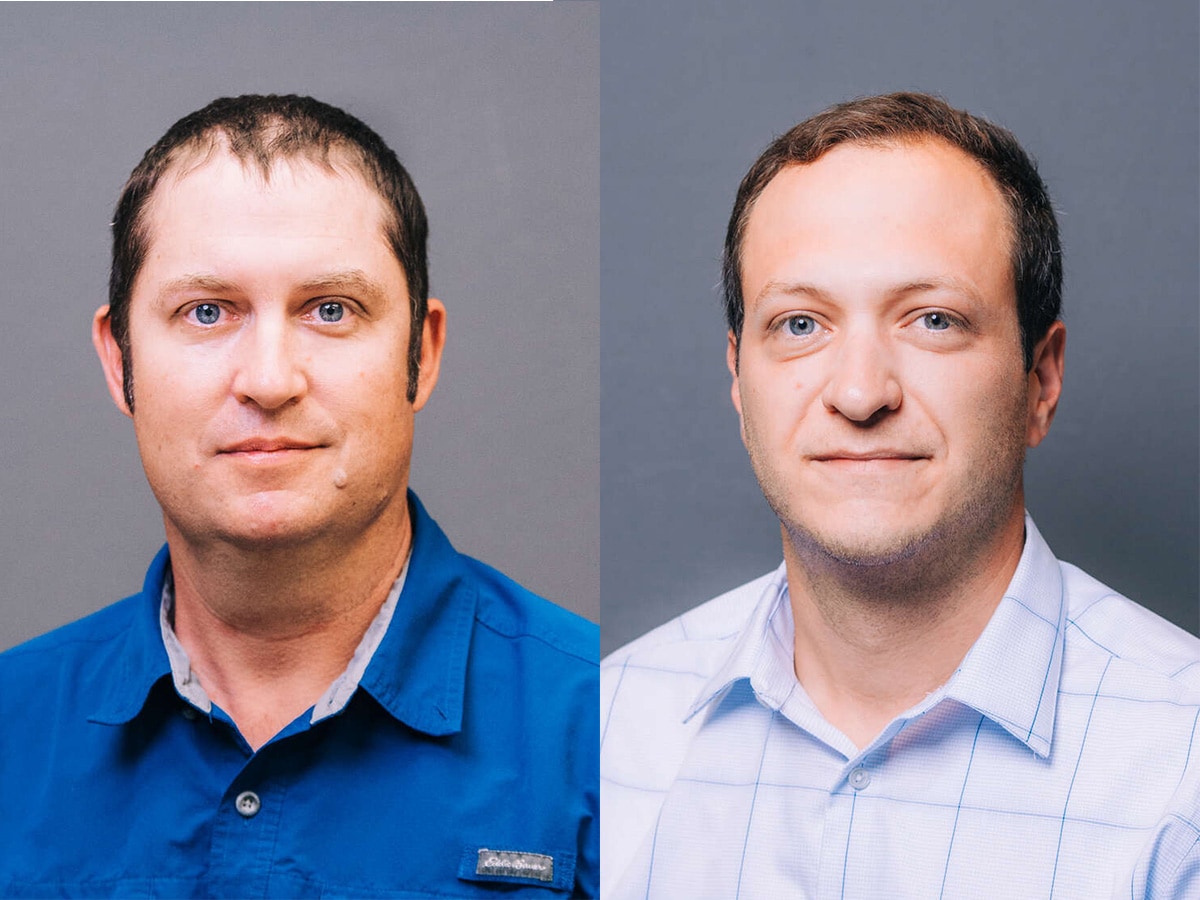
 R. Glenn King and J. Stewart NewA new study from investigators at the University of Alabama at Birmingham shows that immune cells called T cells help make a diverse population of anti-carbohydrate antibodies after humans are exposed to microbes early in life. These antibodies recognize pathogens, help remove stressed and dying cells, and may have roles in the development of Type 1 diabetes and asthma. Published in Immunity, the work could ultimately lead to better therapies.
When cells are stressed or dying, sugars attached to proteins within cells and on their surfaces become exposed. Anti-carbohydrate antibodies then mark these cells and molecules for removal by the immune system. These antibodies also recognize microbes with similar sugar coatings, keeping the gut microbiota in check and mobilizing against pathogens like group A Streptococcus, which causes diseases such as strep throat.
In animal models, the gut microbiome prompts the production of anti-carbohydrate antibodies, which undergo very few mutations. However, it is unclear how humans make these molecules.
“In our earlier work, we noticed some genetic signatures in antibody genes that suggested there was more to it in humans,” said J. Stewart New, who was an instructor at the UAB Marnix E. Heersink School of Medicine Department of Microbiology when he helped lead the study. He is now director of Computational Discovery at Incyte.
Becoming an antibody factory
In the current study, the team used the group A Streptococcus carbohydrate antigen, or GAC, to probe for antibodies against the monosaccharide N-acetyl glucosamine, or GlcNAc, in human samples. GAC has many GlcNAcs on it, so each molecule can bind many antibodies, and humans are ubiquitously exposed to this and similar carbohydrate-based antigens from other microbes.
Their experiments showed that human GlcNAc antibodies are made soon after birth in germinal centers, which are dynamic immune structures. In one part of the germinal center, B cells that were recently exposed to an antigen rapidly multiply and mutate. Then, B cells move to the other part of the structure where T cells test their binding abilities. The B cells with the best attributes go on to become antibody factories.
“Historically, people didn’t think that polysaccharides would prompt B cells to participate in germinal centers because T cell antigens are almost always peptide fragments,” said R. Glenn King, associate professor at the Department of Microbiology. “We think GlcNAc is probably associated with proteins that could potentially be T cell antigens, so the carbohydrate-containing antigens are processed in much the same way as a protein antigen.”
Unlike mouse anti-carbohydrate antibodies, human GlcNAc antibodies had many mutations, a sign that their B cells had been trained in a germinal center. These B cells also were in samples of human tonsils, an immune tissue where germinal centers can form, and they expressed genes indicative of acquiring T cell help.
Although the antibodies had diverse sequences from person to person, they still could bind the same structure — GlcNAc. “Humans are using different gene segments that we diversify in our own unique ways to fill a need,” New said.
The results could have implications for human disease, especially if antibiotics are over-used and the immune system does not have a chance to refine the antibody repertoire toward GlcNAc over multiple infections.
“That could make you more susceptible to certain autoimmune or allergic diseases that would normally be modulated by GlcNAc-reactive antibodies,” King said.
The Immunity article, “Human anti-glycan reactivity emerges from B cells utilizing private gene rearrangements that are affinity maturated in germinal centers,” was led by corresponding authors King and John F. Kearney, both of the UAB Heersink School of Medicine Department of Microbiology.
Co-authors are New, Amanda R. Callahan and Julia N. Burke, Department of Microbiology; Christopher F. Fucile and Alexander F. Rosenberg, UAB Informatics Institute; and Randall S. Davis and Wayne L. Duck, Department of Medicine.