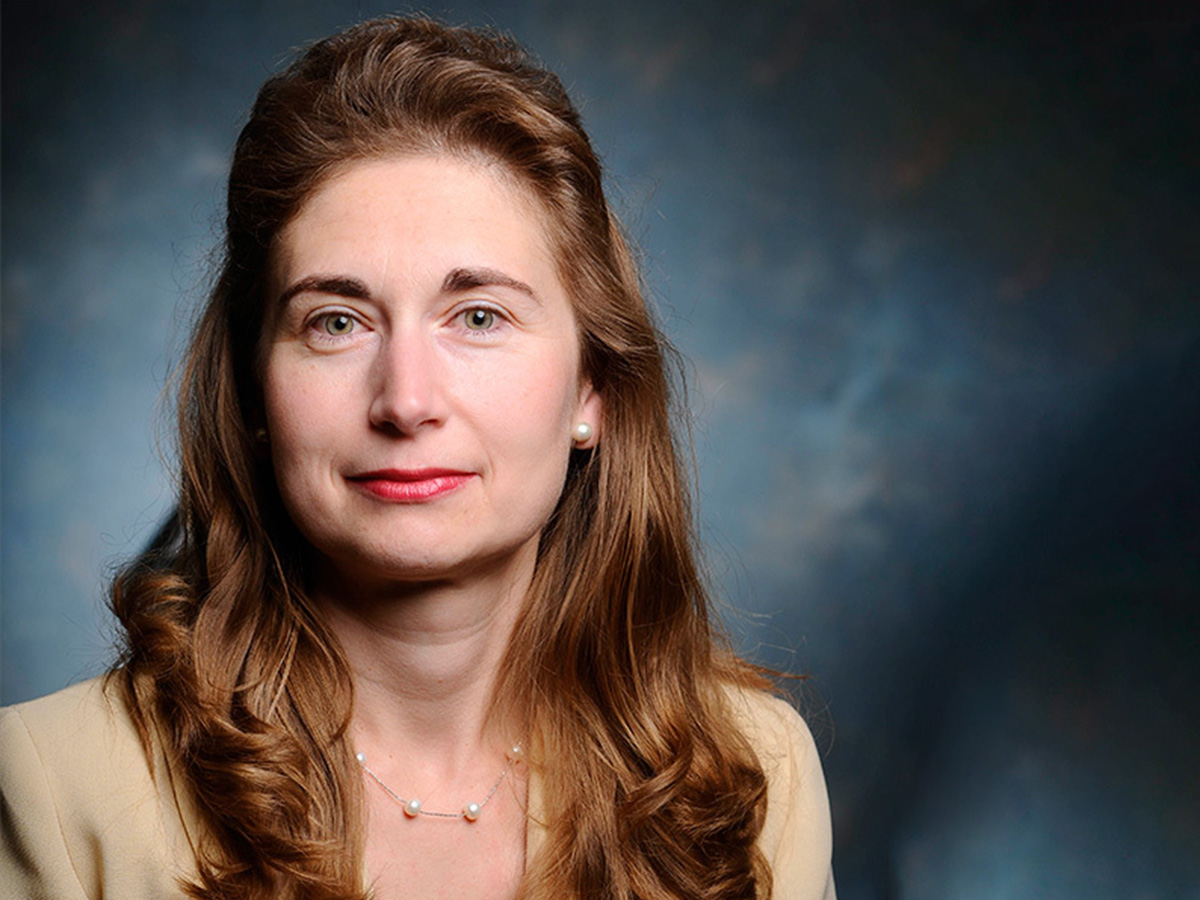
 Anath Shalev, M.D., and her team have discovered a potential solution to weight regain that occurs after stopping GLP-1 medications through the oral drug TIX100. Researchers at the University of Alabama at Birmingham have uncovered a potential solution to one of the biggest challenges in modern obesity treatment: rapid weight regain after stopping GLP-1 medications, including semaglutide or tirzepatide.
In preclinical findings, the investigational new oral drug TIX100 completely prevented weight rebound in mouse models after semaglutide was stopped — a discovery that lays the groundwork for human clinical trials and signals the possibility of the first therapy effective for maintaining weight loss after GLP-1 treatment.
The peer-reviewed study, published today in Diabetes, Obesity and Metabolism, was led by Anath Shalev, M.D., director of the UAB Comprehensive Diabetes Center and professor in the Division of Endocrinology, Diabetes and Metabolism.
The challenge with GLP-1s
GLP-1 medications have revolutionized treatment for obesity and Type 2 diabetes. Yet many patients often discontinue these medications due to gastrointestinal side effects such as nausea and diarrhea, loss of lean muscle mass, the need for injections, or high costs.
As a result, half of patients stop within one year and 70 percent within two. After discontinuation, most regain significant weight — often reversing most of what they initially lost.
Recent University of Oxford research shows people return to their pre-treatment weight within 1.7 years on average after stopping treatment with any weight management medication, including semaglutide or tirzepatide.
TIXiMED began in 2021 as a startup in the Bill L. Harbert Institute for Innovation and Entrepreneurship as a way for UAB Heersink School of Medicine Professor Anath Shalev, M.D., to develop this exciting new approach based on her decades-long research and discovery around TXNIP into a novel treatment option for people with diabetes.
Promising results with TIX100
TIX100, originally developed as an inhibitor of thioredoxin-interacting protein, or TXNIP, a protein that Shalev discovered is linked to beta cell death and islet dysfunction in diabetes, has shown potential benefits in weight regulation.
In the newest study, mouse models rendered obese on a high-fat diet were treated with semaglutide for two weeks, resulting in significant weight loss despite ongoing high-fat feeding.
After stopping semaglutide, mice that received oral TIX100 maintained their reduced weight and showed no significant regain over four weeks. In contrast, the control group rapidly regained all lost weight.
Sustained weight loss in TIX100-treated mouse models was linked to reduced fat mass, not lean mass. The weight loss was also linked to lower food intake and decreased leptin levels, consistent with improved leptin sensitivity and appetite regulation. Leptin is a hormone produced by fat cells that regulates appetite and helps maintain body weight. In obesity, the body’s sensitivity to the functions of leptin is reduced.
TIX100, developed by UAB startup TIXiMED, Inc., has already received the Food and Drug Administration’s investigational new drug status for application in Type 1 and Type 2 diabetes and was proved safe and well-tolerated in a Phase 1 human trial. Shalev hopes these findings will pave the way for a human clinical trial to evaluate TIX100’s effectiveness in maintaining weight loss.
“We are now also planning to pursue future clinical trials for weight maintenance in humans,” Shalev said.
Because TIX100 does not act via GLP-1 receptors, it would not, in theory, have the gastrointestinal side effects associated with GLP-1s, Shalev says. Unlike GLP-1s, TIX100 did not lead to any loss of lean mass either.
“If the weight maintenance observed in these preclinical studies is validated in humans, TIX100 could become a novel, non-GLP-1 option to support sustained weight management after medical weight loss intervention, addressing this important unmet need in the treatment of overweight and obesity,” Shalev said.
Other collaborators on this study include SeongHo Jo, Ph.D., Junqin Chen, Ph.D., Gu Jing, Ph.D., and Guanlan Xu, Ph.D., UAB Division of Endocrinology, Diabetes, and Metabolism; and Peng Li, Ph.D., UAB School of Nursing.
At UAB, Shalev is the Nancy R. and Eugene C. Gwaltney Family Endowed Chair in Juvenile Diabetes Research.