By Pareasa Rahimi
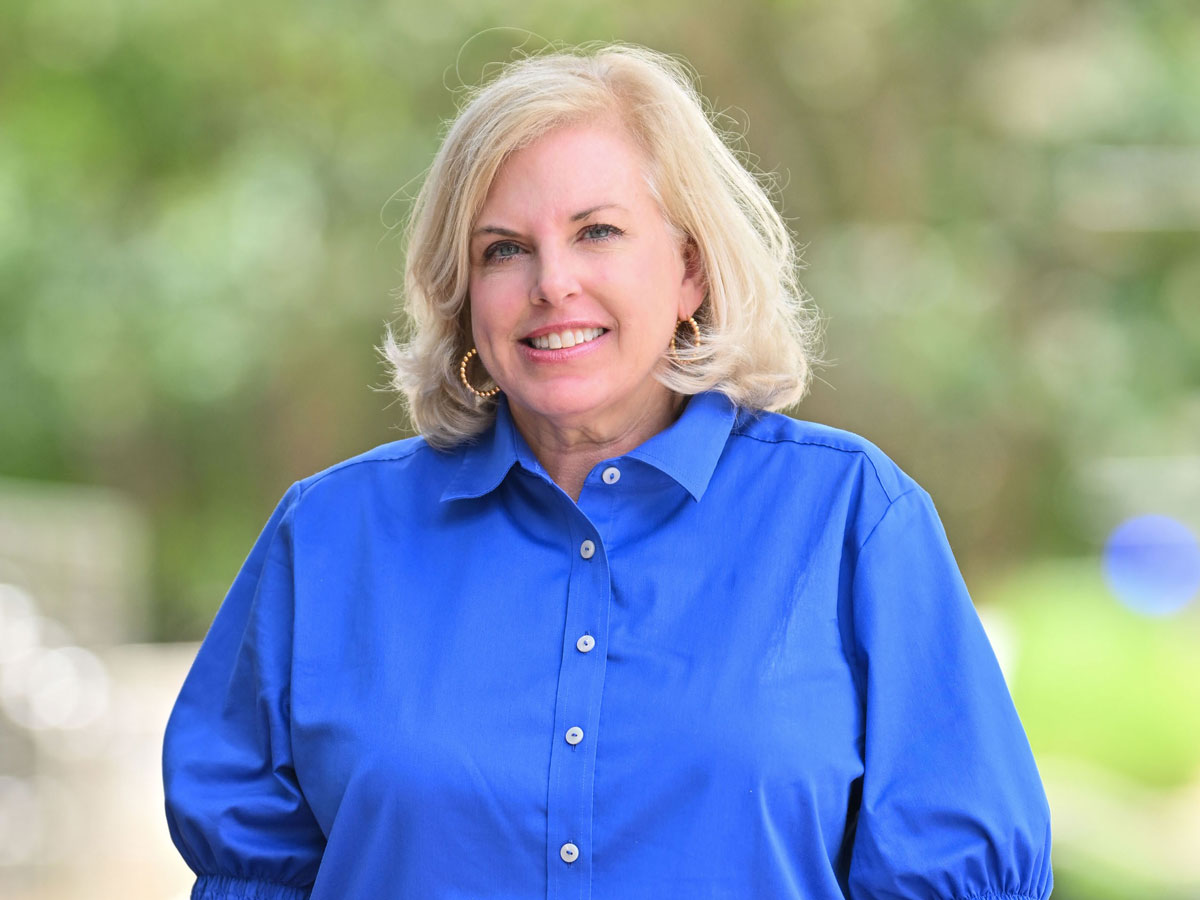
As Director of Community Partnerships and Education within the UAB Marnix E. Heersink School of Medicine Center of Clinical and Translational Science (CCTS) Clinical Research Support Enterprise (CReSt), Meredith Fitz-Gerald, RN, MSN (MSN 2013), leads a team of over 25 professionals, managing more than 150 active clinical trials across UAB, the Birmingham VA Medical Center and Children’s of Alabama. She is committed to providing patient-centered care while supporting the next generation of clinical research staff.
“I’ve always been very cognizant of making sure our patients are well taken care of and that I am their advocate,” Fitz-Gerald said. “In clinical research, you form that relationship with your patients and really take the time to be their educator. Clinical Coordinators wear numerous hats—sometimes it’s being their counselor, sometimes it’s connecting them with the right provider or looking at labs and referring them to specialists. Taking the time to build trust and develop a relationship is so rewarding. I see the impact clinical research can have on our patients’ and their families’ lives, and I feel lucky that I have been able to interact with some wonderful patients and physicians.”
Fitz-Gerald first began practicing as a nurse in the Burn and Trauma Unit at UAB Hospital before transitioning to Labor and Delivery and later to Open Heart Surgery. She went on to join the Preventive Cardiology Research team at UAB Medicine as a Research Nurse Coordinator for clinical trials under the leadership of Vera Bittner, MD, MSPH.
“Becoming a clinical research nurse was so eye opening,” Fitz-Gerald said. “I had no idea this nursing career existed, and training was mostly on the job, but Dr. Bittner was a great mentor.”
Eager to expand her knowledge and skillset, Fitz-Gerald joined one of the School’s first cohorts of the Clinical Research Management Certificate and returned for her Master of Science in Nursing degree with a CRM specialty. She appreciated how clinical research management allowed her to educate her patients and give them the time and attention they needed.
“I knew I wanted to go back to school, and when the School of Nursing launched the CRM program, it was a perfect fit,” Fitz-Gerald said. “I met with a nurse recruiter and shared that I was interested in better hours and wanted to start a family, and she asked if I’d heard of clinical research. She connected me with a nurse manager, and after shadowing, I realized there is a lot of one-on-one patient contact. Once I fell into it, I fell in love with it.”
Through connections made in the program, Fitz-Gerald joined a new unit at UAB, Clinical Research Support, where she helped launch and develop several education programs, including orientation, research training and investigator training.
Over the past 24 years, she has advanced from Coordinator to Manager and, for the past 13 years, has served as Director.
A personal connection to clinical research
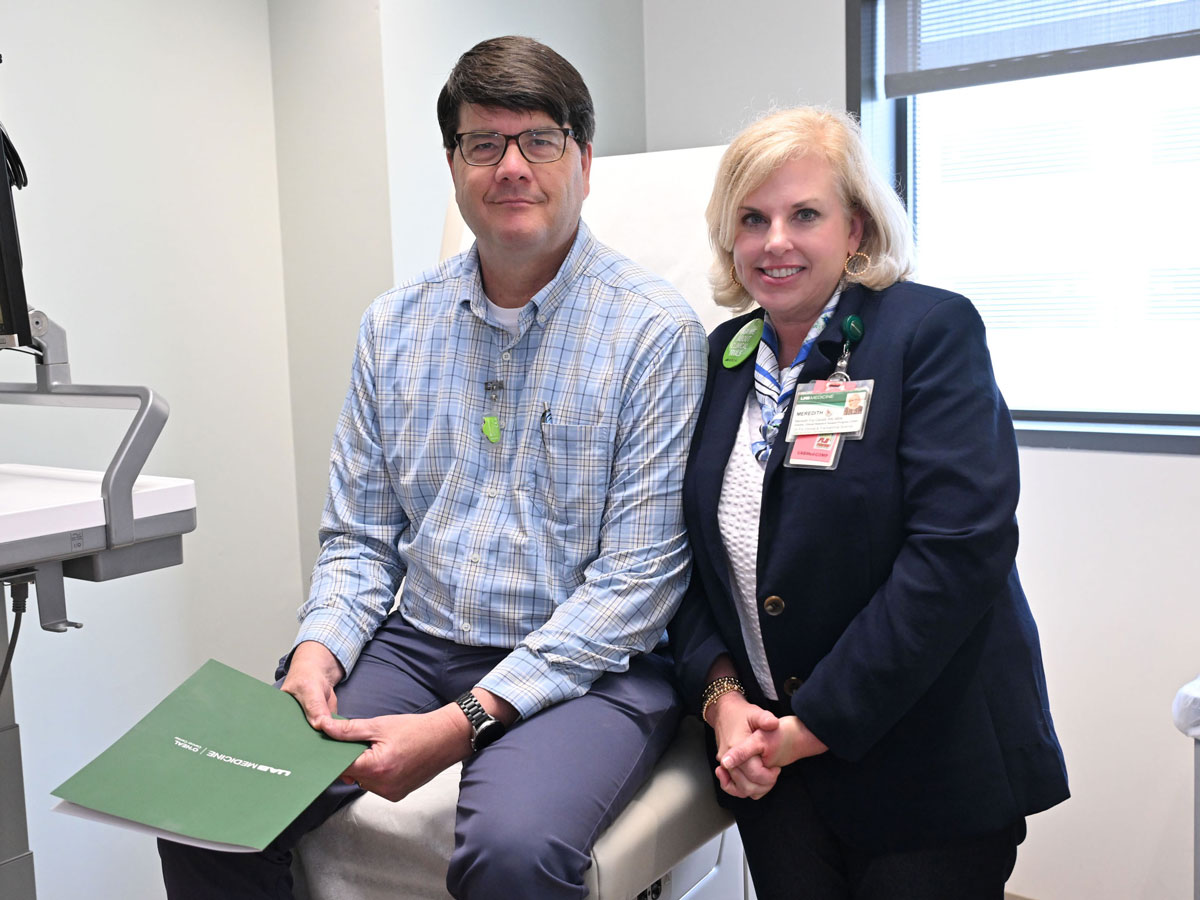
Fitz-Gerald’s passion for supporting her patients shifted from a professional commitment to a personal one as she helped her husband Sean navigate his own clinical trial. In 2021, Sean was hospitalized and diagnosed with an aggressive stage of multiple myeloma, a cancer of plasma cells. He was transferred to UAB, where Fitz-Gerland was confident he would receive the interdisciplinary care he needed.
“We quickly realized that he was having multiple systems impacted,” Fitz-Gerald said. “He had pulmonary issues, nephrology issues and was borderline for going on dialysis. I knew I had to get him to UAB where we could find out what we were dealing with, and UAB is distinguished by its teams and bringing everyone to the table. We were lucky that everything fell into place and he was transferred here.”
Sean underwent surgery and chemotherapy and was initially responsive to treatment before relapsing. Understanding the impact clinical trials can have firsthand, Fitz-Gerald began researching available studies that Sean would qualify for. He enrolled and participated in a phase 1 Car T-cell trial, the first clinical phase for humans, and is now in remission.
“I am very grateful to the medical staff that we have and the care that Sean received at UAB,” Fitz-Gerald said. “The team of physicians, nurses and clinical research staff nurses were phenomenal. By the grace of God and the care he received, he’s here, he’s healthy and he’s living a productive life because of the clinical trial. He was able to see our son graduate from high school and at a point, we really didn’t know if he would make that. We feel very blessed and very thankful.”
Despite Fitz-Gerland’s expertise in clinical research management, seeing the patient experience from her husband’s perspective was enlightening.
“I saw participation from his point of view, which was totally different than what I was used to and it was eye-opening,” Fitz-Gerald said. “While he is well-educated, there was medical terminology that he was not familiar with. We have many non-clinical staff that are involved in research, so it’s important to make sure that we educate everyone so that the team is informed to support our participants and patients the way we should be.”
Putting clinical research management education into practice
Fitz-Gerald’s time in the School’s Clinical Research Management specialty had a lasting impact on her career, and she now serves as an Adjunct Instructor in the newly relaunched CRM Certificate and CRM specialty track in the MSN program, under the direction of Professor Carolynn Jones, DNP, MSPH, RN, CRN-BC, FAAN, her original mentor. In addition to building a network of colleagues and mentors and strengthening her leadership and communication skills, she gained experience in areas outside of her bedside nursing background, including budgeting, collaborative research on the profession itself and disseminating results through lectures and co-published papers.
“I have worked with many great, inspirational mentors across campus and have been very fortunate to help educate the next generation in clinical research,” Fitz-Gerald said. “The program provided many opportunities I would not have had otherwise. It also gave me more of a worldwide perspective beyond the academic medical center. It was great in preparing me to be a better manager and to be equipped for the things that I would later face with Sean and in my leadership roles. This is a role and career pathway more nursing students should know about—clinical research is vast, there are so many opportunities, and it is still a form of patient-centered care.”