By Teresa Hicks
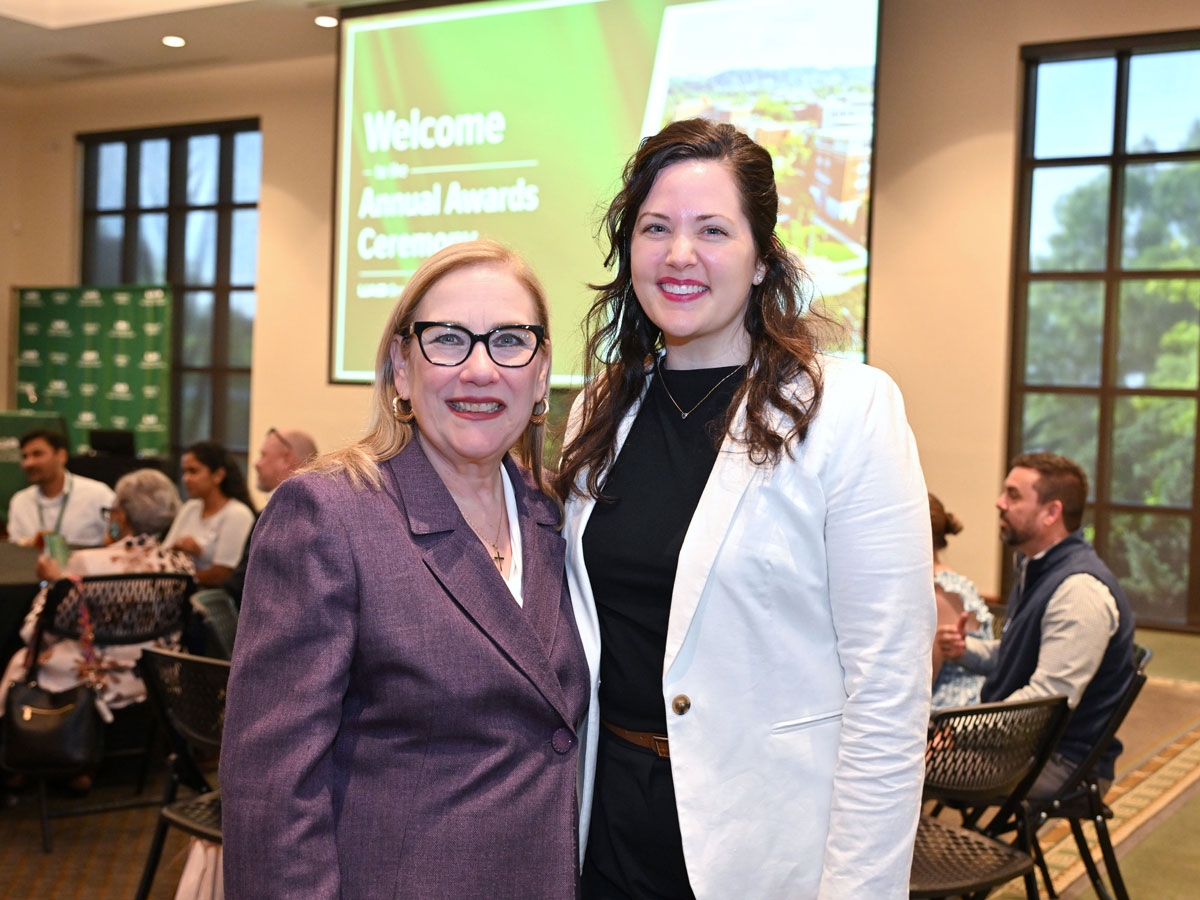
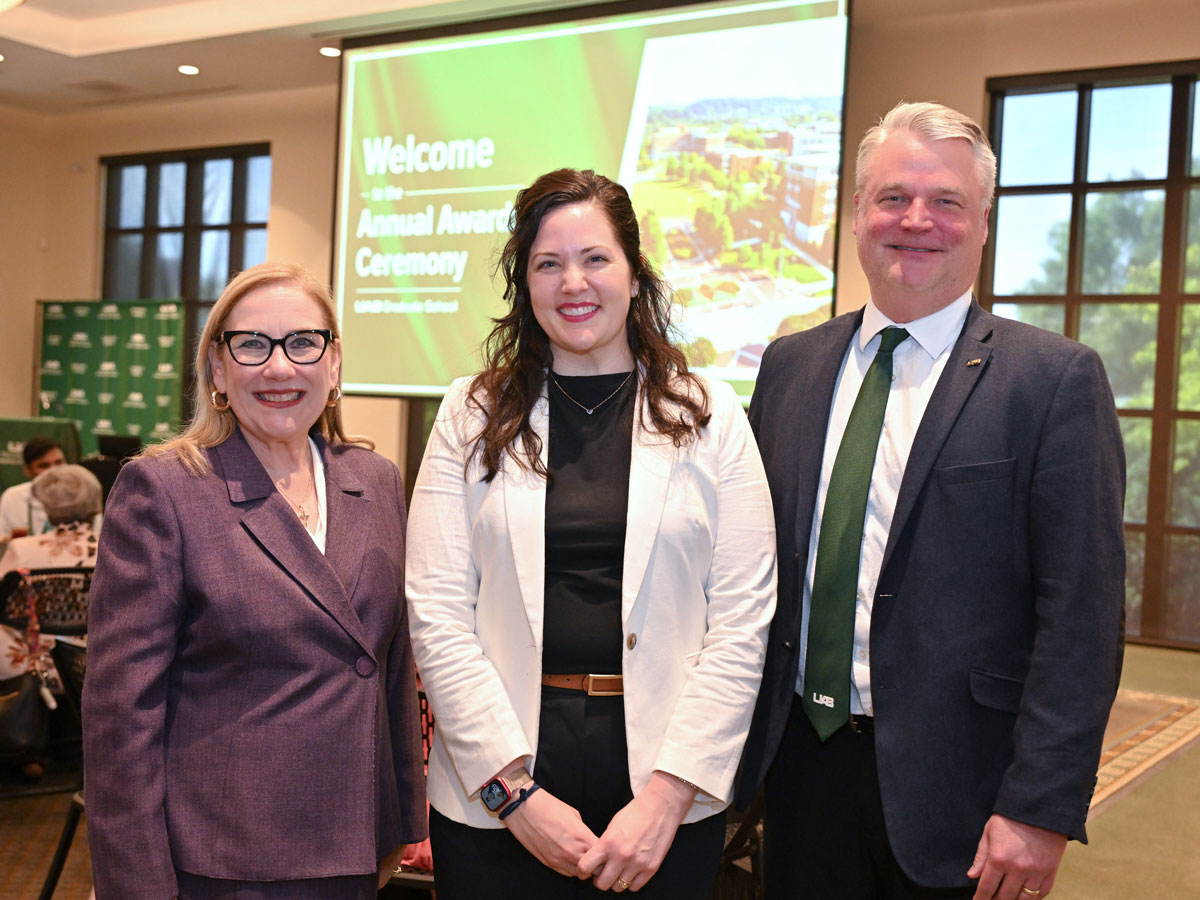
A University of Alabama at Birmingham School of Nursing PhD student and certified nurse-midwife is the recipient of UAB’s 2026 Samuel B. Barker Award for Excellence in Graduate Studies at the doctoral level for her contributions to a growing body of knowledge focused on improving the health and survival of mothers.
Hannah Kumarasamy, MSN, MPH, CNM, WHNP-BC, has distinguished herself through innovative research examining the comprehensive experience of pregnancy, which includes health, financial, social and educational factors. Her goal is to better understand how these come together to influence maternal health outcomes by bringing attention to experiences she says are frequently underrecognized in clinical and research settings.
As a practicing certified nurse-midwife at Grady Memorial Hospital in Atlanta, Kumarasamy’s clinical experiences and her work with the Georgia Department of Public Health Maternal Mortality Review Committee identifying maternal deaths, compiling records and developing case narratives for review directly inform this research.
“Through the combination of my roles, I have seen patients clinically and later reviewed maternal deaths, allowing me to see both lived experiences and outcomes,” she said. “Looking at all the different layers to understand how we got to that point, I started asking myself: what is the overall cost of pregnancy to the individual? We don’t really talk about that or acknowledge how hard the entire experience can be.”
In 2025 analysis “Pregnancy Burden: An Integrative Review and Dimensional Analysis of Pregnancy’s Hidden Challenges” published in the Journal of Midwifery & Women’s HealthOpens an external link., and co-authored by UAB School of Nursing Professor and Association Dean for Access and Engagement Felesia Bowen, PhD, DNP, RN, PPCNP‐BC, FADLN, FAAN; Professor Emerita Patricia A. Patrician, PhD, RN, FAAN; and UAB Lister Hill Library of the Health Sciences Department of Clinical, Academic & Research Engagement Associate Professor Becca Billings, MLIS, AHIP-S, Kumarasamy highlighted a wide spectrum of challenges women can face that potentially contribute to a mother’s complications and/or death.
The analysis showed that pregnancy, when combined with socioeconomic, health or other issues that already exist in a mother’s life—and that many health and social systems lack the resources to support—can lead to increased physical, mental, emotional, financial or other issues that impact their health and well-being. These range from minor inconveniences to dangerous situations. Kumarasamy emphasizes that simply recognizing these experiences can be powerful.
“Even just acknowledging that it’s hard seems to be a large breakthrough for most people,” she said. “Two things can exist at the same time. You can feel terrible and still be looking forward to having a child, but no one acknowledges that you feel terrible.”
Kumarasamy’s long-term goal is to develop a clear pathway showing how these experiences individually and combined influence maternal health and find ways to make lasting, positive change.
“I’d like to understand how the experiences people have during pregnancy contribute to maternal health outcomes and whether there are ways that we can intervene in these areas to help reduce maternal mortality,” she said.
The Samuel B. Barker Award for Excellence in Graduate Studies , named for UAB’s first graduate dean, is presented each spring to one doctoral student and one master’s student who demonstrate exceptional achievement and are expected to graduate within the calendar year. Recipients are selected based on their outstanding dedication to their field, as reflected in nomination letters and their academic accomplishments.
For Kumarasamy, receiving the Barker Award represents more than personal recognition. It affirms the importance and complexity of her work.
“I am honored to receive this award,” Kumarasamy said. “It’s been an intriguing journey studying pregnancy burden. I have heard some people say it’s a negative topic or that I shouldn’t pursue it. When I found out I was nominated for this award, it felt like validation not just for me, but for the people who have gone through these experiences. It’s acknowledging that this work matters.”
Kumarasamy credits the UAB School of Nursing for shaping her research and career path through strong mentorship and support. She pointed to several faculty members who have played a key role in her journey.
“The mentorship that I have received has been unparalleled from my committee chair, Dr. Patricia Patrician, as well as from Dr. Felesia Bowen, Dr. Rachel Wells and Dr. Peng Li,” she said. “They have all been incredibly supportive of my journey. There has never been anything I’ve wanted to pursue, whether it’s submitting something or exploring a new idea, that I’ve gotten pushback on. That kind of environment, where you’re pushed academically but also supported along the way, makes a difference.”
In addition to her research, Kumarasamy has demonstrated a strong commitment to mentorship, teaching and national service. She currently mentors undergraduate honors nursing students, has taught in the Master of Science in Nursing Nurse-Midwifery Pathway and serves on the School of Nursing’s PhD Student Advisory Council Task Force.
Kumarasamy also has contributed to maternal health initiatives at the national level, including work with the March of Dimes Mom and Baby Action NetworkOpens an external link., where she helped define its initial health agenda and serves on its National Advisory Committee. Her interdisciplinary work with the Georgia Department of Public Health has contributed to meaningful changes at both the policy and community levels, including efforts that helped inform Georgia legislation extending postpartum Medicaid coverage from six weeks to 12 months.
In February 2026, Kumarasamy was honored at the UAB School of Nursing State of the School, receiving the Florence Nightingale Award for Scholarly Work. Following her expected graduation this fall, she plans to pursue postdoctoral training to further advance her research, with the goal of improving maternal health outcomes across the South.