
By Tucker Carden
In the South, a region of the country where rates of HIV and chronic disease and illness are among the highest, funding for research to fuel key development and innovation is more important than ever. In the middle of this high-stakes environment, the University of Alabama at Birmingham School of Nursing is helping drive the promotion and advancement of public health outcomes for people living with HIV.
University Professor Mirjam-Colette Kempf, PhD, MPH, in partnership with the University of Mississippi Medical Center has received a renewed six year, $21 million in grant funding from the National Heart, Lung, and Blood Institute to continue their role in the Multicenter AIDS Cohort Study/Women Interagency HIV Combined Cohort Study. The study stands as the longest observational research study of HIV in the U.S. with more than 40 years of observed and collected data.
Kempf fully grasps the stakes and importance of the study, is appreciative for the role she and her colleagues get to play in it and is excited for its continuation.
"This renewal for another six years of funding demonstrates the continued support by NIH to invest in understanding the long-term health consequences of HIV on populations across the U.S.,” Kempf said.
The NIH funding supports critical research focused on improving the health and quality of life for aging people with HIV, primarily in the South, what Kempf dubs “the epicenter of the HIV epidemic in the U.S.” The UAB-UMMC site is one of 13 in the country and is “uniquely positioned to address some of the existing health disparities that are experienced by our participants,” according to Kempf. “The high burden of chronic diseases at the intersection of HIV rates in the South provides an opportunity to better understand the psychosocial determinants of co-morbidities among people living with HIV, including regional differences within the MACS/WIHS Combined Cohort Study network.”
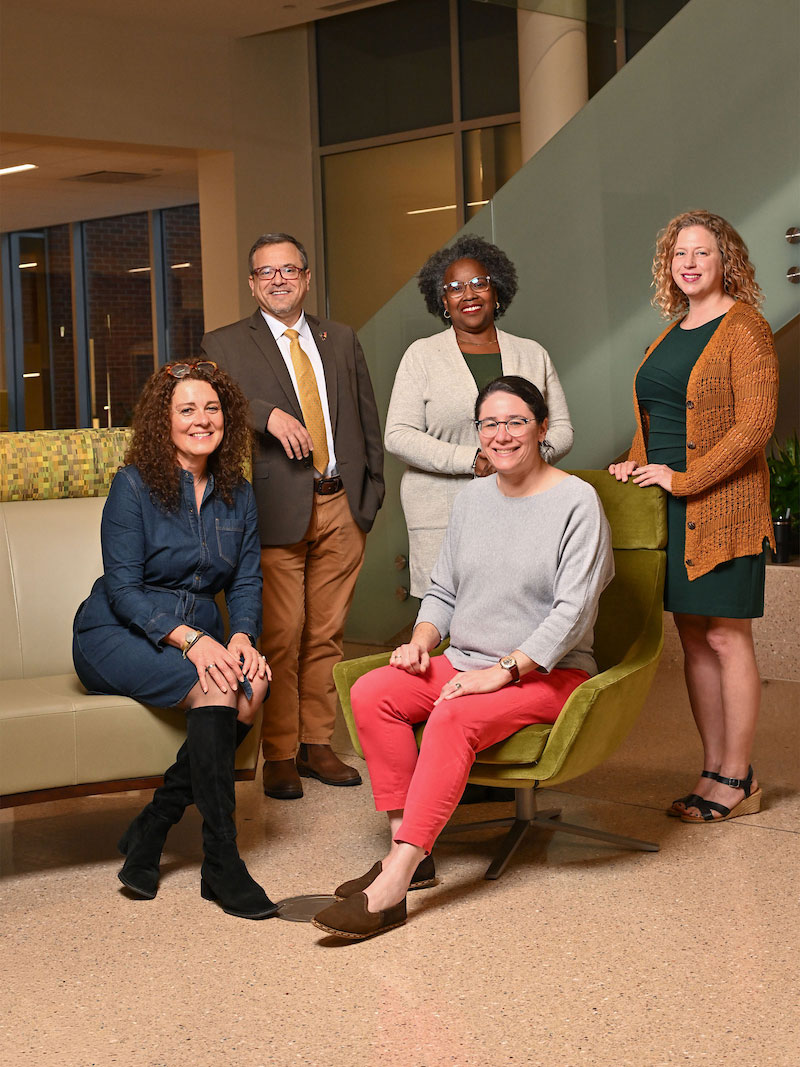
Led by Kempf and colleagues from the UAB School of Public Health, the UAB Heersink School of Medicine and UMMC, the collaborative research team will continue to investigate and examine why people living with HIV are at greater risk for conditions like cardiovascular disease, cancer and cognitive decline. They “aim to understand and reduce the impact of chronic health conditions—including heart, lung, blood and sleep disorders—that affect people living with HIV” by continuing to “investigate a spectrum of questions relating to the basic science, clinical science and epidemiology” of the potentially deadly virus.
Kempf, a member of the School’s faculty since 2010, also recognizes the significance of the renewal for UAB as a whole.
“Funding our site will not only advance the science of co-morbidities associated with HIV infection,” she said, “but also provide a platform to support early-stage investigators across UAB.”
Kempf’s fellow investigators at the UAB-UMMC site share her gratitude and optimism for the continuation of the project, also seeing opportunities to expand the study’s scope. Emily Levitan, ScD, Professor, Vice Chair for Faculty Development in the Department of Epidemiology at the UAB School of Public Health and one of the study’s principal investigators, said that “We have learned a lot about preventing and treating chronic conditions and have even transformed HIV into a chronic disease that people can live with for many years. However, those studies were often based on select populations; the MACS/WIHS Combined Cohort Study includes populations who are often left out of other studies.” She is confident that the study can continue allowing “investigators to study aging in the context of HIV and ultimately develop approaches to live well with HIV into old age.”
Zenoria Causey-Pruitt, PhD, MS, MPH, HQS, the study’s project director, shares these hopeful sentiments. “HIV research in the Southern region of the U.S. provides a great opportunity to engage and collaborate with populations that have historically been unrepresented in research,” she said. “By exploring and understanding the elements that contribute to both health disparities and the amazing resilience of people living with HIV in the South, study investigators can hopefully develop more effective intervention strategies, enhance treatment engagement and improve quality of life.”
Kempf acknowledges and appreciates the collaborative, cross-disciplinary solutions that have and will continue to arise from the cohort study thanks to this extension of funding.
“The MACS/WIHS Combined Cohort Study provides researchers from different disciplines with opportunities to focus on heart, lung, blood, and sleep co-morbidities as well as other conditions known to co-occur with HIV disease, including mental health and neurological illnesses, diabetes, kidney failure, liver diseases and certain cancers among people living with HIV” she said. “This continued research effort is unique in its ability to pursue research questions across multiple disciplines due to its interdisciplinary funding by 13 NIH institutes.”
This work also will support the development of future interventions, expand opportunities for trainees and early-career investigators and strengthen the region’s leadership in HIV and aging research. UAB has worked with UMMC since 2013 as a WIHS site and since 2019 as a MACS/WIHS combined cohort site, when the two cohort studies merged, with UAB serving as the primary location for both.
This kind of investment, as well as the decision to renew it, goes to show the value, reputation and consequence on a national scale of the research conducted by scholars at the UAB School of Nursing, the powerhouse in nursing education and research in the state of Alabama for good reason.
In addition to Kempf's University professorship at the School, she holds secondary appointments within the UAB Heersink School of Medicine, School of Public Health and several university-wide interdisciplinary research centers. She also is a senior investigator with the UAB Center for AIDS Research, where she contributes to multiple core facilities to support and promote cutting-edge HIV research, mentors early-stage investigators, serves as Co-Director of the CFAR Developmental Core and serves as Associate Co-Director for the Implementation and Community Sciences Core.
Kempf securing a renewal of funding for the MWCCS should come as no surprise to anyone familiar with her track record. A successful and prolific researcher in the field of HIV and socio-behavioral research, she is a highly funded investigator in the School and mentor to many on campus.
Securing this extension in funding for the MWCCS is yet another notch in the illustrious scholarly belt of Kempf, one of the School’s, and UAB’s, most innovative investigators and researchers. That pedigree and its importance take on a whole new meaning in the South, which “carries the burden of higher prevalence rates of chronic diseases and HIV, but lacks the health care infrastructure to provide care equally across populations,” as Kempf pointed out.
With the diligent, dedicated work of this cohort study and their “unique” geographic positioning, that can change; and Kempf knows it. “Identifying gaps of care will allow for strategic development of intervention strategies that improve health outcomes among people living with HIV,” representing even more innovation and ingenuity powered by the nationally renowned faculty at the UAB School of Nursing.