By Teresa Hicks
Chronic pain is often seen as only a physical condition, but it can extend well beyond the body. Those living with long-term pain frequently report difficulties with memory, attention and other aspects of cognitive function.
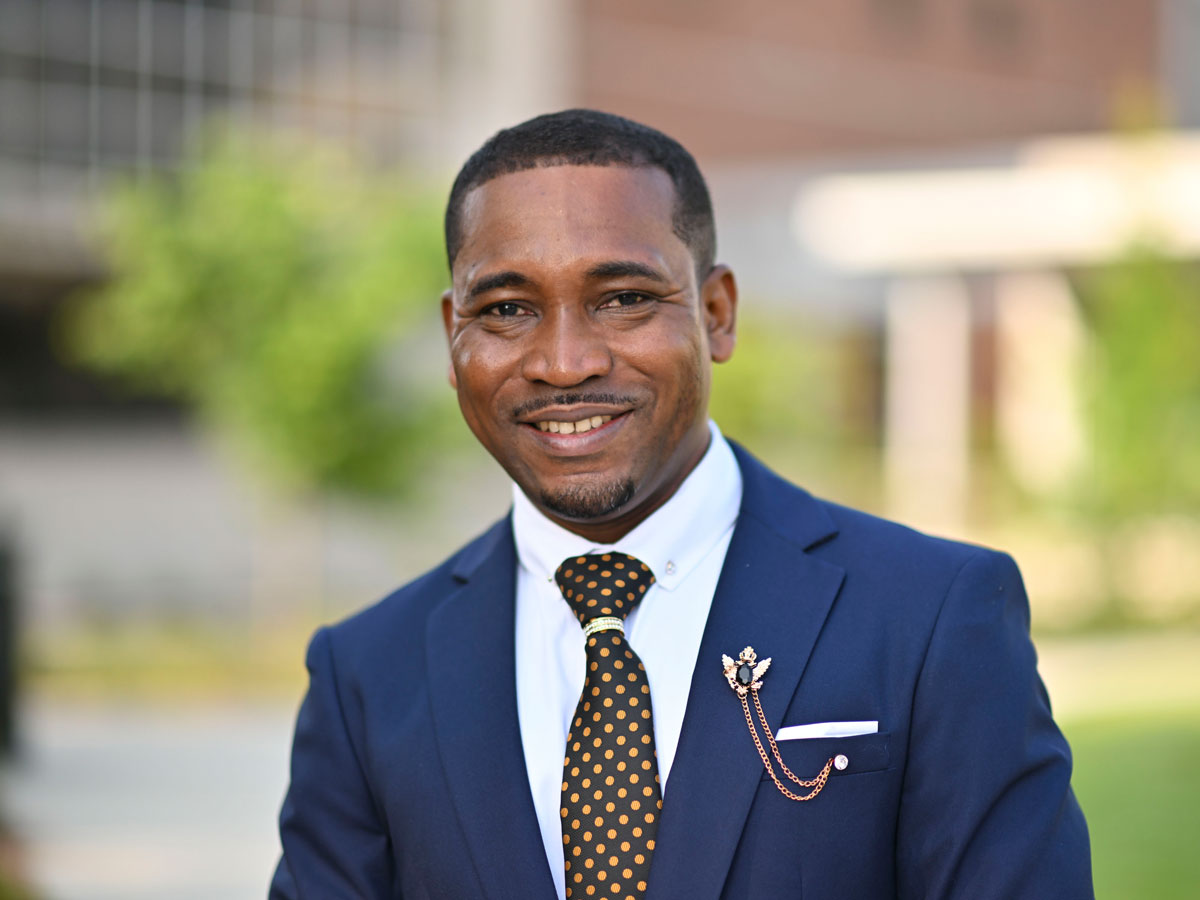
Despite this overlap, the relationship between chronic pain and cognitive impairment remains complex and not fully understood. University of Alabama at Birmingham School of Nursing PhD student Philemon Domoyeri MPhil, RN, and an interdisciplinary team of faculty and researchers are working to clarify this connection through new research. Domoyeri holds a Master of Philosophy in Physiology and previously practiced as a nurse anesthetist and registered nurse in Ghana.
He is the lead author on a recent publication in Pain Management Nursing, “Exploring Biopsychosocial Factors Influencing the Association Between Chronic Pain and Cognitive Impairment” highlighting the multifaceted nature of chronic pain and its potential impact on cognitive health.
“Chronic pain doesn’t just steal your comfort; it may accelerate cognitive decline,” Domoyeri said. “If you live with chronic pain, ask your care team about cognitive screening. Early checks can help protect your memory and thinking skills. Addressing biopsychosocial risk factors such as stress, sleep, lifestyle and socioeconomic challenges can also improve pain management and preserve cognitive health.”
Domoyeri collaborated with co-primary mentor, Professor and Interim Assistant Dean for Research & Scholarship Edwin Aroke, PhD, CRNA, FAANA, FAAN, co-primary mentor, Professor and Interim PhD Program Director Pariya Wheeler, PhD, and Prince J. Mosley, BS, a student in the UAB Heersink School of Medicine.
The team identified a trend suggesting that individuals with chronic pain may experience signs of accelerated brain aging, up to two to eight years faster in brain regions associated with memory and executive function.
“Building on this finding, the next stage of my study will investigate underlying mechanisms associated with cognitive impairment, by focusing on epigenetic changes, brain age biomarkers, and psychosocial factors such as depression, sleep quality, and socioeconomic stressors,” Domoyeri said.
Together, the team brings expertise spanning nursing science, research leadership, population health and biomedical science. For Aroke and Wheeler, the project also reflects the broader value of doctoral mentorship and cross-disciplinary collaboration in shaping the next generation of nursing scholars, and the growing role of doctoral nursing students in advancing evidence-based scholarship that aligns with nursing’s holistic approach to care.
"Witnessing a PhD student bridge the gap between rigorous scientific inquiry and public impact is the ultimate reward of mentorship,” Aroke said. “Philemon's work at the intersection of pain research and cognitive health is a crucial step toward enhancing quality of life for an aging population, and I am incredibly proud to see his scholarly path unfold."
Wheeler echoed that perspective, emphasizing both the significance of the research area and Domoyeri’s future as a scholar.
"The mentorship team of myself and Dr. Aroke is a perfect match for supporting Philemon in examining the intersection of pain and cognitive function,” Wheeler said. “This is an understudied and significant research area, and I have no doubt Philemon will be a leader in the field with his continued impactful work."