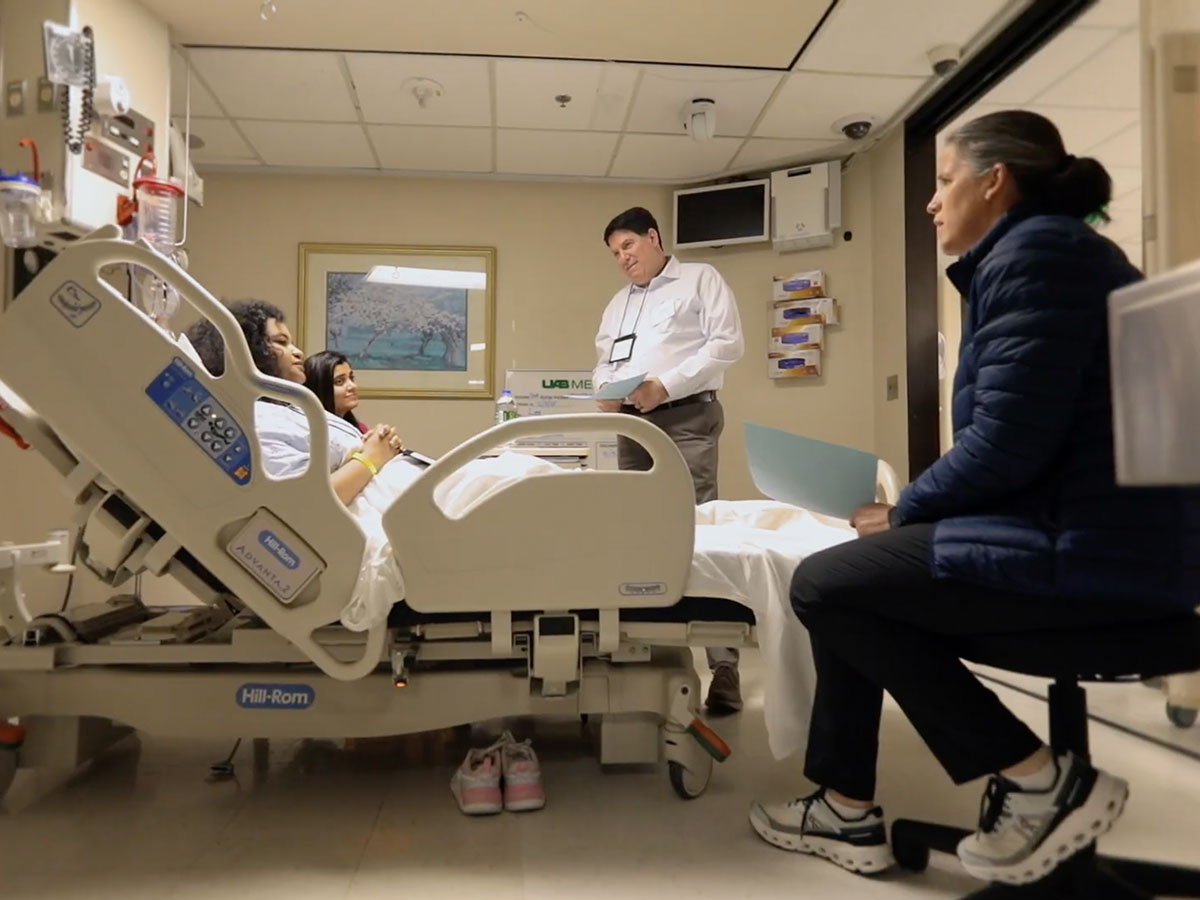
 On a warm summer day in July, visiting healthcare executives from around the country exit the School of Health Professions building and cross University Boulevard to put what they have just learned in the classroom into practice.
They have come to UAB for a unique, weeklong certificate program in high-reliability healthcare, taught by faculty experts on the topic from the Department of Health Services Administration and veteran healthcare consultants from partner Press Ganey.
Now, they have the opportunity to practice building connections, checking on concerns, and committing to improvements with patients and hospital staff in a custom-developed simulation in UAB’s Sim Center in Quarterback Tower.
Translating faculty expertise into new programs
There are many ways to translate faculty expertise into programs that improve the careers and lives of new audiences through noncredit courses, workshops and certificate programs.
The UAB High Reliability Certificate from the School of Health Professions’ Center for Healthcare Management and Leadership is one example.
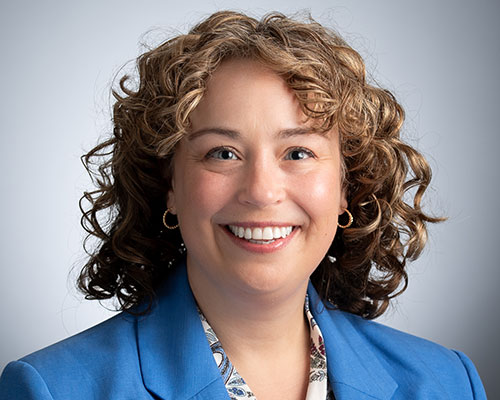 Katy Smith, director of UAB's Office of Continuing Education and Lifelong LearningYou can see another option in the School of Engineering, where the Advanced Safety Engineering and Management program has a growing catalog of online, practitioner-focused certificates and courses that have attracted professionals nationwide, including more than two dozen learners from a large West Coast utility company.
The Alabama Public Service Training Initiative, part of the College of Arts and Sciences, offers a third model. APSTI is pioneering a series of micro-credentials for busy professionals working in government and nonprofit roles.
These are part of a growing catalog of dozens of courses, certificates and workshops listed on the website of the Office of Continuing Education and Lifelong Learning, or CELL, which is part of UAB’s Center for Teaching and Learning.
Expanding access to UAB educational opportunities
“Our mission is to expand access to UAB educational opportunities,” said Katy Smith, director of CELL. “These opportunities enhance the careers and lives of learners, generate revenue for departments and units, have the potential to create an admissions pipeline to our programs, and provide a creative space for faculty.”
Interested in brainstorming ideas for continuing-education programs or working with CELL to support your existing programs? Contact Katy Smith at
“Within the Department of Mechanical and Materials Engineering, the Advanced Safety Engineering and Management program sees professional education as an important way to support UAB’s mission of education, innovation and community engagement,” said Donald Burke III, Ph.D., ASEM graduate program director and associate professor. “It gives us an opportunity to remain connected with learners throughout their careers while extending the university’s impact beyond traditional degree programs. More importantly, it allows us to connect UAB’s expertise with real-world challenges and help individuals and organizations build the knowledge, skills and agility needed for long-term success.”
CELL provides behind-the-scenes support, advice and more
CELL handles the infrastructure necessary for continuing-education programs, including online course setup and administration, handling payment processing, creating registration pages, and coordinating marketing support. Smith also is available to meet with faculty and staff who are exploring new continuing-education ideas.
The Reporter spoke with Burke and the leaders of two other successful continuing-education programs on campus to learn more about their offerings, how they tap into UAB faculty expertise and their advice on launching a program.
Leandra Celaya
Director of the Center for Healthcare Management and Leadership
Assistant Professor, Department of Health Services Administration

What CHML offers
The UAB High Reliability Certificate, a weeklong, in-person program developed in partnership with Press Ganey, offered several times per year; Lean Six Sigma Greenbelt Training for Healthcare, an online, self-paced certificate; biannual UAB National Symposium for Healthcare Executives, next offered Nov. 4-6, 2026, in Birmingham; and custom offerings for external clients.
“What we do is develop and deliver timely, relevant content for a practitioner-facing audience,” Celaya said — including the 6,000-plus alumni of the Department of Health Services Administration’s academic programs. “I also think of the center as a teaching incubator for new content and ideas we want to try,” Celaya said. “Our programming meets industry needs, while complementing the academic mission of our department and UAB.”
The center has partnered with UAB’s Marnix E. Heersink Institute for Biomedical Innovation to create a one-day course on AI for healthcare leaders, for instance, and partnered with UAB healthcare simulation experts to create five novel simulations that are part of the High Reliability Certificate. “There is so much opportunity for cross-school collaboration at UAB,” Celaya said.
How CHML leverages faculty expertise
“It’s a partnership,” Celaya said. “Our faculty have new ideas for courses or new formats that would benefit practitioners and their organizations. The center facilitates the administrative details that can often be a barrier to executing these ideas.”
Faculty enjoy working with participants in the center’s programs because “the participants bring in real-world, practical examples and experiences that they are facing in their roles,” Celaya said. “That gives faculty very valuable insights on what is most relevant in the industry.” And after participants have experienced what UAB has to offer, they often ask about the Department of Health Administration’s academic programs, including its master’s program, which is ranked No. 1 in the country by U.S. News & World Report.
Connections built in continuing-education programs also help students launch their careers, Celaya says. “At our national symposium, we have health executives from across the country learning directly alongside our students,” she said. “That is an incredible opportunity for our students to network with organizational leaders as they prepare to enter the job market.”
How CHML works with CELL
“We were able to launch our fully online asynchronous Lean Six Sigma Greenbelt program because of all the support that CELL offers,” Celaya said. “They can access the university platforms to provide the learning management tools we need and interface with university systems. That is incredibly important.”
Celaya and Smith meet monthly to discuss any challenges or pain points that Celaya is facing, she says. “Katy knows the right people to talk to and resources to connect with at the university to break down barriers we are facing.”
Celaya's advice on building continuing-education programs
Connect to a sense of purpose
“For something like this to work, faculty, staff and alumni need to see that it brings value and is a strategic asset to the department,” Celaya said. “For faculty, this can be a way to pilot new content and refine it and integrate it into our academic programs. For students, this is an opportunity they might not have otherwise to learn alongside industry leaders.”
Create a support structure
“You have to build the administrative support and structure around any programs you create,” Celaya said. “Asking very, very busy faculty and staff to navigate those processes themselves is not a strategy for long-term success.”
Cultivate relationships
“Create an exceptional learning experience and then stay in touch with past participants,” Celaya said. “Without overwhelming them with communication, encourage them to share opportunities with their colleagues and let them know when you have new programs. For healthcare executives, there is a particularly long decision cycle related to academic programs. I have talked with people considering our Executive Doctoral program who have been contemplating it for many years. For busy professionals, a graduate program is a big commitment. Our continuing-education programs can be a valuable introduction to UAB, with opportunities to meet our faculty and see what we’re about and what we have to offer.”
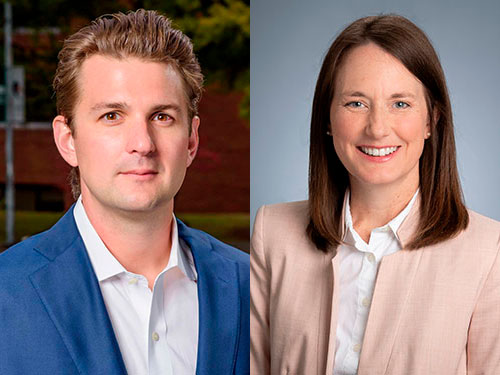
Peter Jones, Ph.D.
Director of Research and Curriculum, Alabama Public Service Training Initiative
Associate Professor, Department of Political Science and Public Administration
Kristin Boggs
Director, Alabama Public Service Training Initiative
What APSTI offers
Short workshop series designed for professionals working in public service and nonprofits. Each series has prework and readings followed by a two-hour in-person session. Participants who attend at least five of the six sessions in each series receive a micro-credential.
“We designed APSTI’s micro-credentials around the realities of today’s public and nonprofit workforce,” Jones said. “Most participants are busy professionals who may not be looking for a full degree or certificate but still need high-quality professional development. Micro-credentials provide a middle ground between a one-time workshop and a formal academic program. Participants can focus on skills that matter most to them, take courses individually or stack workshops together to earn a credential. Looking forward, we hope the format can serve as a bridge to other educational opportunities, like certificates.”
“We used feedback gathered from prospective attendees to determine both the length of individual training sessions and number of sessions they could dedicate to professional development,” Boggs said. “This allows us to then tailor the content to fit within those parameters.”
How APSTI leverages faculty expertise
“One of the biggest advantages of the micro-credential model is its flexibility,” Jones said. “Instead of asking a faculty member to develop and teach an entire semester-long course, we can invite them to lead a workshop in their specific area of expertise. In the beginning, we relied on faculty within the Department of Political Science and Public Administration, who are experts in budgeting, nonprofit leadership, public management, policy analysis and data analytics. Now that we’ve gained traction within the public service community, the micro-credential model has made it easy to engage faculty expertise across UAB and respond more quickly when practitioners identify a new area of interest.”
“The micro-credential model is a great opportunity for working across disciplinary boundaries,” Boggs added.
How APSTI works with CELL
“CELL has been a valuable partner as we’ve developed our continuing-education strategy,” Jones said. “Their experience with non-degree programming has helped us think through program design, registration, marketing and the needs of adult learners.”
“CELL also sees what is happening across campus and can share best practices with us based on what has worked well for others,” Boggs said.
Jones' advice on building continuing-education programs
“Begin with community needs,” Jones said. “Universities have tremendous expertise; but the key is identifying where that expertise can solve real problems faced by employers, practitioners or community organizations. I’d also encourage departments to start small and don’t try to reinvent the wheel. A workshop series or micro-credential can be a great way to test demand and refine content, and partners like CELL can help you avoid the early missteps.”
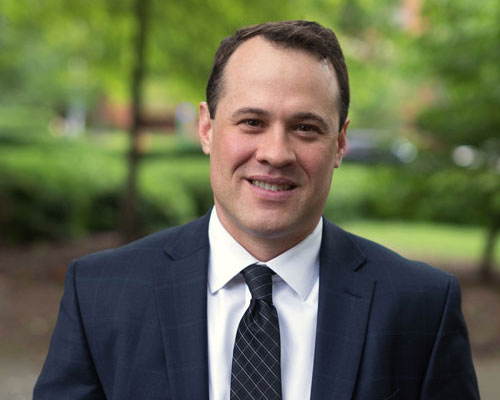
Donald Burke III, Ph.D.
Graduate Program Director, Master of Engineering | Advanced Safety Engineering and Management
Associate Professor, Department of Mechanical and Materials Engineering
What ASEM offers
Seven professional-education courses and certificates (see full list here), including Human and Organizational Performance Champions Course; Enhancing Performance Across Neurological Spectrum; Fall Protection and Safe Access; and the newest offering, Applied AI for EHS Certificate.
“Our professional education offerings began with the HOP Champions Course, which was developed to address a growing industry need for practical training in Human and Organizational Performance principles,” Burke said. “The success of that initial offering demonstrated strong demand for accessible, industry-focused learning and provided a foundation for expanding our portfolio.”
The ASEM team developed additional courses and certificates using “feedback from industry partners, alumni and participants,” Burke said. “We evaluate new offerings based on industry demand, emerging workplace challenges, and their ability to provide meaningful value to working professionals.”
Burke says that professionals discover ASEM’s programs through several channels. “Word-of-mouth referrals from alumni and previous participants remain among the most effective,” he noted. “We also benefit from relationships with industry organizations, employers, safety professionals and UAB’s broader network. Digital marketing, engagement with professional associations, conference participation and our website all help increase awareness.”
But the most important draw, Burke says, is the immediate value that ASEM’s courses offer to working professionals. “They want practical tools, leadership skills and current knowledge they can apply right away,” he said, “and that demand continues to drive interest in our offerings.”
The new Applied AI for EHS certificate is a case in point. It “was developed and launched in partnership with the American Society of Safety Professionals, helping us bring timely and relevant AI education to safety professionals across a broader audience,” Burke said. Participants have reported immediate impact after completing the certificate, he added: “Many have quickly recognized practical ways to apply AI tools within their organizations and have gained greater confidence in evaluating AI-related opportunities and risks. The response to the course has reinforced our belief that professionals are looking for timely, forward-looking education that helps them navigate emerging technologies while making meaningful improvements in their day-to-day work.”
How ASEM leverages faculty expertise
“Our courses are taught by subject-matter experts who bring both academic expertise and extensive industry experience to the classroom,” Burke said. “Depending on the topic, a course may be led by a single faculty member with deep expertise in that area, or it may involve multiple instructors who contribute specialized perspectives. We have found this approach to be particularly valuable in safety engineering and risk management, where complex challenges often benefit from multidisciplinary viewpoints.”
ASEM’s courses “also incorporate industry practitioners and guest experts who share current examples, case studies and lessons learned from the field,” Burke said. “This combination helps ensure participants gain both a strong theoretical foundation and practical insights they can immediately apply in their organizations.’
How ASEM works with CELL
“CELL provides the foundation upon which we build our professional education programs,” Burke said. “While our faculty develop the course content and instructional approach, CELL manages many of the critical behind-the-scenes functions, including registration, support for large group enrollments, Canvas course setup, and the creation of digital badges and certificates.
“Their expertise allows us to deliver a polished, scalable learning experience while enabling our faculty to stay focused on developing relevant, high-quality content for industry professionals.”
Burke's advice on building continuing-education programs
Start with a clearly defined market need — and make sure it aligns with the strengths of your department.
“By talking with industry partners, alumni and potential learners, you can identify the skills and knowledge that are most needed and then build learning opportunities that draw on the unique capabilities already available within your faculty,” Burke said.
Focus on delivering value and quality before focusing on scale.
“Start small and use your first few offerings as an opportunity to learn what works, gather feedback, and refine both the content and delivery of the course,” Burke said. “Once you’ve incorporated those lessons and established a reliable process, it becomes much easier to scale successfully. A program that consistently delivers a great experience will build a strong reputation and often grow organically through referrals and repeat participants.”
Think carefully about how you translate faculty expertise into a professional learning experience.
“Many departments already have the knowledge needed to create valuable programs, but working professionals are looking for practical insights they can apply right away,” Burke said. “The most successful offerings take academic and industry expertise and package it in a way that is relevant, engaging and immediately useful.”
View professional education as an ongoing relationship rather than a one-time event
“We see our most successful courses as creating pathways for continued learning and engagement,” Burke said. “As industries evolve, professionals need opportunities to update their skills and stay current, and UAB is uniquely positioned to help meet that need through its academic expertise, research strengths and strong connections with industry.”