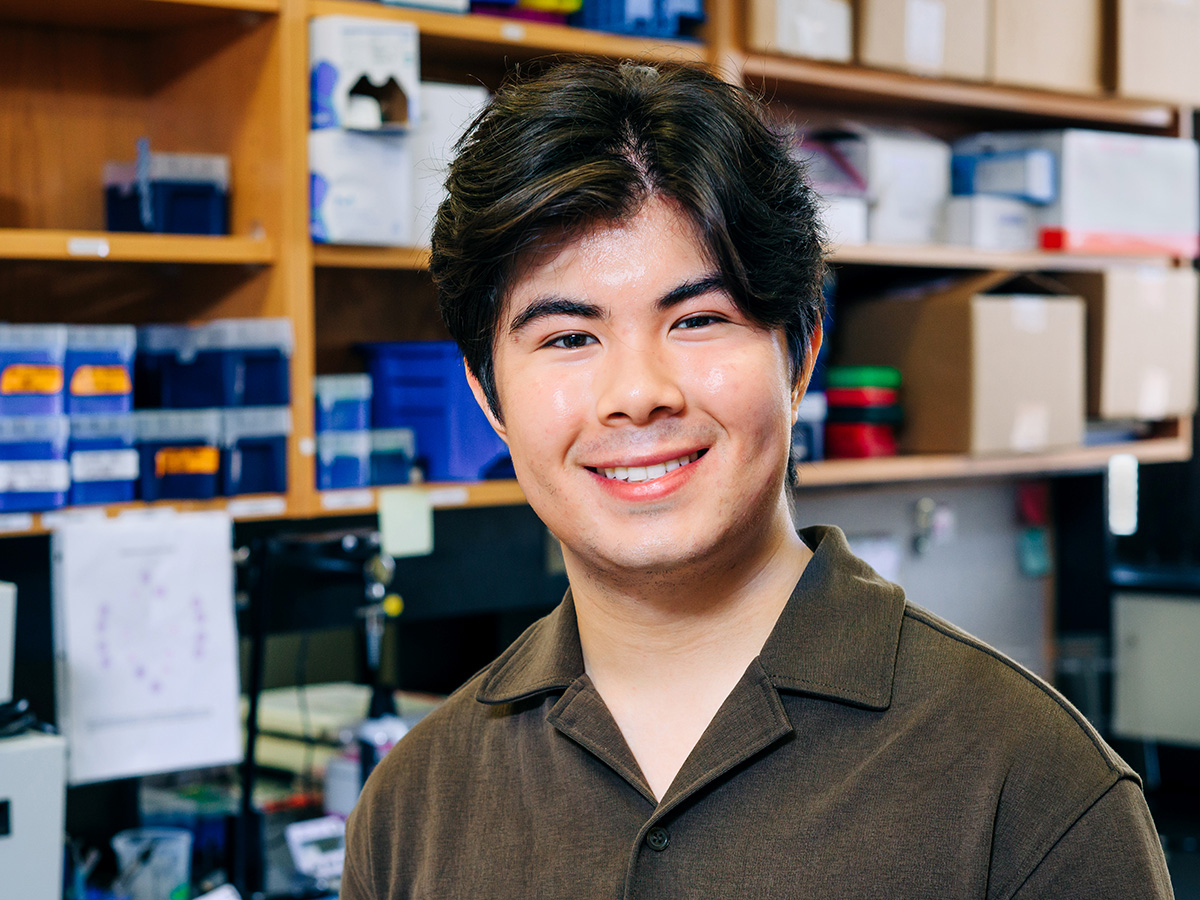
 Connor Nguyen in the lab of Associate Professor Mary Kathryn Sewell-Loftin, Ph.D., in the UAB O'Neal Cancer CenterConnor Nguyen is studying how mechanical forces around cancer cells influence tumor spread through the body. The work is taking him places, too. Last year, he found himself giving an oral presentation at the Biomedical Engineering Society meeting in San Diego, California.
“Meeting researchers and scholars from other universities who asked questions and were genuinely interested in my work was a really rewarding experience,” said Nguyen, a junior majoring in biomedical engineering and applied mathematics. “It was an honor to be chosen, and it felt like real recognition for the effort I had put in.”
Nguyen is a member of the UAB Honors College’s Science and Technology Honors Program and a scholar in the Roadmap for America’s Cancer Explorers for the 21st Century, or RACE21, program at UAB.
During his freshman year, Nguyen began working in the lab of Mary Kathryn Sewell-Loftin, Ph.D., at the UAB O’Neal Cancer Center. In addition to a national presentation, he is a co-author on a paper in preparation from the lab. And this summer, Nguyen extended his research through a $2,500 stipend as part of the UAB Presidential Summer Honors Fellowship Program.
Nguyen’s advice for undergraduates interested in research? “Just go for it,” he said — visit labs, talk with professors, and find the right environment.
Here is how Nguyen got his start and found his research niche.
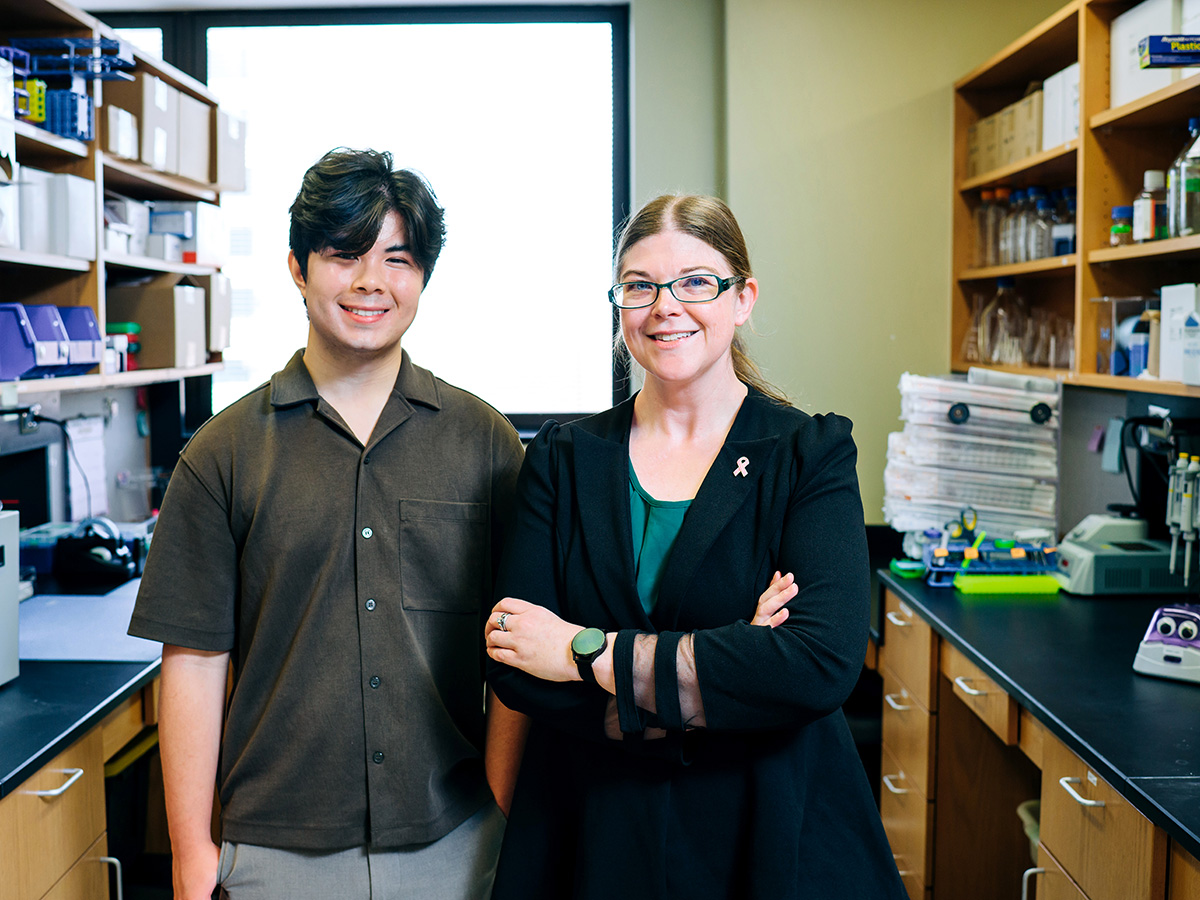 Nguyen and Sewell-Loftin in her lab in UAB's O'Neal Cancer Center
Getting started
Nguyen found out about Sewell-Loftin’s work through the SciTech Honors Program. “The final project of the introductory course, STH 199: Introduction to the Scientific Process, has you work with a research paper from one of the PIs [principal investigators] at UAB,” Nguyen said. You read through the paper, treat it as if it were your own work, and try to improve some of the figures and write an abstract based on the information presented.”
That project led him to an undergraduate in Sewell-Loftin’s lab, who “gave us more information about the research they were doing,” Nguyen said. “After the semester ended, I reached out to Dr. Sewell-Loftin, and she offered to meet me over Zoom and have me visit the lab so she could describe her projects in detail and explain what a position in the lab would actually look like day to day. I was really interested in what I saw, and so I joined as soon as Christmas break ended.”
Starting small, finding a niche
After Nguyen joined the Sewell-Loftin Lab and was still in training, “I started with small, simple experiments tied to my graduate student’s project,” he said.
Over time, he developed his own project and research niche: studying the role of mechanical strain on the lab’s murine (mouse) cancer cell lines. “The goal was to address the translational gap we see with mouse models in cancer research, deepen our understanding of how biomechanical forces affect murine cancers and validate a robust mouse model for future work,” Nguyen said. “This became the foundation for my current project in the lab. I worked on it last summer, and the work was funded by the RACE21 program at the time.”
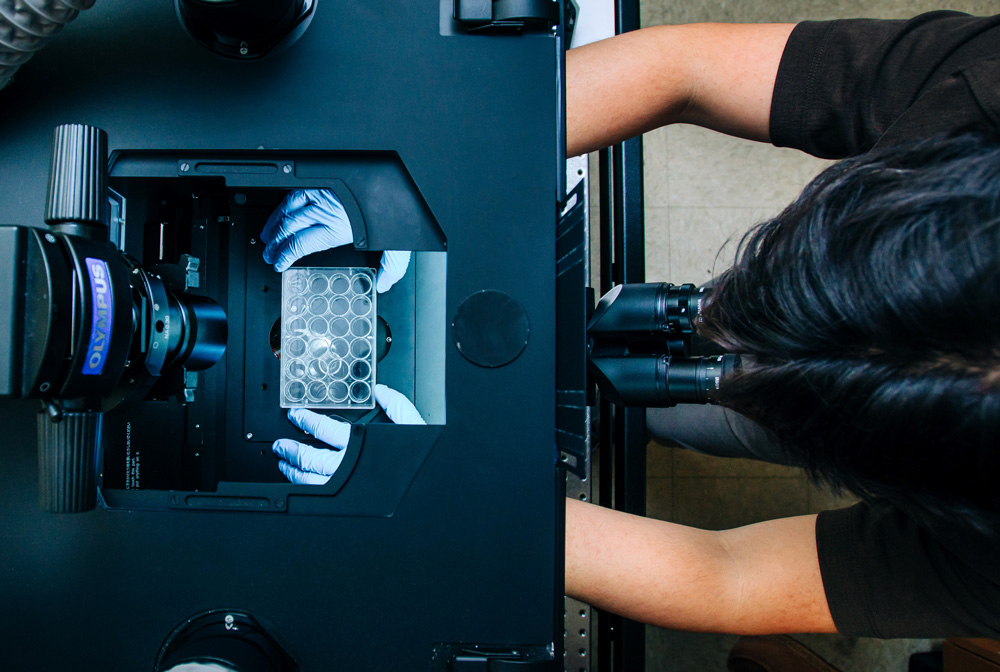 Nguyen inserts a sample into the Sewell-Loftin lab's fluorescence microscope
Learning lab techniques, and how science works
As were the other undergraduates working in Sewell-Loftin’s lab, Nguyen was taught how to create tissue-on-a-chip models, operate the lab’s fluorescent microscope, analyze imaging data and more. (Learn more about what Sewell-Loftin teaches undergraduate researchers in this related story.)
“I’ve also learned how to become an independent researcher who can review previous work and identify gaps in the knowledge that are worth looking into,” Nguyen said. And he has “learned a lot about how science and research operate behind the scenes,” he added. “I think people who haven’t worked in a research lab might take for granted how much effort goes into research at universities: managing the logistics, understanding how grant funding works, conducting literature reviews and IRB reviews, recognizing how deeply intertwined science and politics are, and most importantly, learning how to communicate your work to the audiences it aims to help.”
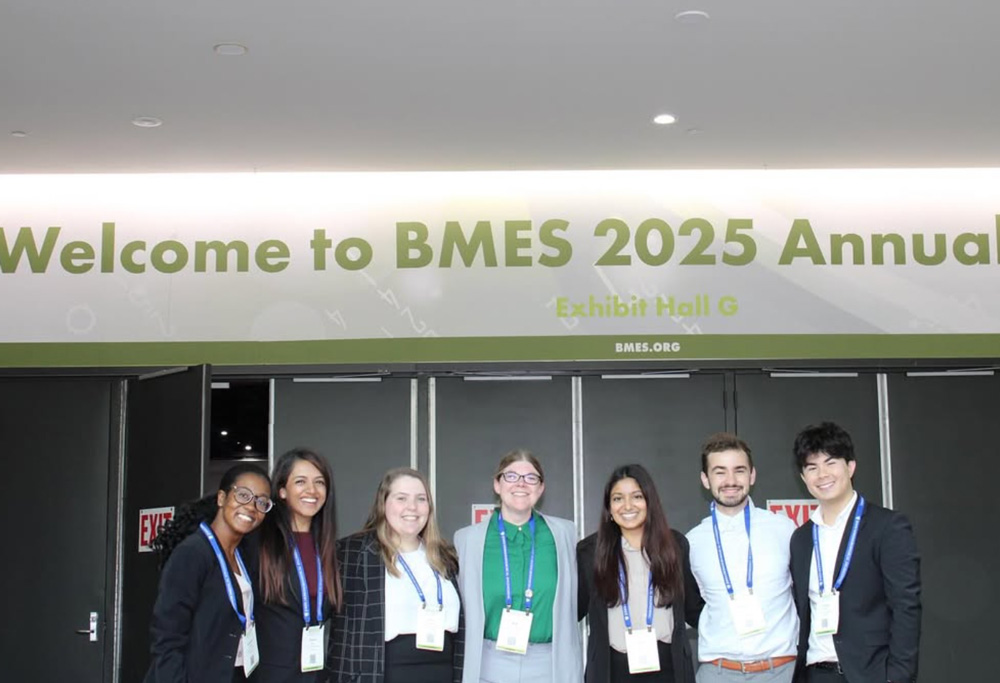 Sewell-Loftin lab members, including Nguyen (far right) at the BMES 2025 Annual Conference in San Diego, California, in October 2025. Image courtesy Sewell-Loftin Lab
Presentations and fellowship funding
“I’ve had the chance to give several oral and poster presentations about my project,” Nguyen said. In addition to the 2025 Biomedical Engineering Society meeting, where he gave an oral presentation during the Mechanobiology session, “I also presented at one of last year’s Departmental Biomedical Engineering Seminars as part of the Biomedical Engineering Honors program,” he said. That “meant a lot to me since I had spent the year prior sitting in the audience listening to those same weekly talks.”
For his Presidential Summer Honors Fellowship this summer, Nguyen expanded his mouse model project to focus on a specific enzyme called focal adhesion kinase, or FAK.
His earlier work showed that murine cancer-associated fibroblasts tug on the extracellular matrix surrounding them in the same way that human fibroblasts do — and that these deformations are related to worse cancer prognoses.
Now he is working with an FAK-inhibiting drug named defactinib that prevents the formation of focal adhesions. “These focal adhesions act like anchor points for the cell’s cytoskeleton and transmit the pulling force from the fibroblasts into the surrounding matrix,” Nguyen said. Without those anchor points, fibroblasts “can’t gain the traction or leverage they need to actually deform their surroundings, so the matrix should remain undisturbed,” he said. “Hopefully this work provides more insight into how mechanical signals are regulated in cancer and helps identify a new target for future therapeutics.”
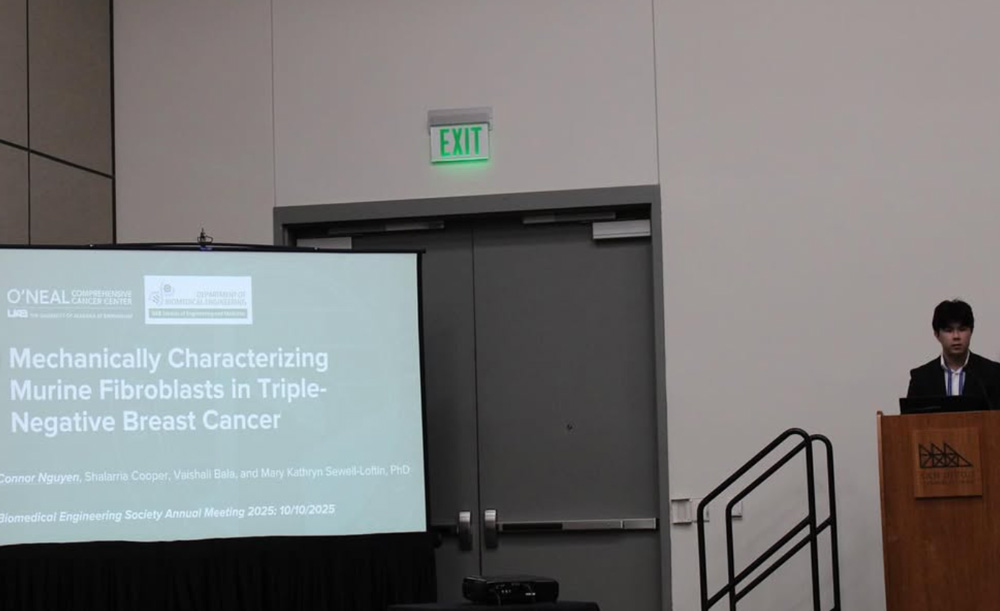 Connor Nguyen's presentation at BMES 2025. Image courtesy Sewell-Loftin Lab
Four tips for students interested in research experience
1. Go for it
“You’ll never know whether you love it or hate it until you actually give it a try,” Nguyen said.
2. Tour labs and talk to PIs
“There’s no better way to find your research niche than actually visiting different labs and talking to different professors to see what’s right for you,” Nguyen said.
3. Prioritize your growth
“It’s important to find an environment and group of people you feel comfortable with and can learn from,” Nguyen added. “I’ve heard horror stories about PIs at other universities, so I’m grateful I joined a lab whose environment fosters growth and encouragement, which makes me want to keep learning and growing as a researcher. That’s why I think it’s so important to feel comfortable setting boundaries and expectations for what you can manage.”
4. You will find your fit
“UAB is such a large institution, with so many research opportunities, that there really is a place for everyone,” Nguyen said.
Learn more about undergraduate research at UAB, including how to find opportunities to get involved.