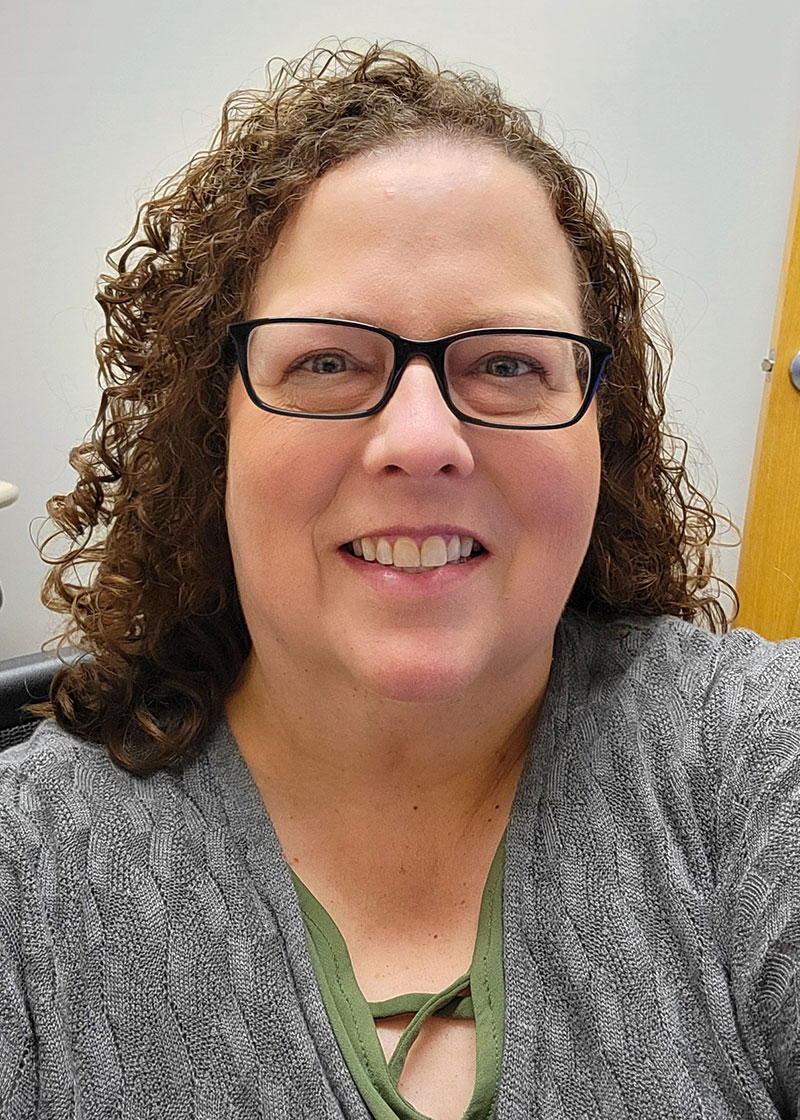
 Kathy Livingston, BSOT, CLVTLast fall, UAB’s Low Vision Rehabilitation Graduate Certificate Program (LVRGCP) introduced a pioneering course in blindness rehabilitation. Instructor Jenice Heck, LOTR, MMC, an occupational therapist who has been blind since birth, offers students a unique blend of clinical education and personal insight into the lives of people who live without vision.
Kathy Livingston, BSOT, CLVT, is an experienced occupational therapist who recently transitioned her practice from acute care to low vision rehabilitation. She received low vision training when she joined the Cincinnati Association for the Blind & Visually Impaired in Ohio but lacked knowledge about blindness techniques and resources.
Livingston, who is enrolled in the LVRGCP, was excited to have the option to add this course to her curriculum.
“It filled in the blanks for me, and bridged an important gap in my low vision training,” she says. “It equipped me with practical tools and resources I can use to help my clients who are blind do what they need and want to do in their daily lives.”
From the Practical to the Personal
A key piece of the blindness course is instruction in teaching clients who are blind to use assistive devices and organizational techniques, such as strategies to identify recipe ingredients and integrate cooking tools so they can enjoy preparing meals while staying safe in the kitchen.
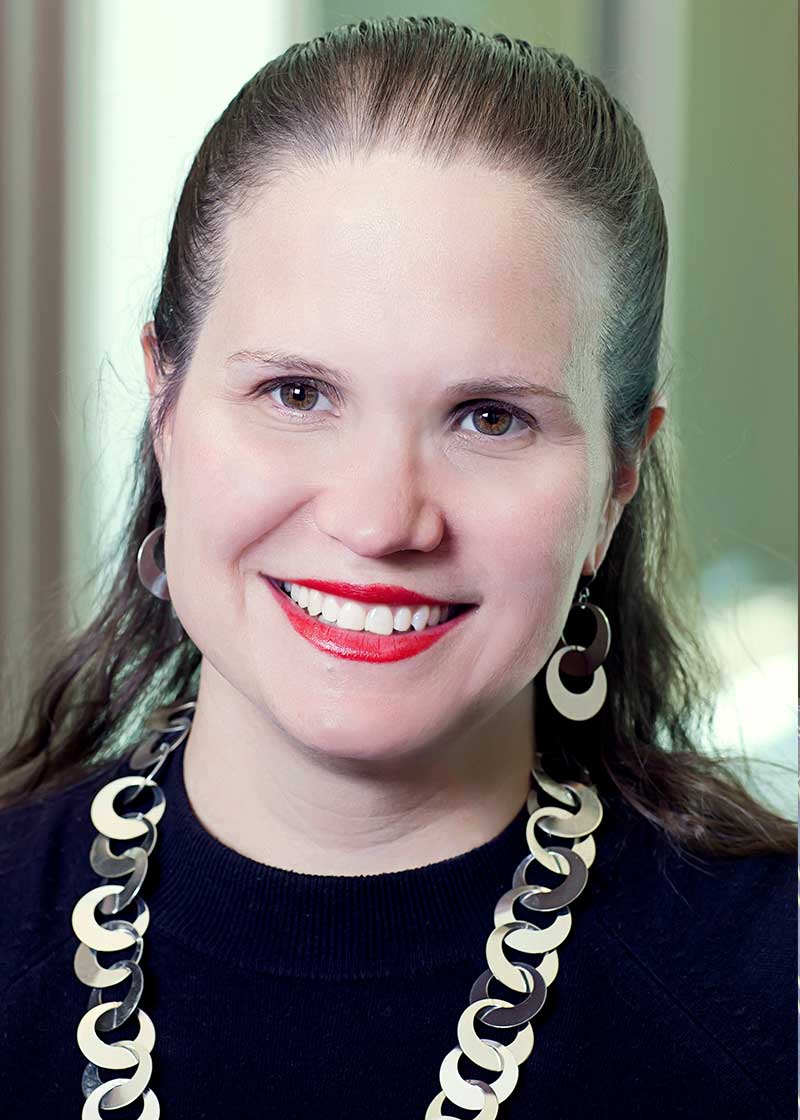 Jenice Heck, LOTR, MMCThe course’s hands-on practical training also includes the use of devices and technology for other daily tasks, such as dressing and applying makeup, as well as techniques that allow clients to protect their bodies as they move through space. Students learn to assess clients with progressive vision loss to determine the right time for referral to orientation and mobility experts.
Heck also delves into the philosophy of blindness rehabilitation and its emphasis on teaching. Livingston says it was especially helpful to learn from someone who is blind.
“Jenice uses the techniques she teaches us every day,” she says. “She also gives us opportunities to talk to her about being blind and blindness sensitivity.”
Livingston notes that all occupational therapy practice areas include clients with visual disorders, and this course gives therapists the skills and knowledge to work confidently with those who are blind.
“Occupational therapists in general are very holistic practitioners, but I feel like we are missing that blindness piece because we’re so used to working with people with some sight,” she says. “This course changes your view of the world and gives you tools in your tool belt to help those with blindness.”
Take the Course
If you’re an occupational therapist, you can take the blindness course without enrolling in the LVRGCP. To start the process, apply to the UAB Graduate School as a non-degree seeking student.
Visit the LVRGCP website to learn more about this course or the certificate program. If you have questions, email or call Program Director Beth Barstow, PhD, OTR/L, SCLV, FAOTA, at
The Low Vision Rehabilitation Graduate Certificate is the preeminent low vision rehabilitation program for occupational therapists in the world. Our nationally recognized faculty members edited and contributed chapters to the American Occupational Therapy Association textbook, Occupational Therapy Interventions for Adults With Low Vision. In addition, more than half of OTs with a Specialty Certification in Low Vision (SCLV) are UAB alumni.
Your time is valuable. Your needs are immediate. In this program, you’ll learn clinical applications today that you can implement tomorrow.
Around the world, from Singapore to Ireland to Alabama, our graduates are driving the future of this field through leadership and innovation. Our alumni take pride in both their work and their education.
Build your skills. Build your confidence. Build your own Low Vision Clinic.
Whether your interest is in acquired brain injury or age-related eye disease, the Low Vision Rehabilitation Graduate Certificate will prepare you to make an immediate impact in your community.
Don’t miss family time. Don’t miss work.
You need only six classes to earn your Low Vision Rehabilitation Graduate Certificate, and our format allows you to tailor your learning to your schedule.
Affordable. Flexible. Online.
All students pay the in-state tuition rate, no matter where they live.
UAB has many degree programs (both on-campus and online) that can lead to professional licensure or certification. Licensure requirements vary from state to state and among professional organizations. If you are interested in learning about potential professional licensure requirements in your state, contact UAB State Authorization at
If you do not live in the United States, Puerto Rico, or the U.S. Virgin Islands, please be aware that your country may or may not regulate distance education. Visit the UAB eLearning website for more information before enrolling.
Did You Know?
- More than two-thirds work directly with persons with vision impairment.
- More than half of OTs with SCLV designation are UAB alumni.
- More than half present at vision-impaired support groups or organizations.
- More than 75% participate as volunteers promoting vision impairment awareness.
- Nearly half have taught continuing education courses to rehabilitation professionals.
-
“As an OT working in the area of low vision, enrolling in the UAB graduate certificate course was one of the best professional decisions I have made. The courses are very well conceived, having a network of other low vision OT's for discussion and support is wonderful, and it has given me a great framework for OT practice in this specialty area. I would highly recommend this program to any OT considering work or already working in low vision rehabilitation.”
— Mary Ruff, Golden Valley, Minnesota
-
“The material covered in this program is extremely beneficial in my daily clinical practice and the workload is reasonable for the full-time working OT.”
— Lisa Puleo, Atlanta, Georgia
-
“I was working 40 hours a week when I started the program and also became a new mother during the program…I appreciated the flexibility of not having to sit in a classroom and to be able to work on assignments and take exams when it was convenient for me.”
— Elsa Zavoda, Eidson, New Jersey
Request More Info
International Students
One of the best things about UAB is its amazing variety of its scholars — we are home to more than 2,000 international students, scholars and visitors annually. We want you to have every opportunity to succeed in your course work and college life. Here are some easy tips for you to follow:
INTO UAB Initiative
Are you an international student interested in attending UAB? Explore the INTO UAB initiative.
- Visit the UAB International Student and Scholar Services website. They have all sorts of forms, guides, and helpful links to make your life easier.
- Don’t be shy. Let your instructors know that English is your second language.
- Meet regularly with your professors. They are experts and can help!
- Visit the UAB English Language Institute. They will give you assistance with both oral and written English.
- Visit the UAB Writing Center. They have tutors and instructional workshops.
- Consider Graduate School classes for professional development.
- Make friends with fellow graduate students and work in your campus office.
- Frustrated and out of options? UAB counselors are there for you.
We invite you to explore all of the programs and services offered to international students. International Student and Scholar Services will be able to advise you about how to apply and who to contact for information. Please visit their website, or send general questions to
And remember — you are not alone! There are other international students/non-native English speakers in graduate programs across campus.
For experienced occupational therapists or students who want to pursue doctoral-level research, we offer the Clinical Doctorate in Occupational Therapy (OTD) and the PhD in Rehabilitation Science, a joint program with the Department of Physical Therapy. This OTD program is not an entry-level program, and its graduates earn a post-professional degree. It is designed to provide experienced occupational therapists with in-depth training in specialized areas.
Students interested in the field of low vision rehabilitation can opt to pursue the OTD, our Low Vision Rehabilitation Graduate Certificate program, or both. We also offer the Multitiered Approach to Trauma Graduate Certificate for professionals in any field who wish to implement trauma-informed practices and policies within their professional practice.
Find Your Program Today


Request More Info