Our natural teeth are a precious commodity. We only get one adult set, but sometimes they need rescuing. Enter endodontics.
 Endodontists are specialists who focus on diagnosing and treating issues related to dental pulp and the tissues surrounding the roots of teeth. They are skilled in performing root canal therapy, which is a common procedure aimed at saving a tooth that has been severely damaged or infected.
As an endodontist and chair of the UAB School of Dentistry Department of Endodontics, Ashraf F. Fouad, D.D.S., M.S. works with other disciplines to promote oral health on the front end – before a tooth requires saving. Often giving talks on the prevention and treatment of endodontic diseases, he says there are many diseases we can’t do as much to prevent, but caries is one that we can.
“Caries, which causes tooth decay, is very preventable if you get in the right habits,” Fouad said. “Good oral hygiene habits, together with a balanced diet and avoidance of frequent sugary snacks, are essential for maintaining healthy teeth and gums and preventing problems.”
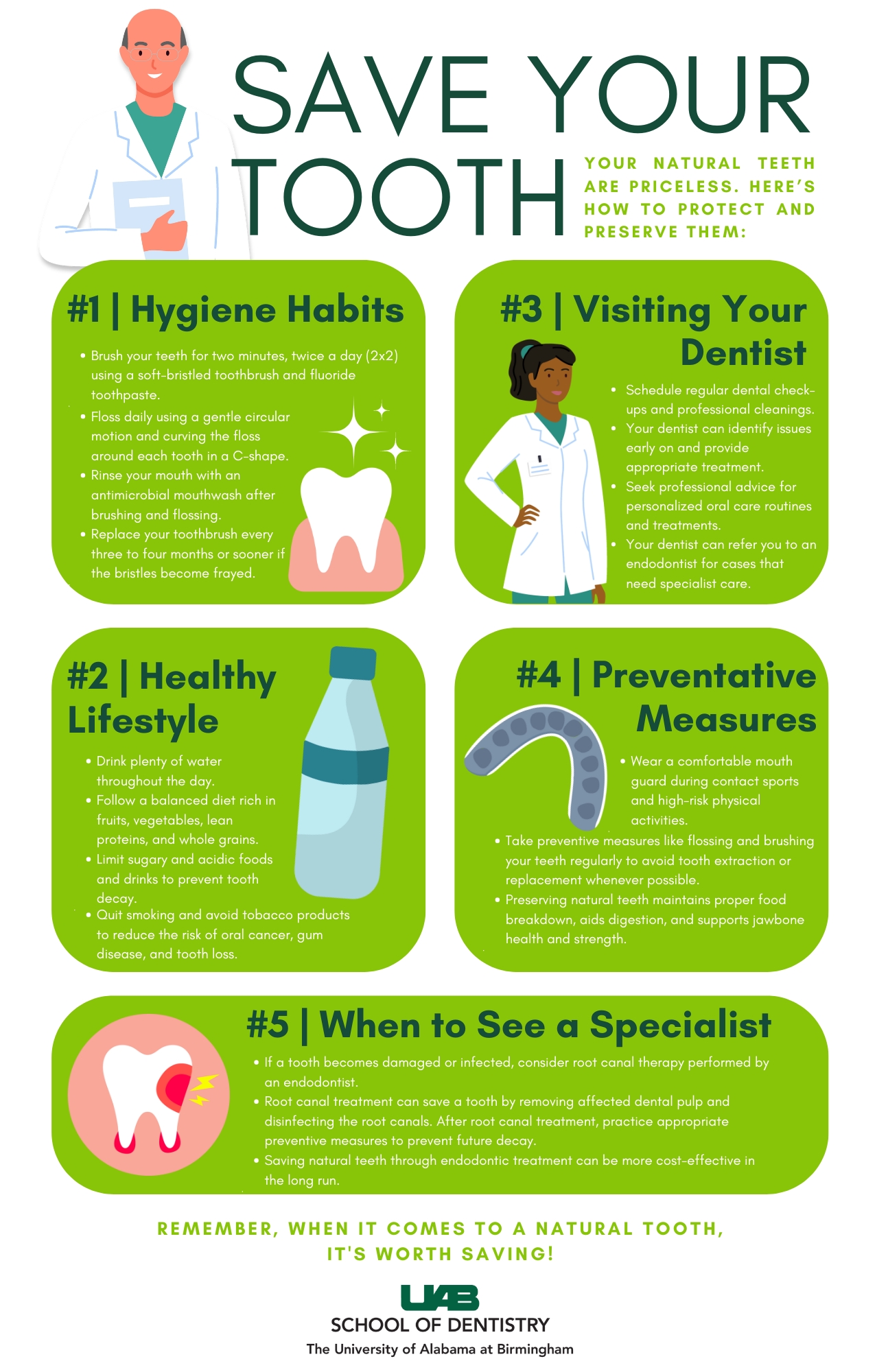
Hygiene habits begin with brushing your teeth for two minutes twice a day (2x2) with a soft-bristled toothbrush and a pea-sized amount of toothpaste. Some brands of toothpaste come with fluoride which can help strengthen your teeth. After brushing, floss at least once a day using a gentle sawing motion, curving the floss around each tooth in a C-shape. This removes food particles and plaque from between your teeth and along the gum line. After brushing and flossing, rinse your mouth with an antimicrobial mouthwash to help kill bacteria. Don’t forget to replace your toothbrush every three to four months or sooner if the bristles become frayed. A worn-out toothbrush is less effective at cleaning your teeth.
Fouad says that since your oral health is closely linked to your overall health, it is important to maintain a healthy lifestyle. Drink plenty of water throughout the day and eat a balanced diet rich in fruits, vegetables, lean proteins, and whole grains. Limit your intake and the frequency of sugary and acidic foods and drinks since they can contribute to tooth decay. Behaviors like smoking and using other tobacco products can significantly increase the risk of oral cancer, gum disease, and tooth loss. Smoking is also associated with increased tooth pulp infection and reduced healing after treatment. Quitting tobacco is beneficial for both your oral health and overall well-being.
Visit your dentist regularly, he advocates. Regular dental check-ups and professional cleanings are essential. Your dentist can identify issues early on and provide appropriate treatment.
“In most industrialized countries, where access to care is higher, caries is on the decline but dental trauma is on the rise,” said Fouad. “Trauma can result from things like accidents, falls and fights, but a big factor is our focus on a healthy, active lifestyle.”
He suggests that bicycles, basketball, and soccer are big contributors and points out that people wear helmets while cycling, but the helmet does nothing to protect the teeth. As a preventative measure, he urges you to wear a comfortable mouthguard while engaged in contact sports and other high-risk physical activities.
While there are situations where tooth extraction or replacement may be necessary due to severe trauma, decay, or other dental issues, preserving your natural teeth whenever possible is preferred. Natural teeth are designed to efficiently break down food and aid in the process of digestion. And since teeth are connected to the jawbone, the process of chewing helps to maintain the bone's health and strength. If teeth are lost, adjacent teeth can shift and tilt, leading to misalignment, bite problems, and potential gum issues. The jawbone can begin to deteriorate, which can result in facial sagging and other aesthetic issues.
If a tooth does become damaged or infected, Fouad says an endodontist can perform root canal therapy to save it. The procedure involves removing the affected dental pulp, cleaning and disinfecting the root canals, and then filling and sealing them. After the root canal treatment and appropriate restoration of the tooth, it remains critical for the patient to save the tooth from future decay by appropriate preventive measures.
“Root canal treatment has a very high success rate," says Fouad. "However, even for the small percentage that continue to have disease, an endodontist can perform re-treatment or a small surgery at the tip of the root to save many of these cases.”
He warns that while endodontic treatment may seem costly at first, preserving and restoring the functionality of natural teeth can be more cost-effective in the long run.
When it comes to a natural tooth, it’s worth saving.