Our school boasts a dedicated faculty and staff who invest a significant amount of time and effort in conducting groundbreaking research. This page aims to showcase some of our exceptional faculty and staff members’ outstanding research.
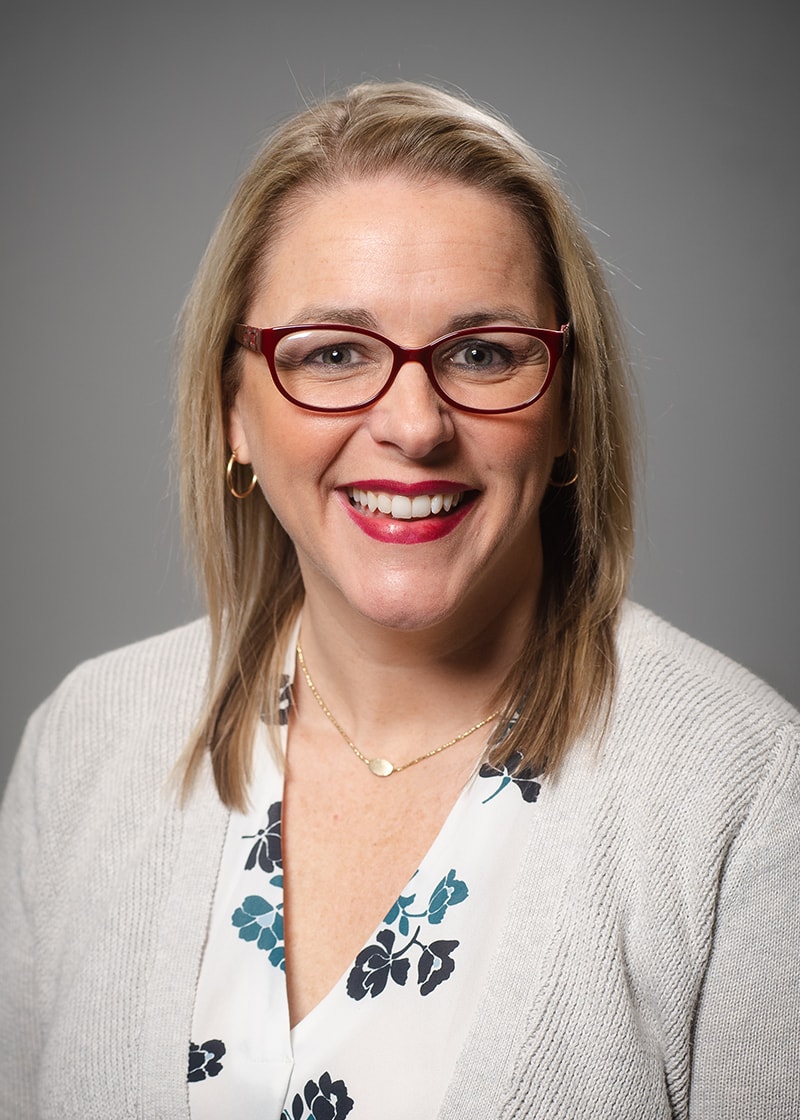
Kelly Hill, PhD
Research Interests: Teacher preparation, supporting multilingual learners in mainstream classrooms, early literacy, family engagement, translanguaging pedagogy, and effective field experience for pre-service teachers
Methodological Interest/Expertise:Qualitative Methodology (thematic analysis, case study, phenomenology, doc analysis, action research) and Mixed Methods (exploratory sequential and explanatory sequential)
Dr. Kelly Hill is an Associate Professor of Early Childhood (ECE) and English Learner Education at the University of Alabama at Birmingham (UAB), where she has served since 2015. With professional experience spanning PK–12 education, literacy coaching, and higher education, Dr. Hill brings a comprehensive and practice-informed perspective to her work in teacher education. Her contributions are grounded in a commitment to language and literacy development, family engagement, multilingual education, and the preparation of educators who are responsive to the diverse needs of learners in their communities. Mentorship is a central component of Dr. Hill’s teaching. She has chaired or co-chaired numerous doctoral dissertations and served on many dissertation committees, supporting research on literacy, multilingual education, and early childhood teaching and learning. Her mentorship often includes guiding students toward conference presentations and publications, contributing to their development as scholars and practitioners. Her commitment to graduate mentorship has been recognized with the Graduate Dean’s Award for Excellence in Mentorship. She has an extensive record of peer-reviewed publications in journals such as Educational Leadership, Talking Points, and the National Field Experience Journal, as well as contributions to edited volumes and practitioner-focused TESOL publications. Her scholarship addresses topics including multilingual literacy practices, inclusive classroom environments, and strategies for engaging families in children’s learning. Dr. Hill is an active contributor to national and international scholarly communities, presenting regularly at conferences such as TESOL, the National Council of Teachers of English (NCTE), and the National Association for the Education of Young Children (NAEYC). These presentations reflect her engagement with current issues in teacher education and her role in advancing conversations around multilingualism and literacy. Dr. Hill contributes to the field through editorial board service and manuscript review for journals and conferences, supporting the dissemination and evaluation of research in literacy and multilingual education. She currently serves on the editorial board for The Reading Paradigm, a state literacy journal, and The Dialog: A Journal for Inclusive Early Childhood, a well-respected national journal. She also serves on the executive board for NCTE Language and Literacy for All (LLA). Her research has been supported by significant external funding. She served as Principal Investigator on a $2.6 million U.S. Department of Education National Professional Development grant (IMPACT-PD) and as Co-Principal Investigator on a second federally funded project (CREST), both focused on improving outcomes for English learners through teacher development and instructional support. These projects demonstrate her ability to lead collaborative research initiatives with direct implications for educational practice. Dr. Kelly L. Hill’s work reflects a strong integration of teaching, scholarship, and service in support of teacher education, teaching multilingual learners, and literacy development. Through her teaching, she prepares educators to meet the needs of diverse learners; through her scholarship, she contributes to knowledge and practice in multilingual and early literacy education; and through her service, she strengthens programs and professional communities. Her contributions demonstrate a sustained commitment to advancing equitable and effective educational practices across multiple contexts.
Highlighted Publications:
Hill, K., Paul-Flannery, J., Ponder, J., & Komol, G. J. (2026). More isn’t always better! Effective and efficient alignment of teacher candidates’ coursework and fieldwork. National Field Experience Journal (32) 1, 70-94.
Sudduth, M., Paul-Flannery, J., & Hill, K. (2025). Nurturing home languages to engage and empower multilingual families in early childhood settings. The Dialog: A Journal for Inclusive Early Childhood Professionals, 28(1), 45–55.
Lee, E. O., Ennis, R. P., Anson, L. E., Kilgo, J., Christensen, L. M., Hill, K., & Stavrinos, D. (2025). Using a mindfulness-based intervention with children with autism spectrum disorder to decrease disruptive behavior in early elementary inclusion classrooms. Journal of Emotional and Behavioral Disorders, 0(0).
Hill, K. (2024). Translanguaging pedagogy: A bridge to reading success for young English learners. The Reading Paradigm, 17(1), 39–46..
Paul, J., Sudduth, M., Woodard, M., Pruitt, C. & Hill, K. (2023). Empowering pre-service educators to build multilingual spaces through family engagement. The Reading Paradigm, 16(1), 16–22.
Hill, K. (2022). “I build my casa from rocks!”: Translanguaging in shared reading for multilingual learners. Education, 142(4), 157–168.
Hill, K. & Allen, K. (2021). And that’s the end of the story! How Nataly found her voice. Talking Points, 33(1), 17–24.
Check out Dr. Hill's Scholar Page for more information
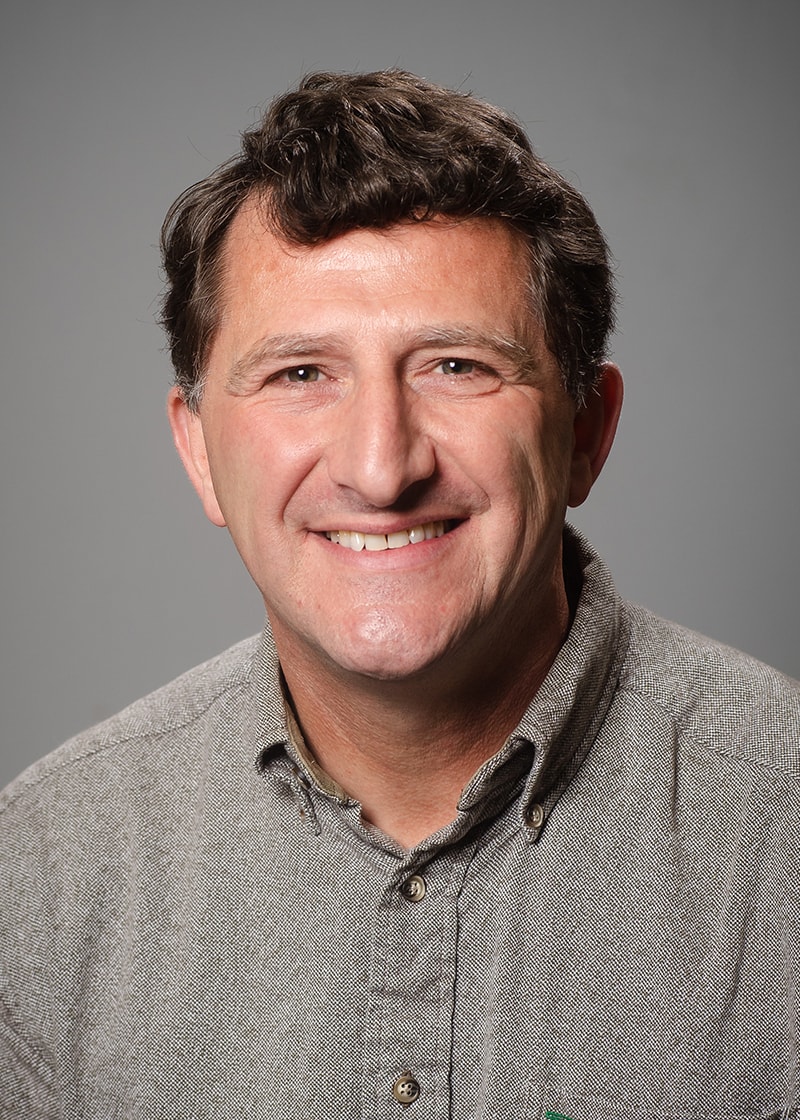
James Ernest, Ph.D.
Research Focus: Effects of the expansion of state-funded high-quality Pre-K programing including retention, absenteeism, disciplinary infractions, achievement; Researching the state's Pre-K to 3rd grade expansion project.
Methodological Interest/Expertise:Program Evaluation; Quantitative approaches; Q Methodology as mixed methodology.
Dr. Ernest’s recent work involves field-based research that provides data analysis, research evidence, and consultancy to the Secretary for the Alabama Department of Early Childhood Education (ADECE) and her team. With colleagues in the School of Public Health, UA Tuscaloosa, and PARCA we have secured over $5 million in grant funding to support our work over the past decade. Our data-based collaborative research has anchored grant applications to help receive federal grants of more than $75 million awarded to the ADECE. This is split into two main projects with the work compiled into more than 20 research briefs over the past decade. The First Class Pre-K project uses research and data recommendations to support the rationale and evidence for systematic program expansion including where new classrooms are funded and pace of growth; choice of curricula and assessments; and the value of coaching to support teacher professional development. Initially, Dr. Ernest developed the Alabama Reflective Coaching (ARC) model in 2012 from his work in Georgia in the 2000’s. The ARC has been used in over 1500 classrooms with lead teachers. Our research team has systematically created a dataset of more than 600,000 unique individuals from the state education system used to compare children attending the First Class Pre-K program and those that did not. We use this database to explore academic progress (primarily math and reading), attendance, retention rates, special education placements, behavioral incidents, High School graduation rates, and will be exploring post-graduation variables. Our work has provided accountability for increasing the state budget for Pre-K from just over $19 million in the 2011-2012 year to $210 million in the 2027 budget. The program for 4-Year-Olds has developed from teaching just over 3,000 children to more than 24,000 children annually. This work to improve Alabama’s early learning system led to being interviewed in the documentary Starting at Zero: Reimagining Education in America. Our second line of exploration is research for the Pre-K to 3rd Grade project. This provides data to support increased funding and development of Governor’s Kay Ivey’s P-3 expansion as part of the larger Strong Start, Strong Finish initiative. Since our first program evaluation in 2019, the number of classrooms implementing the P-3 initiative has risen to 489 statewide. In the past year, the P3 project has been linked to the larger First Class Pre-K project for future analysis. Professionally, Dr. Ernest has served as the Research Chair for Childhood Education International, an Associate Editor for Early Childhood Education Journal (the #1 Early Childhood Education journal according to Google Scholar Metrics), and reviews for several early childhood journals. He is the Vice Chair for the Department of Curriculum and Instruction at UAB.
Recent Publications:
Preskitt J., Kerch C., Ernest J., Rahim J., Yami A., Cooper M., Morgan G., Walker T., Brooks A. & Johnson H. (2026). A first look at a combined approach to improving 3rd grade reading and math: First Class Pre-K & Pre-K-3rd Grade integrated approach to early learning. [Issue Brief, 1-4].
Kerch, C., Donovan, D. A., Ernest, J. M., Strichik, T., & Winchester, J. (2021). An exploration of language and social-emotional development of children with and without special needs in a statewide pre-kindergarten program. Education and Treatment of Children, 43, 7-19.
Preskitt, J., Johnson, H. H., Becker, D, Ernest, J. M., Fifolt, M., Adams, J., Strichik, T., Ross, J., & Sen, B. (2020). The persistence of reading and math proficiency: The benefits of Alabama’s pre-kindergarten program endure in elementary and middle school. International Journal of Child Care and Educational Policy, 14(8), 1-12.
Check out Dr. Ernest's Scholar Page for more information