UAB Theatre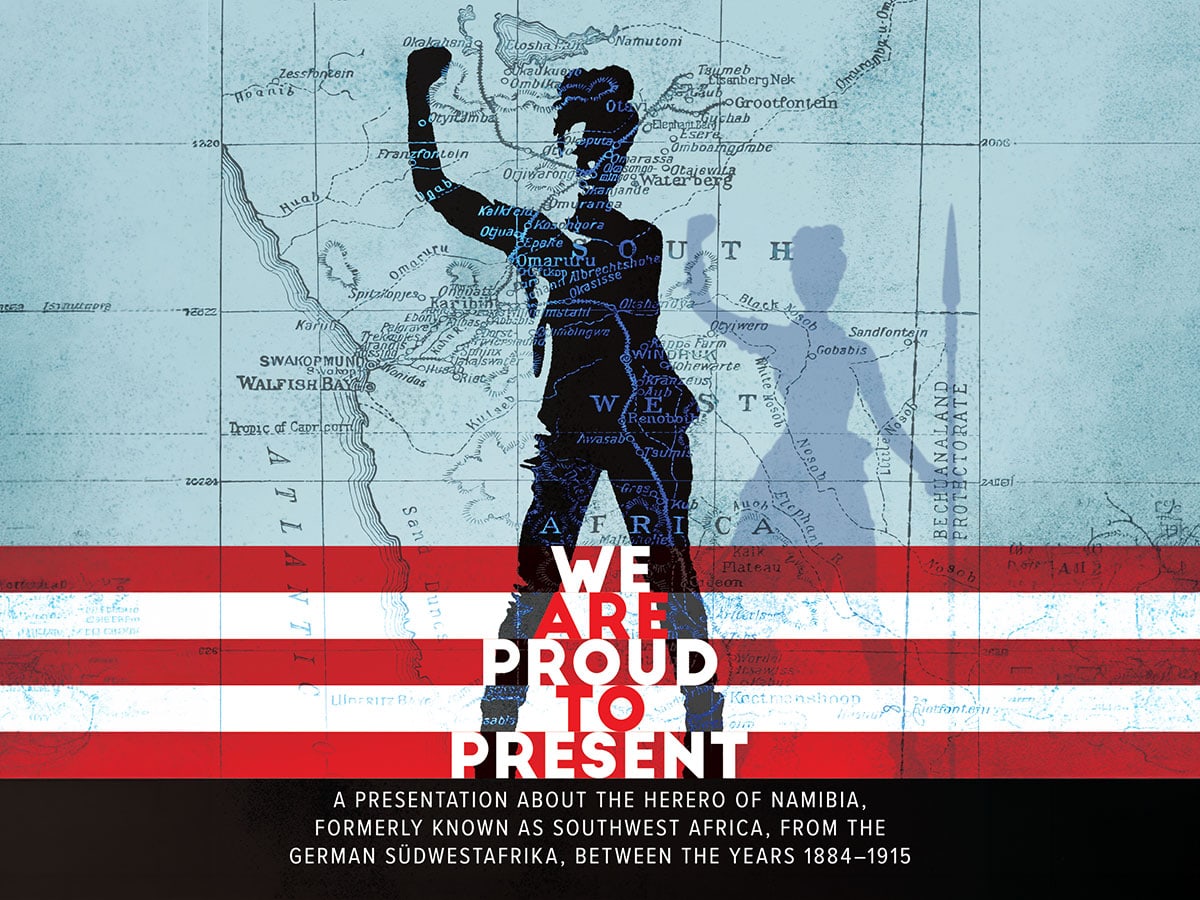 This meta-theatrical drama by Jackie Sibblies Drury tells the story of six actors wrestling with the history of colonial genocide in Namibia and its impact on human relations in the present day.’s new season features plays about power and will open with a meta-theatrical drama: Six actors gather to tell the story of a forgotten genocide against the Herero and Nama people in colonial Africa.
Theatre UAB is the performance company of the College of Arts and Sciences’ Department of Theatre at the University of Alabama at Birmingham.
The plays this season will explore power in its many shades and manifestations, says Professor and Chair Megan Lewis, Ph.D.
“These are timely plays that explore the personal and political nature of power,” Lewis said. “All the works in the season demonstrate the vital work theater does in our world — how we tell the stories of our times — in entertaining, sizzling and provocative ways. This play is about what we know — or do not know — about somewhere else, and what we can — or cannot — discuss right here at home.”
See “We Are Proud to Present” at 7:30 p.m. Oct. 14-17 and at 2 p.m. Oct. 17-18, in UAB’s Alys Stephens Center, Odess Theatre. Tickets are $15.
“We are Proud to Present”
The play, from 2012, has a long name: “We Are Proud to Present … a Presentation About the Herero of Namibia, Formerly Known as South West Africa, From the German Südwestafrika, Between 1884-1925.”
It is written by American playwright Jackie Sibblies Drury, who balances sharp humor with mounting dramatic tension as she explores how the idea “history is written by the victors” can color how the past is perceived, writes student dramaturg Andrew Gleason.
Within a rehearsal room, a group of six idealistic contemporary actors, three white and three Black, collaborate to wrestle with the history of German colonial rule in Namibia. Along the way, they test the limits of empathy as their own stories, assumptions and prejudices catalyze their theatrical process.
As the actors begin developing their educational presentation about this historic atrocity, they encounter a fundamental archival obstacle: The Herero left behind virtually no written primary records. This forces the troupe to rely on letters sent home by German soldiers as historical sources. They find themselves attempting to reconstruct the erased voices of the victims using only the biased archives. Eventually, the full force of the horrific past crashes into the good intentions of the present. What seemed a faraway place and time comes all too close to home.
Mona Eldahshoury, who is making her directorial debut at UAB, says the play takes its unwieldy title seriously.
“Between those years, the German colonial government carried out a genocide against the Herero and Nama people of present-day Namibia,” Eldahshoury said. “It is one of the least remembered atrocities of the 20th century.”
Beginning in 1884, German settlers in Southwest Africa exploited and abused local tribes for two decades. In January 1904, the Herero and Nama people revolted against colonial oppression and land seizures. General Lothar von Trotha responded with an extermination order in October 1904, known as “Vernichtungsbefehl.” What followed was a German onslaught that forced Herero men, women and children to flee into the Omaheke Desert or be imprisoned within concentration camps. The result was the deaths of up to 80 percent of the Herero and 50 percent of the Nama population. This is recognized as the 20th century’s first genocide.
In the rehearsal room, the six actors have good intentions; but their process breaks under the strain of unanswered questions and their own subjective histories. The play poses many questions but finds few answers, Eldahshoury says.
“‘We Are Proud to Present’ refuses the comfort of a right way to do this work and instead asks its audience to hold the past in productive tension as we wrestle to find answers for the present,” she said.
Performances of “We Are Proud to Present” will be at 7:30 p.m. Oct. 14-17, with a 2 p.m. understudy matinee Saturday, Oct. 17, and a 2 p.m. matinee Sunday, Oct. 18, in the Odess Theatre in UAB’s Alys Stephens Performing Arts Center. Tickets are $15, or call 205-975-2787.
Each show will include a talk-back after the performance. Lewis will lead the post-show conversation on opening night, Wednesday, Oct. 14. Gleason will lead the post-show discussion Saturday, Oct. 17, with Jennifer Taylor from Equal Justice Initiative, and Sunday, Oct. 18, with director Eldahshoury.
Special guest Catherine Mathers, Ph.D., from Duke University will lead the post-show discussions Thursday, Oct. 15, and Friday, Oct. 16. Mathers will screen her film “When I Say Africa” at UAB’s Institute for Human Rights, Heritage Hall, Room 402, at 3 p.m. Oct. 16.
A South African sociocultural anthropologist with interdisciplinary training in sociology and the natural sciences, Mathers is associate professor in International Comparative Studies at Duke University. Her book “White Saviorism and Popular Culture: Imagined Africa as a Space for American Salvation” (Routledge 2023) interrogates the white savior industrial complex by exploring how America continues to present an imagined Africa as a space for its salvation in the 21st century. She produced the documentary “When I Say Africa,” grounded from her book “Travel, Humanitarianism and Becoming American in Africa” (Palgrave 2010).
Cast and crew
The cast is Kazarious Brown of Cottondale, Alabama; Lily Cameron of Adamsville, Alabama;
Andrew Gleason of Las Vegas, Nevada; Arianna Mendoza-Corona of Helena, Alabama;
Isabella Newton of Birmingham, Alabama; and Jared Owens of Fort Payne, Alabama. Understudies are Kimahri Sanders of Northport, Alabama; Sarah Thiel of Fultondale, Alabama; and Patrick Wilson of Irondale, Alabama.
The crew is Ola Ajigbeda of Homewood, Alabama, and Katelyn Douglas of Springville, Alabama, assistant directors; Alexander DeWolfe of Hoover, Alabama, stage manager; Samantha Adkins of Madison, Alabama, and Brook Powell of Mobile, Alabama, assistant stage managers.