
Tell us what you're doing after graduation!
Complete the First Destination Survey today.
Schedule an Appointment
You can schedule an appointment to meet with a UAB Career center team member. Log into Handshake and select the "Career Center" tab. Then click the "Appointments" box to get started.
Walk-In/Drop-In
The UAB Career Center offers a virtual “walk-in/drop-in” service available to UAB students without an appointment. The virtual walk-in/drop-in hours are Monday through Friday from 9:00 a.m. until 4:00 p.m. on a first come, first served basis. Click the yellow box below to access the walk-in/drop-in service via Zoom.
Cancellation and No-Show Policy
for Scheduled Appointments
If you need to reschedule or cancel your appointment, please notify our office 24 hours in advance. This allows our staff to offer your appointment time to another student, who is in need of our services. Failure to cancel your appointment within 24 hours, more than once, will result in losing your appointment privileges for the semester; however, you may still utilize our drop-in services.

For students, micro-internships are short-term, paid, professional projects that provide opportunities for career exploration, skill development, and building a network.
Micro-internships are the perfect opportunity for employers to support quick-turnaround projects while identifying potential long-term interns or job candidates through a talent-rich pool of UAB students.
Unlike traditional internships, micro-internships can take place year-round, typically range from five to fifty hours of work, and have a duration of one week to one month. Micro-internships are used by Fortune 100 to emerging start-ups and can impact various areas.
Employers can post micro-internship opportunities, students can apply, and then employers can virtually interview students when it fits their schedule via Zoom or other web-based conference platforms.
For more information about hiring UAB students for micro-internships, contact us at careercenter@uab.edu.
-
Students
Students
Micro-internships are your opportunity to explore different careers, enhance your skills, prove yourself, and build your professional network and portfolio. In addition, you will have a chance to receive valuable feedback from your employer around workforce readiness competencies. Micro-Internships are short-term, skilled, paid work experiences, many of which can be completed remotely.
Through Micro-Internships, you can demonstrate your skills, explore career paths, and develop your professional network. These paid opportunities typically range from 5 to 40 hours of work and are available year-round. New Micro-Internship opportunities are being posted daily. If you are interested, here's how to get started:
- Create an account at https://info.parkerdewey.com/uab
- Fill out your profile as completely as possible (takes < 5 minutes)
- Review current Micro-Internships available
- Apply to projects of interest by providing customized, carefully edited responses to the application questions
- Be sure to check the platform regularly for new opportunities
For more information about micro-internships, contact internships and Workforce Readiness at nwadams@uab.edu.
-
Employers
Employers
Beyond offering opportunities for our students to gain experience and demonstrate their skills, Micro-Internships also provide you or your colleagues with immediate support on short-term tasks. In addition, Micro-Internships support your university recruiting efforts, helping you identify, assess, and build relationships with students who may be prospective job candidates.
Micro-Internships typically require 5 to 40 hours of work by the student, are due a few days to a few weeks out, and are similar to those completed during a typical internship. Given the nature of this program, students are not your employees or contractors, making it easy to provide these opportunities on demand.
- Sales/Marketing
- Human Resources
- Strategy
- Research
- Operations and Support
- Finance and Accounting
- IT
https://info.parkerdewey.com/uab/featured
To learn more and post projects, visit UAB Micro-Internship.
What is the UAB Career Influencer Network?
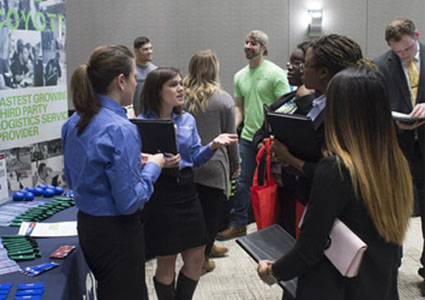
The Career Influencers Network provides the opportunity to learn how to best support students in becoming career ready and achieving post-graduate success in today’s quickly evolving world of work. The UAB Career Center is focused on empowering and equipping campus partners with the tools they need to assist students with transitioning from college to career.
- Open to all faculty, staff, and administrators
- Three 60-90-minute sessions required
- Receive a certificate of completion and the career readiness toolkit, which provides activities, rubrics, and templates to facilitate connections between students’ academic experiences and their career goals
What can we expect to learn in each 90-minute session?
The three initial workshops we will be offering this summer include:
- UAB Career Center Services and Resources
- Description: This workshop will provide participants with an overview of the services and resources available through the UAB Career Center. Participants will identify resources and services to utilize at various points throughout the UAB student experience to maximize support of their career development journey.
- Duration: 1 hour
- Student Career Success Factors
- Description: This workshop will assist participants in identifying and exploring student career success factors. Participants will identify current and future opportunities to integrate and highlight these student career success factors into their work with students.
- Duration: 1 hour
- Student Career Planning and Career Launch
- Description: This workshop will provide participants with tools, techniques, and best practices to support successful student career planning and career launch. During this workshop, participants will explore the development of student 4-year career plans, identify opportunities to maximize resource utilization, and role-play student career conversations.
- Duration: 1 hour
To view and register for the Career Influencer Network Series visit the UAB Center for Teaching and Learning Upcoming Workshop Series.
For more information about this series contact careerservices@uab.edu.
UAB Career Influencer Network Completers
-
College of Arts & Sciences

Tyna Adams
Ph.D. Academic Advisor, College of Arts and Sciences (CAS)

Jamie Grimes
Academic Advisor, Chemistry

Crimsynn Dover
Academic Advisor, Psychology
College of Arts and Sciences (CAS)

Jayde Sherron
Academic Advisor,
College of Arts and Sciences (CAS)

Catherine Danielou, Ph.D.
Senior Associate Dean for Undergraduate Academic Affairs

Janet Morrison
Academic Advisor, Biology

Carin Mayo
Program Manager II, Political Science and Public Administration

Heather Patterson
Instructional Laboratory Coordinator, Biology

Martha Earwood
Teaching Assistant Professor; Internship Coordinator

Heather Ammons
Honors Counselor II
-
Honors College

Heather Ammons
Honors Counselor II
-
Office of the Provost

Laine Chapman
Manager of Outreach and Work-Study Program, Office of Financial Aid
-
Office of First Year Experience

Victoria Smith
Associate Director - First Year Experience
-
School of Health Professions

Rachel Mars
Academic Advisor
-
School of Engineering
George Talley
UAB Adjunct Instructor, School of Engineering
-
School of Nursing

Leah Carpenter
BSN & AMNP Pathway Manager
-
School of Public Health

Meena Nabavi
Program Manager, School of Public Health

Tessa Graham
Program Coordinator II

Lisa McCormick
Associate Dean for Public Health Practice

Nicole Gravitt
Academic Advisor
-
Student Affairs

Stacey Maline
Associate Director of Programming, University Recreation

Allie Reeves
Accommodation Services Coordinator, Disability Support Services

Jenna Robie
Program Coordinator II, Disability Support Services

Debbie Morgette
Assistant Director for Student Outreach
-
UAB Athletics

Ramone Cooper
Associate Athletic Director for Student-Athlete Services
Frequently Asked Questions
-
Is the Career Influencer Network open for everyone?
The Career Influencer Network is open to all UAB Faculty & Staff.
-
Will we receive points from CTL for this workshop?
Yes, The Career Influencer Network is part of the point’s partner. Certificate for completion of series and points towards CTL certifications.
-
Are these workshops offered online or remotely?
Yes, Workshops are currently being offered virtually.
-
What happens when I complete all of the workshops in the series?
Once you complete all workshops you will receive a certificate of completion and the career readiness toolkit, which provides activities, rubrics, and templates to facilitate connections between students’ academic experiences and their career goals. You will also be acknowledged on the Career Center Website.
-
Are these workshops recorded?
Yes, they are recorded through CTL but you don’t get points for viewing a recording.
-
How often are these workshops offered?
These workshops will be offered several times each term. Our goal is to ensure everyone has the opportunity to complete the series.
-
Does the Career Center provide any follow-up support with implementing these career readiness practices?
Yes, Along with the Career Readiness toolkit, The Career Center Staff is available to assist you with implementing career readiness practices in your everyday work with students.
-
Can I refer a co-worker/colleague to this workshop series?
Yes, we encourage all participants to refer all coworkers and colleagues.
-
Who do I contact if I have questions about the Career Influencer Network?
Meagan Mason- ButlerMason@uab.edu
Adam Roderick- AdamRod@uab.edu
UAB Career Center Canvas Course 
The UAB Career Center is now providing UAB students with the opportunity to enhance career readiness through Canvas modules focused on key career components and resources. These modules can be completed as a series or individually. The modules are designed to walk you through various aspects and tasks to ensure you are ready for your career journey.
At UAB, we want every student to establish a solid foundation for career success following graduation. The bedrock of that foundation is set now – while you are engaged in your academic journey. These modules complement your coursework and assist in refining skills, competencies, and abilities to propel you forward to career success.
Each module comes equipped with an introduction, learning outcomes, multiple resources, and action items, and assessments. Students can complete each module 10 - 20 minutes.
UAB Career Center Canvas Modules
Click the modules below to learn more about each lesson.
-
Introduction to the Career Center
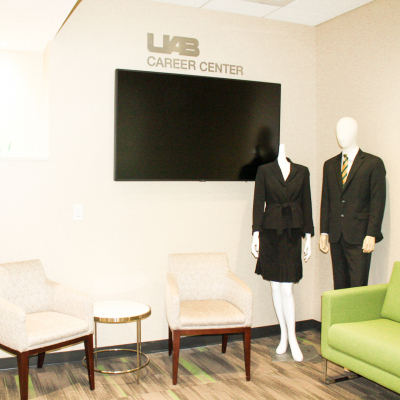
Introduction to the Career Center
This introductory module will walk you through the services and resources offered by the UAB Career Center and will connect you with your assigned Career Consultant.
-
Learning Objectives
- Identify the services offered by the UAB Career Center
- Identify career resources available through the UAB Career Center
- Identify assigned Career Consultant
- Activate and complete Handshake profile
-
After completing this module, you will be able to:
-
Self and Career Exploration

Self and Career Exploration
Through this module, we will walk you through some steps and exercises to identify a career pathway that fits your unique skills, values, experiences, and aspirations. Even if you already have an idea about what your career trajectory may include, use this module to help refine that trajectory and solidify a career plan to achieve career and professional goals.
Learning Objectives:
-
After completing this module, you will be able to:
- Explore unique values, skills, personality, interests, and leisure activities
- Explore various majors and careers through the utilization of the FOCUS 2 assessment
- Identify career pathways that align with unique characteristics and aspirations
- Develop a personalized Career Action Plan
-
Gaining Experience

Gaining Experience
Having a career roadmap is a critical task for successfully navigating the college to career transition. A crucial part of having a plan that aligns and complements career goals is gaining relevant experience. These experiences will not only solidify a career path that fits personal skills and work values, but these experiences will also increase the probability of future success.
Learning Objectives:
- After completing this module, you will be able to:
- Identify various approaches and opportunities for gaining experience at UAB
- Identify three SMART goals to implement in gaining relevant career experience
- Identify and connect with assigned Career Consultant
- Complete Handshake profile
-
Resume Building

Resume Building
A well-drafted resume separates good from great. Compelling resumes are not just summaries of education and work history; they emphasize accomplishments and results and connect skills and experience to an employer’s needs. This module will introduce the best practices in crafting a strong resume.
Learning Objectives:
-
After completing this module, you will be able to:
- Construct Accomplishment Statements using the APR format
- Navigate through an Applicant Tracking System
- Develop a personal resume highlighting relevant experiences and skills
-
Interview Skills

Interview Skills
Interviews may be conducted over the phone, online, in-person, or in a group. Regardless of the format of the meeting, it is challenging to be successful in an interview without clearly conveying to the interviewer why the employer should hire you and how your skills relate to the position. In this module, we will walk you through the keys to excelling in the next interview.
Learning Objectives:
- After completing this module, you will be able to:
- Navigating the common interview questions
- Utilize the STAR Method to respond to behavioral interview questions
- Successfully follow-up on the interview
- Identify appropriate interview attire
-
Career Launch
Career Launch
It is time to start thinking about life after graduation. In this module, we walk you through some key concepts to ensure you are positioned for your first destination upon graduation. In this module, we will review marketable skills, explore avenues for locating opportunities and identify resources to use in securing your first full-time position.
Learning Objectives:
-
After completing this module, you will be able to:
- Reflect on a Career Event attended
- Assess current career competencies and articulate those competencies to future employers
- Identify the importance and benefits of networking
- Identify four (4) posted positions in Handshake
-
Building Your Professional Network

Building Your Professional Network
Understanding how to create, build, or enhance your professional network can improve your opportunities to new jobs, careers, promotions and professional standing. This module will introduce you to successful strategies and activities to craft and improve your professional network.
Learning Objectives:
-
After completing this module, you will be able to:
- Identify action steps to build your professional network
- Recognize the benefits of an informational interview
- Identify the different segments or parts of an Elevator Pitch
-
Your Professional Brand
Your Professional Brand
In this ever-changing digital world of instant video and digital technologies, building and maintaining a positive, yet strong professional brand has become imperative in your career development. Companies and employers are also exploring new ways and technologies to maximize recruitment efforts and efficiencies to search for desirable candidates. A well-crafted resume should not be your only tool in your career search strategy.
Learning Objectives:
-
After completing this module, you will be able to:
- Recognize the importance of building a positive professional brand
- Identify components of a professional and personal online audit
- Identify available web-based resources in creating an active online professional profile
-
Introduction to Exploring Graduate and Professional School

Introduction to Exploring Graduate and Professional School
This module will introduce you to many factors and opportunities available when deliberating your pursuit of a post-baccalaureate degree. The decision factors and resources offered in this module are not extensive or exhaustive lists of factors or resources. The information provided is meant to serve as a resource guide of the most common factors most individuals consider when making this potentially life-changing decision.
Learning Objectives:
-
After completing this module, you will be able to:
- Identify the common decision factors when considering graduate or professional school.
- Identify two types of graduate and professional master's degrees (beyond the various academic disciplines).
- Identify five common application materials required by most graduate and/or professional schools.
-
Personal Finance

Personal Finance
In this module, you will learn about the key areas of personal finance essential to launching your career on a strong financial foundation. Those areas are:
Learning Objectives:
-
After completing this module, you will be able to:
- Budgeting - keeping up with all of your income sources and what you do with that income is vital to your financial health.
- Saving - start learning the importance of "paying yourself first".
- Credit - learn how to establish and maintain good credit.
Career Center Canvas Modules Q&A
-
What is the UAB Career Center Canvas Course?
The UAB Career Center Canvas Course is an interactive course designed to guide you through instructional content and interactive activities to build on your career-readiness and competencies. Currently, the course offers six informative modules to deepen and broaden your knowledge about resources offered by the UAB Career Center, develop a clear plan of action to excel in your future career, and refine your resume and interview skills.
-
I did not sign-up for the UAB Career Center Canvas Course. How did I get enrolled?
The UAB Career Center believes every UAB student should have access to the career-readiness resources and services of the UAB Career Center. You should have the same access and information as your peers about how to find jobs and internship, build a resume, how to prepare for interviews, and understand how to begin networking with professional in your aspirational career field. You have been enrolled to ensure your equal access to career-readiness resources.
-
Am I charged a tuition fee if I am enrolled in the UAB Career Center Canvas Course?
Good news! No. Enrollment in the UAB Career Canvas Course is free resource by the UAB Career Center. There are no additional charges associated with this course. Please note, this is not an academic course with a course grade or credit hour associated with the course.
-
Do I have to complete all of the Career Center Canvas Course modules?
You have been enrolled to ensure your equal access to career-readiness resources. Unless assigned by your instructor, you are not required to complete any of the Career Center Canvas Course modules. The UAB Career Center believes every UAB student should have access to the career-readiness resources and services of the UAB Career Center.
-
Will I receive credit hours for completing this course?
The Career Center Canvas Course is not an academic course you take for credit or a grade. This course is a self-directed resource you may find helpful in gaining greater insight and knowledge about the career tools and strategies beneficial for your career-readiness and success. Therefore, you will not earn academic credit for completing the Career Center Canvas Course. However, faculty and instructors can elect or choose to incorporate one or more Career Center Career Course modules in their respective courses which may impact your course grade and GPA.
-
Do the modules have to be completed in order?
It is not required to complete the Career Center Canvas Course in sequential order. However, as it relates to developing your general career-preparedness competencies, the modules are designed to build upon one another. Though each module has been designed to be independent of each other. This flexibility allows you to use the content of the course and course modules to fit your needs.
-
My professor/instructor has added a UAB Career Center Canvas Course module into one of my course. Can my professor/instructor add a module into the course?
Yes. In fact, we encourage it. While you are automatically enrolled in the UAB Career Center Canvas Course. You are not required to complete the course. The UAB Career Center recognize and support faculty and instructors who include career education as a learning outcome in their respective courses
-
If I have completed a UAB Career Center Canvas Course module on my own and my professor/instructor assigns the same module(s) for their course, do I have to complete the module again?
Faculty and instructors have the freedom to make course assignments. If you have a completed an module with in the UAB Career Center Canvas Course, we suggest you meet with your professor/instructor to discuss your question.
-
Does the course grade impact my GPA?
In short, no. The Career Center Canvas Course is not an academic course you take for credit or a grade. This course is a self-directed resource you may find helpful in gaining greater insight and knowledge about the career tools and strategies beneficial for your career-readiness and success. However, faculty and instructors can elect or choose to incorporate one or more Career Center Career Course modules in their respective courses which may impact your course grade and GPA.
-
I completed and submitted a module quiz/assignment, how long will grading take before I receive feedback?
It is the goal of the UAB Career Center to provide feedback on your completed/submitted quiz or assignment within 24 to 72 hours after submission. However, if you are completing the module quiz or assignment as part of an academic course assignment, your instructor may grade or provide feedback in less or more time.
-
Who do I contact if I disagree or have questions/concerns about how my quiz/assignment was graded?
If you have completed the module quiz or assignment as part of your self-directed learning, you can schedule an appointment with a career consultant in the UAB Career Center. Log into your Handshake profile to schedule the appointment. However, you may need to schedule an appointment with your course instructor if you have grading questions or concerns if you are completing the quiz or assignment as part of your academic course requirement.
-
Can I use the resume I built/designed in the canvas course to apply for jobs or internships?
The goal of the UAB Career Center is to provide you with the resources to help you become stronger and more confident in your knowledge and familiarity with the tools contained in the Career Center Canvas Course. You are also invited and encouraged to schedule an appointment with your career consultant for additional support and guidance.
-
I have completed the course module I thought would help me with my career-related question(s). Yet, I still have questions. What are my next steps?
If you have completed the ourse module and still have questions, you can schedule an appointment with a career consultant in the UAB Career Center. Log into your Handshake profile to schedule the appointment.
Request access to the Career Center Canvas Course
Thank you for your interest in taking your career readiness to the next level. We are excited to support you.
Please take a moment to complete the below Canvas Course Request Form so we can begin the process of providing you access to this content.
Career Center Canvas Modules Request Form
For more information about the student resources provided by the UAB Career Center, please visit our website.
Questions? Please contact our Associate Director of Career Education, Cynthia Washington, at cmw2@uab.edu
Searching for a position in higher education can be time-consuming, and the hiring processes can vary widely based on your discipline.
The first step is to consult with your mentors and advisors about timelines and expectations in your discipline. Then, you need to create an application package based on the requirements of the positions you are applying for and the standards of your discipline.
Here are a few explanations and samples of documents (in addition to your CV) that you may need to include as a part of your application package for your academic job search.
-
What is an Academic Cover Letter?
The academic cover letter is a key document that communicates your scholarly fit with the academic position, department, and institution you are applying to. Academic cover letters have a different format than business cover letters, and are scrutinized very closely by search committees; therefore, they must address both your research and teaching accomplishments, and highlight your future professional trajectory (and how that fits with the needs of the department).
It is very important to work with mentors in your discipline to align your cover letter and other application materials with your specific discipline’s standards and formatting. Our advice here is general, and varies by discipline, so make sure to talk with your mentors!
When and How to Use Academic Cover Letters?
- All academic positions will require a cover letter, and sometimes you will be asked to send your CV and cover letter only (eliminating all other application documents, like research and teaching statements). Therefore, the cover letter should be able to stand alone, in case the application process only allows you to submit a CV and cover letter.
- Consider the cover letter as one piece of the overall picture of you as a scholar created by all of your application documents. How does the cover letter expand on and reinforce the rest of your application?
- Begin by drafting your longer statements about teaching and research (dissertation abstract, research statement, etc.) Then craft one paragraph summaries of those longer statements for use in your cover letter.
- Think about the way you want to be perceived as a scholar and a teacher. What is the main takeaway you want the committee to have? Make sure to edit your cover letter to present the image that you want to portray.
Tips: Make sure to use university letterhead specific to your department. This is the only document that requires letterhead. Also, if you cannot find the name of the department contact, address your letter to the search committee.
Academic Cover Letter Paragraph by Paragraph
Introduction:
State the position that you are applying for, then in 1-2 sentences introduce yourself and include your dissertation title, chair, and degree completion date. Think about ending this paragraph with an explanation of your findings and how it impacts your field.
Dissertation/Thesis:
Go into more detail on your main findings—this might include your methodology and explanation of what you are examining. Explain how your work addressed a gap in your field. Describe the trajectory of your research and mention the most impactful publications the resulted.
Future Research:
Next, talk about your future productivity and research by describing planned projects and how they can further the department’s offerings. Specify journals and presses that you plan to submit projects to. (For teaching positions or shorter cover letters, you might combine the dissertation and future research into one paragraph)
Teaching:
Briefly state your approach to teaching and give some examples that demonstrate your teaching philosophy in action. Tailor this to the position, thinking about the size of the classes and the topics you might be teaching.
Tailor To the Job Ad:
You need to research the department in order to show how your research and teaching complement the current offerings of the department or its initiatives. You might find that the department is trying to fill a gap in their course offerings or research groups, and you can explain how you can address that need.
Closing:
Thank the hiring committee for their consideration and give a specific reason why you are interested in that school or department. Note the materials included in your application and state your availability for interviews (usually at a conference where the interviews will be held).
-
What is it?
A research statement is usually 1-2 pages (single spaced) that describes your research trajectory as a scholar. It is supposed to highlight your growth and explain your vision for your future research. For academic faculty appointments, especially those at research universities, the focus on your future research productivity is intense. Therefore, you need to tailor your research statement (along with all the other documents in your application package) to emphasize what the institution values—if a university has a strong research focus, emphasize your publications; if it values teaching a research equally, consider mentioning how your research complements your teaching.
When do I need one?
A research statement is used primarily for academic faculty applications, but also may be used for jobs at research institutions, think tanks, and government positions. Sometimes you might have to condense your research statement into a paragraph in your academic cover letter—the level of competitiveness in the academic market has increased, and many hiring committees specify that applicants should only send a cover letter and a CV. But it is always a good idea to have a fully realized research statement for all your applications; it might be asked for later in the hiring process.
Tip: The research statement structure varies by discipline! Make sure to talk with mentors in your program about the expectations in your discipline to ensure you are meeting the hiring committees’ expectations!
Two Potential Structures for the Research Statement
Structure One
Introduction:
Introduce your research interests in the context of your fieldSummary of Dissertation/Thesis:
Give more detailed information about your doctoral research project, perhaps by condensing your abstract or expanding on your dissertation paragraph from your cover letter.Contribution to field and publications:
Describe the significance of your project for your field and detail publications initiated from your research. You can include any future publication plans, also. Be specific about journals or presses that you plan to submit to, or who might be interested in publishing your work. For longer (2 page) research statements, use more detail in multiple paragraphs.Second Project:
Discuss your second project in detail and include publication plans for your work. (Humanities and Social Science scholars may only need to discuss one future project-make sure to know the pacing expected in your discipline) Make sure that your projects flow from your dissertation to your second project to show your cohesion as a scholar and your ability to innovate beyond your dissertation.Wider Impact of Your Research:
Describe the broader significance of your work. What ties these project together and/or what impact do you want to make on your field? Remember that if you are applying to a teaching-oriented position, you want to tie everything back to your teaching.Structure Two
25% Previous Research Experience:
Describe your early work and how it influenced your approach to research and/or how it reinforced a commitment to your field. Explain how this work led you to your current project.25% Current Practice:
Describe your dissertation/thesis project. Consider how to incorporate the primary features of your abstract—context, methodology, findings, significance. Mention any grants or fellowships that funded your project, publications that were initiated from your research, and any publications that are in the works.50% Future research:
Talk about how your current work will lead to and inform your future research. Describe the next major project in detail and include a realistic plan for accomplishing it. Keep in mind that future projects should be feasible given the resources, funding, and equipment available at the institution you are applying to. What publications might arise from your future research? Finally, make sure to tie your research plans to the overall research agenda of the whole institution. -
What are they?
Diversity statements are short (2 pages or less) documents that explain your experience and capabilities working with people from different backgrounds. Usually this pertains to teaching or service, so most applicants focus on experience teaching students from different backgrounds, participating in service activities that focus on minority issues, or teaching diverse topics. Diversity for this document can include race/ethnicity, religion, age, sexual orientation, gender identity, disability, veteran status, among others.
When do I need one?
Some job applications will specifically require a diversity statement. You can also include them as an optional supporting document if it is not asked for, as long as you don’t go over the page limits for the application package and it does not replace a document that is more important to your candidacy. Some institutions or jobs may highly value (HBCUs, universities that cater to veteran) and it might be a good idea to include a statement when applying to positions at those institutions.
A Short Example:
(Start with a general statement of your experience--use concrete examples when you can)
The experience of teaching a diverse student population had played an important role in shaping my growth as a teacher in higher education. As a graduate student at UAB, I acted as a lead tutor at TRIO, which was a program designed to support first-generation college students and students from underrepresented populations. This program serves students from a range of wide backgrounds, and students with various physical and learning disabilities, and veterans. Working at TRIO taught me how to diagnose the difference between rushed academic work and the work of a student with a learning disability. Additionally, as a teaching assistant for BIO 101, I worked in a group setting and had to learn how to encourage students from different backgrounds to contribute to group work and relate to each other through the complex racialized and gendered dynamics that arise in those settings.
(Think about ways to talk not just about teaching. Think also about outreach and research, if appropriate)
At USG, I would like to continue contributing to campus diversity through my teaching, research, and service. I would like to be able to take on a mentoring role and work with undergraduate and graduate student who are part of underrepresented populations through the Smith Scholars Program and I would be happy to meet with and advise student social groups such as the Muslim Student Association and International Scholars program. Finally, I believe that USG provides rich opportunities for interdisciplinary research and many chances to engage in issues across disciplines—I look forward to sharing my own research and methods with students and colleagues across campus.
-
What is it?
Also sometimes called a “Statement of Teaching Philosophy,” the Teaching Statement is usually between 1-2 pages and should give your reader a snapshot of your teaching experience and methods. Using the first person, you are expected to explain your approach to teaching, the impacts you have made, and outline some specific strategies, assessments, and evidence of outcomes that are supported by your teaching experience.
When do I need one?
A teaching statement is usually part of the application package for academic positions, teaching positions in K-12 and charter schools, and private schools. Sometimes they may be required for training positions at certain organizations. It is typically part of a more robust teaching portfolio, which will include a record of teaching experiences, evaluations, syllabi, etc.
Questions to ask yourself when writing a teaching statement:
- What are your goals for yourself and your students?
- What was your best teaching experience? Your worst? Pick an example of a time you made a mistake and how you implemented what you learned from it.
- What are your strengths and weaknesses as a teacher? How you can you improve?
- What are your philosophies on teaching and learning in the classroom, and how you do you implement them? What strategies do you use?
- How do you know when a strategy has worked? What kind of assessments do you use?
Teaching Statement Structure and Example:
First, introduce your teaching philosophy
I believe that my first job as a teacher is to create critical thinkers. Today’s students will be the people challenged with solving some of the greatest problems that humanity has ever faced, and even if my students do not all become scientists, a chemistry class can give students the skills they need to analyze their world from a different perspective. Practicing problem solving and extricating important information from a real world scenario is the best way to give students confidence in their skills and abilities, so they can face the challenges of the future …
Then, provide examples of teaching strategies and methods that you use that align with your philosophy
I find that questioning leads to more internalized knowledge of concepts. Asking questions hinting at the limitations of a theory can help a student logically deduce the next step in refining it. Sometimes questions need to be asked questions differently in order to help students think about the question from a different perspective. This leads to greater understanding and assists in developing critical thinking skills …
Provide evidence that strategies were effective
I am currently in the midst of running an entire course at UAB, and the process has been both challenging and rewarding. The students constantly challenge my way of thinking as I challenge theirs, and that dialogue helps both the student and the instructor grow as thinkers and as individuals. I have found that if the teacher is excited about teaching, with a goal of keeping the curriculum exciting, the students will follow suit. They should realize that the person standing in front of them is not only interested in science, but also cares about them and their difficulties, strengths and challenges. I have found that my methods have been able to keep students engaged in the process of scientific inquiry, even for students who are not necessarily science majors …
How can the uab career center help you?
UAB Career Center is here to help. Make an appointment with a career advisor to review your application package and discuss your future career plans.
If you are a postdoc, please contact Britney Blackstock, at (205) 934-6809 or brfields@uab.edu
Many graduate students pursue non-academic jobs for various reasons. Some choose to pursue academic and non-academic employment simultaneously, while others decide to focus exclusively on non-academic industries. If you are considering a non-academic job search after your PhD or Masters, here are a few things to consider:
Take an assessment of your skills and interests:
(Masters options): Focus2, TypeFocus.
(Ph.D. options): MyIDP and VersatilePhdare assessment tools that can help you find industries that fit your skills, strengths, and interests (You can access the Master’s resources through Handshake and the Ph.D. resources through the OPE careers page). Be empowered to make an individual appointment with the Career Center to talk about how to assess your skills and strengths and find jobs that work for you.
Explore PhD non-academic career options:
Use online resources such as PhD Career Guide - Career Information for PhDs to explore different industries and browse opportunities.
Prepare for your search:
Convert your CV to a resume, and review information on cover letters and interviewing for business and industry. Create and leverage your LinkedIn account for maximum impact. The advisors at UAB Career Center are well-versed in these topics, and you can make an appointment with us at any time.
How can the uab career center help you?
Make an appointment with a career advisor to talk about your career options and how to successfully market yourself to different industries. An advisor can help you target the right industries and translate your academic experiences into skills and accomplishments that are attractive to companies.
If you are a postdoc, please contact Britney Blackstock, at 205-934-6809 or brfields@uab.edu