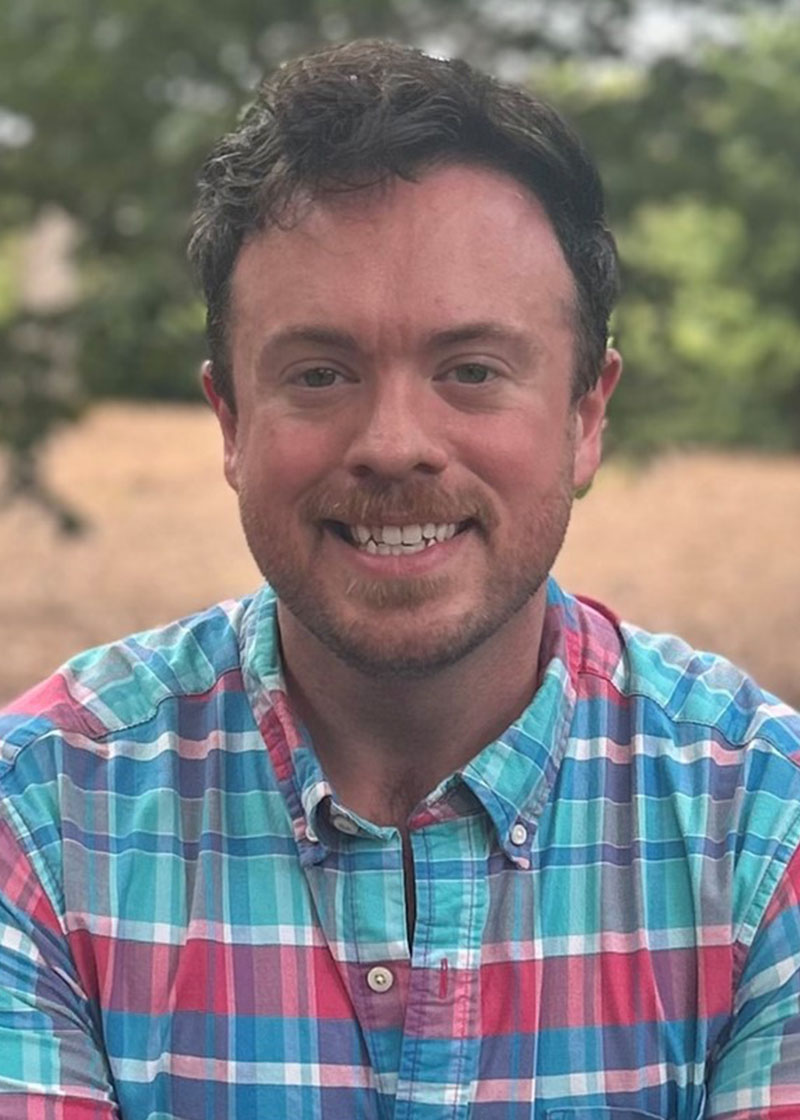
Nicholas Sherwood, Ph.D.
Dr. Nicholas (Nick) Sherwood is a peace psychologist and Researcher at the University of Alabama at Birmingham’s Institute for Human Rights (IHR). His research program examines how conflict, structural marginalization, displacement, and other forms of social vulnerability shape health, well-being, agency, and participation—and how rigorous, community-engaged research can support more equitable and effective responses. He specializes in global mental health promotion; mental health and psychosocial support in conflict-affected settings; health equity; and mixed-methods and community-based participatory research.
At IHR, Dr. Sherwood conducts interdisciplinary research spanning human rights and health. His current portfolio includes studies of maternal and child health equity, LGBTQ health access, community-based health promotion, and the psychosocial well-being of human rights defenders and peacebuilding practitioners. Across these projects, he contributes to research conceptualization and design, mixed-methods and participatory data collection, analysis, methodological development, grant strategy, and translating findings into scholarly publications, policy briefs, technical reports, and public-facing resources. He teaches advanced seminar-based graduate and undergraduate courses in the College of Arts and Sciences, including “Health and Humanitarian Crisis” and “Psychology of Peace and Human Rights.” Dr. Sherwood mentors emerging researchers (e.g., IHR graduate assistants) in participatory methods, ethical practice, professional development, and practitioner well-being.
Before rejoining IHR, Dr. Sherwood had more than a decade of experience integrating research, practice, and training across academic, nonprofit, and international settings. He has designed, implemented, and evaluated research and practice programming related to peacebuilding, trauma healing, psychosocial resilience, and post-conflict reconciliation in Eastern Africa, the Middle East and North Africa, and North America, with particular attention to the US Deep South. His work is guided by the principle that people closest to a social problem hold essential knowledge about both the problem and its possible solutions. He therefore develops research processes involving practitioners and community partners in study design, interpretation, methodological refinement, and research-to-practice translation.
Dr. Sherwood's doctoral research developed a participatory psychological profile of resilience among more than 40 insider-peacebuilders and human rights defenders working across conflict and reconciliation settings. His study examined occupational challenges including trauma exposure, burnout, social isolation, and physical risk, as well as the biological, psychological, interpersonal, community, spiritual, and structural resources practitioners use to sustain themselves and their work. He is developing this research into a scholarly book and practitioner-oriented resources intended to strengthen the health, happiness, safety, and long-term sustainability of front-line practitioners in the peacebuilding, human rights, humanitarian aid, and development sector.
Dr. Sherwood's Ph.D. focused on the psychology of conflict analysis and resolution from George Mason University’s Jimmy and Rosalynn Carter School for Peace and Conflict Resolution. He holds an M.A. in anthropology of peace and human rights from UAB, and a B.A. in psychology and political science from Christopher Newport University. He is currently pursuing an interdisciplinary M.S. degree at UAB in mixed-methods research and multi-tiered approaches to trauma.
Nicholas Sherwood - CVOpens an external link.
Syllabus (Psychology of Peace & Human Rights)Opens an external link.