The Alabama BOLT (Building Opportunities for Learning & Training in Behavioral Health) internship is a year-long, paid internship that offers hands-on experience, faculty mentorship, and a $10,000 support package ($6,000 stipend + $4,000 tuition/fees support). It focuses on preparing students for roles in behavioral health, peer support, and mental health services, with an emphasis on serving children, teens, and young adults. The program expands on the training offered in the Certificate in Mental Health.
Highlights
- Classroom and clinical field experience
- Mentorship from UAB faculty and professionals
- Interprofessional teamwork in primary care settings
- Training in cultural competence and telehealth
Who Should Apply?
Students in the Mental Health Certificate Program or students in related majors (psychology, nursing, social work, healthcare) who are passionate about supporting communities. Preference given to juniors and seniors.
How to Apply
Applications are due on July 1 each year.
Questions?
Please
Advance Your Future in Psychology
UAB’s Master of Arts (M.A.) in Psychology offers flexible pathways designed to meet your academic and professional goals. Whether you are interested in research, applied work, or teaching, our program provides rigorous training, hands-on experiences, and personalized mentorship to prepare you for the next step in your career.
Choose Your Path: Plan I vs. Plan II
You have two options for completing our M.A. in Psychology, Plan I and Plan II. The key distinction is that Plan I requires a thesis, while Plan II replaces the thesis with additional coursework, and applied experiences designed to strengthen your professional skills.
-
Plan I: Thesis Track
Plan I is designed for students interested in academic, research-focused careers. It is ideal for those planning to work in research settings or pursue doctoral study. Students in this track engage in mentored research culminating in a Master’s thesis, which may be developed as a publishable scientific manuscript.
Career Outcomes:
- Research assistants, analysts, or coordinators in academic institutions
- Data analysts or evaluation specialists in research, education, or industry settings
- Research coordinators in healthcare or public health organizations
- Program coordinators or managers in nonprofit, healthcare, or community organizations
- Policy, outreach, or communications roles in governmental or advocacy organizations
-
Plan II: Non-Thesis Track
Plan II does not require a thesis. Instead, students complete additional coursework such as a teaching practicum, which may include serving as a teaching assistant or instructing an undergraduate course. Students may also complete additional applied training opportunities such as community-based practica, and advanced coursework across psychology subfields.
Career Outcomes:
- Program coordinators or managers in nonprofit, healthcare, or community organizations
- Data analysts or evaluation specialists in research, education, or industry settings
- Policy, outreach, or communications roles in governmental or advocacy organizations
- Academic advising, student success, or other higher education support roles
- Compliance manager, employee trainer, recruiter, sales representative, or customer services officer
- Post-secondary psychology instructor
Program Highlights
- Flexible Scheduling: Choose from full-time or part-time enrollment.
- Multiple Start Dates: Begin your program in either Fall or Spring semester.
- Hybrid Learning Options: Access select courses online for added convenience.
- Dedicated Mentorship: Receive personalized guidance from faculty in research, teaching, and career development.
Why Choose the M.A. in Psychology at UAB?
- Learn from nationally recognized faculty who are leaders in research and practice.
- Engage in collaborative research opportunities across psychology and the health sciences.
- Receive career-focused training tailored to your individual goals and interests.
- Develop teaching, leadership, and applied skills through hands-on experiences.
- Prepare for a wide range of careers, including human resources, coaching, case management, outreach, research, and program coordination.
- Build a strong foundation to pursue advanced doctoral programs in psychology.
Application
Apply to the MA in Psychology program through the Graduate School application. The application deadlines are July 1 for Fall admission and November 1 for Spring admission.
- Two (2) letters of recommendation. For students applying to Plan 1, one letter should be from their undergraduate research mentor.
- Personal statement explaining why you are applying to MA in Psychology and how it will benefit your professional development
- Resume or CV
- Application form
- Plan 1 or 2 supplemental question
- Official transcripts: Provide official transcripts from every college-level institution attended. If you have completed coursework outside the United States, you must also provide a course-by-course foreign college transcript evaluation from any NACES accredited evaluation company.
MA Requirements
- Students must have a 3.50 overall undergraduate GPA.
- Students must have completed an undergraduate statistics course and a research methods course with a C or better.
- International students have additional requirements and are strongly urged to consult the UAB Graduate School before seeking admission to the MA Program.
- Students in Plan 1 should have at least one semester of mentored research experience before applying.
- Students in Plan 1 must have identified a research mentor who is able to serve as their thesis mentor.
Certificate in Mental Health
Our new mental health certificate is designed for undergraduate students who may be interested in clinical psychology and would like to gain additional skills to help those with mental health challenges.
This 15-hour program allows students to quickly add the certification to their existing major, however, the certificate can be earned with or without concurrently pursuing a bachelor’s degree. Students must maintain a grade of B or better for each course.
A complete list of courses can be found in the UAB Undergraduate Catalog.
Plan of Study
Requirements – total of 9 hours
- PY 101 – Introduction to Psychology (or Honors PY 201)
- PY 218 – Abnormal Psychology (or Honors PY 228)
- PY 397 – Community-Based Practicum in Psychology (3 credits)
Electives – total of 6 hours
Select two from the following:
- PY 305 – Medical Psychology
- PY 322 – Applied Behavior Analysis
- PY 325 – Clinical Child Psychology
- PY 435 – Motivation and Emotion
- PY 418 – Psychotherapy and Behavior Change
Notes
- PY 101/PY 201 and PY 218/PY 228 may count towards the Psychology Major and the Mental Health Certificate
- PY 101/PY 201 may count towards the Psychology Minor and the Mental Health Certificate.
Questions?
Contact a Psychology Advisor for more information.
Student Research Participant Information
 The department uses the online Sona Psychological Research System to schedule participant appointments and assign participant credits. If you decide to fulfill your research requirement through participating in a research study, you will be required to set up an account.
The  Sona User Guide provides a step-by-step description of what you need to do to participate. Once you create an account you will be able to look at what studies are available and their eligibility requirements. You will also be able to sign up for a study or a set of studies.
After you have signed up for an account, you can access the Sona system directly.
Questions?
For more information about about participating in research or using the Sona system, please contact:
Dr. John E. Gampher
Psychology Subject Pool Coordinator
PY 398: Research Practicum in Psychology
The Research Practicum gives you an opportunity to receive academic credit for conducting supervised research. In your other classes, you learn from books, articles, and lectures about the body of psychological knowledge. In this course you become part of the process through which new knowledge is created! It is taken for a grade (A-F).
Most supervisors are primary faculty in the Department of Psychology. Sometimes you will gain research experience by working as part of a team or lab group led by a faculty member, even though day-to-day supervision is provided by a graduate student.
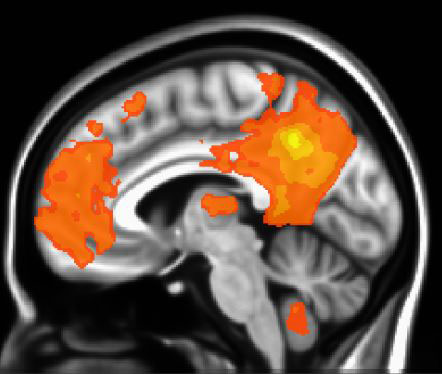 UAB has many faculty engaged in psychological research outside the Department of Psychology, and many of them have served as supervisors for PY 398. If you have a question about whether a particular individual can serve as a PY 398 supervisor, please
Prerequisites
Although PY 398 has no prerequisites beyond PY 101: Introductory Psychology, we recommend that you first (or simultaneously) complete appropriate coursework. Typically this would include PY 216 and 316, as well as a relevant introductory coursework in your area of interest. For example, if you want to participate in research on basic neural processes, you might first take PY 253: Brain, Mind and Behavior or PY 353: Behavioral Neuroscience. A faculty supervisor may have their own requirements for you to participate in their research.
How to Enroll
A good place to start is the descriptions of faculty research interests in the faculty directory. You might also check the bulletin boards in Campbell Hall, and the Psychology advisors may also know of possible opportunities. You are responsible for contacting faculty you would like to work with. The nature of the research project is negotiated between you and the faculty supervisor. It may include laboratory research, data analysis, field experience, library research, etc.
It is important to discuss the number of hours per week that you can commit to. This decision translates to the number of credit hours for which you register. Talk to your practicum supervisor to determine what your time commitment will be.
Once you've made those arrangements, you must complete a Practicum Authorization Form in collaboration with your supervisor. Once the form is completed and signed by your supervisor, return it to a Psychology advisor. Assuming that your enrollment is approved, you will receive notification from the department that you can register for the course.
Activity Logs
You'll complete an activity log of your practicum that will be graded by your supervisor. You'll use the log to keep track of your time, but also to keep a record of your activities and accomplishments each week. This is a part of your grade, so be sure to fill it out during the semester instead of all at once at the end. You are responsible for making sure that your supervisor has the form on time and is aware of the deadline for submitting your grade.
Questions?
Contact the Practicum coordinator, Dr. John Eric Gampher.
PY 397: Community-based Practicum
The Community-based Practicum gives you the opportunity to receive academic credit for participating in service activities in the community that involve the application of psychological knowledge. It is taken on a Pass/Fail basis.
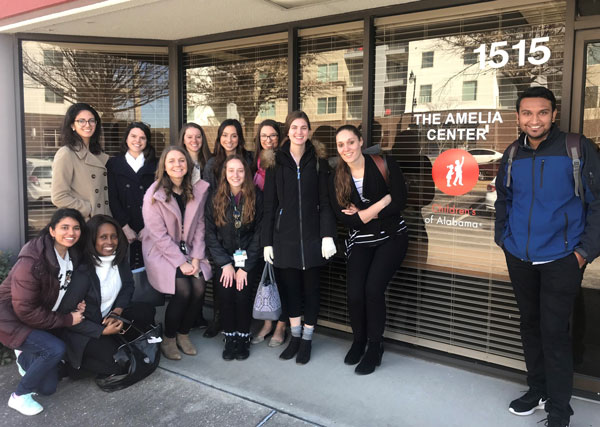 Supervisors and settings for PY 397 vary widely, but often involve a clinic, center, or other setting that provides mental health or related psychological services. Our students have completed practica at the Crisis Center, Family Court, Department of Human Resources, and Children's Hospital, to name a few. The basic requirements are:
- the student must be engaged in meaningful work of a psychological nature, and
- the student must be supervised by a psychologist, licensed counselor, or other qualified professional.
Prerequisites
Although PY 397 has no prerequisites beyond PY 101: Introductory Psychology, we recommend that you first complete appropriate course work. For example, if you want to participate in providing mental health services at the Crisis Center, consider first taking PY 218: Abnormal Psychology. If your want to work with children, then PY 212: Developmental Psychology should be completed first.
How to Enroll
If you are interested in gaining community practicum experience, check out UAB's Service Learning website. They can help connect you with a group that fits your interests.
You are responsible for making arrangements with the outside agency to participate in community work related to the field of psychology. In order to receive credit, you must also obtain prior approval from the Director of Undergraduate Studies and receive supervised experience at the community site. If you have questions about whether a site or activity is likely to be approved, feel free to
It is important to discuss the number of hours per week that you can commit to. This decision translates to the number of credit hours for which you register. Talk to your practicum supervisor to determine what your time commitment will be.
Once you've made those arrangements, you must complete a Practicum Authorization Form in collaboration with your supervisor. Once the form is completed and signed by your supervisor, return it to a Psychology advisor. Assuming that your enrollment is approved, you will receive notification from the department that you can register for the course.
Activity Logs
You'll complete an activity log of your practicum that will be graded by your supervisor. You'll use the log to keep track of your time, but also to keep a record of your activities and accomplishments each week. You will also be required to complete a Reflection Exercise, which is included in the activity log. This is a part of your grade, so be sure to fill it out during the semester instead of all at once at the end. You are responsible for making sure that your supervisor has the form on time and is aware of the deadline for submitting your grade.
Questions?
Contact the Practicum coordinator, Dr. John Eric Gampher.
PY 396: Teaching Practicum
The Teaching Practicum provides you with the opportunity to receive academic credit for participating in supervised teaching of undergraduate psychology courses. It is taken on a Pass/Fail basis. You must have completed the course you wish to assist in, and must obtain permission from the Practicum coordinator.
How to Enroll
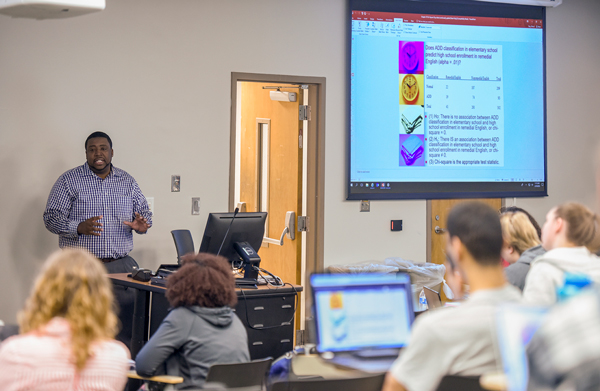 Any instructor (including graduate, adjunct, and tenure/tenure-track) of a course or courses listed or cross-listed in the Psychology undergraduate catalog at the 100, 200, or 300 level may serve as a PY 396 supervisor. You are responsible for contacting the instructor who teaches the course you are interested in teaching.
It is important to discuss the number of hours per week that you can commit to. This decision translates to the number of credit hours for which you register. Talk to your practicum supervisor to determine what your time commitment will be.
Once you've made those arrangements, you must complete a Practicum Authorization Form in collaboration with your supervisor. Once the form is completed and signed by your supervisor, return it to a Psychology advisor. Assuming that your enrollment is approved, you will receive notification from the department that you can register for the course.
Activity Logs
You'll complete an activity log of your practicum that will be graded by your supervisor. You'll use the log to keep track of your time, but also to keep a record of your activities and accomplishments each week. This is a part of your grade, so be sure to fill it out during the semester instead of all at once at the end. You are responsible for making sure that your supervisor has the form on time and is aware of the deadline for submitting your grade.
Questions?
Contact the Practicum coordinator, Dr. John Eric Gampher.
Student Resources
As a student of UAB, you have a unique opportunity to broaden your horizons, explore the connections between disciplines, and define your future. Your opportunities are limited only by your own imagination, stamina, and the 24-hour day.
You will find a wealth of resources related to all things academic, university services, and student life on the UAB Students home page.
You can find plenty of activities to balance all that academic stimulation. If you're a sports fan, you can find something to watch year-round from among the many UAB sports teams. If you're more a player than a watcher, check out the intramural and club sports listings.
Academic
Visit UAB Students for a full list of academic resources. Here are a few that might be particularly useful:
Financial
- College of Arts and Sciences Scholarships
- Bsmart, UAB’s Blazer Scholarship Management and Resource Tool
- Paying for College (includes information on grants, scholarships, and loans)
- Tuition and Fees
Education Abroad
Why study away? Because you will not only gain a fresh perspective on your academic development, but you'll benefit from personal enrichment as well. Studying away has more benefits than we can list here, but they include:
- broadening your curriculum experience
- giving you a new perspective on our country
- teaching you about other countries through shared experiences
 Psychology students visit the Taj Mahal in India.
Research shows employers highly value these experiences and skills, and study-away can improve your future professional and financial potential.
Study Away Opportunities
A complete list of opportunities are available on the UAB Education Abroad website. You must gain approval to participate in these programs; contact UAB Education Abroad at least one month before the application deadline for the program that interests you. You can also contact your academic advisor for more information on these and other psychology programs around the world.
Past Study Away Trips
- Stockholm, Sweden — Stockholm University
- New Delhi, India
- Prague, Czech Republic — Charles University
- United Kingdom — Lancaster University and Hull University
- Galway, Ireland — National University of Ireland, Galway
- Cape Town, South Africa — University of Cape Town
- Dunedin, New Zealand — University of Otago
- Andalusia, Spain — University of Jaén
- Lincoln, Nebraska — University of Nebraska
Covering the Costs
Most scholarships and financial aid can be used on a semester away. Visit the Education Abroad students section for more information on how to apply for these scholarships.
Minor
A minor in psychology can work well with many educational paths and help you develop skills that are foundational to your success. It is a perfect choice for pre-med students and other health careers including dentistry, occupational therapy, public health, and counseling fields.
A psychology minor can be used in many non-medical careers as well. One of its biggest advantages is its adaptability. You will further your knowledge through the development of a strong understanding of human behavior. Employers of all types are looking for people with these skills.
Minor Requirements
A complete list of minor requirements and courses are available in the UAB Undergraduate Catalog.