UAB faculty bring multiple disciplines together for an evidence-based exploration of temporomandibular disorders
 Temporomandibular disorders can present clinicians with difficult questions. The conditions involve the jaw joint, chewing muscles and surrounding tissues, with symptoms that can include chronic pain, limited jaw movement, headaches and facial pain. Yet despite how common TMD is, important questions remain about its causes, the persistence of pain and the most appropriate approaches to treatment.
Beginning in January, faculty from across the UAB School of Dentistry will bring several areas of expertise together to examine those questions through TMD: An Evidence-Based Lecture Series, a nine-month continuing education program devoted to the evidence surrounding TMD diagnosis and treatment and its applications in clinical practice.
Presented by UAB Continuing Dental Education, the series brings together perspectives from Oral and Maxillofacial Surgery, Orthodontics, Prosthodontics, Physical Therapy, and other disciplines involved in caring for patients with temporomandibular joint disorders and myofascial pain.
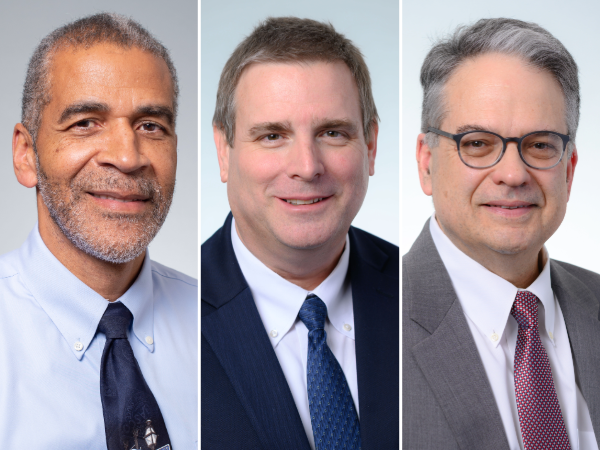
The course is directed by Patrick Louis, D.D.S., M.D., McCallum Endowed Professor and Chair of the Department of Oral and Maxillofacial Surgery. A board certified oral and maxillofacial surgeon with joint appointments in the UAB School of Dentistry and Heersink School of Medicine, Louis' research interests include temporomandibular joint disorders, trauma, dental implants, orthognathic surgery, pathology and reconstructive surgery.
A multidisciplinary approach
Rather than approaching TMD through the lens of a single specialty or trying to cover the subject in a single day, the series is structured as monthly discussions that examine different aspects of diagnosis and management over time.
“TMD can involve a range of factors. Evaluating and treating these patients often requires us to look at the problem from different perspectives. Bringing expertise from oral and maxillofacial surgery, orthodontics, prosthodontics and other areas into the conversation gives clinicians a broader understanding of the options available to their patients,” Louis said.
The progression of the series itself illustrates that complexity.
Louis and Brendan Squier, D.M.D., M.D., open the series in January with a discussion of etiology, diagnosis and treatment options. In February, Christos Vlachos, D.M.D., D.D.S., M.S., associate professor and board-certified orthodontist, will examine occlusion, splints and orthodontics. In March, Daniel Givan, D.M.D., Ph.D., a professor and board-certified prosthodontist, will explore occlusion, splints and TMD from the prosthodontic perspective.
Later in the series, Louis and Squier will conduct a hands-on session on Botox for TMD and other indications. Mary Kreger, D.P.T., a physical therapist, will discuss physical therapy options for managing TMD, while Pam Sims, Pharm.D., Ph.D., and Louis will examine pharmacology, medical management and injectables. Katie Powell, D.M.D., M.D., and Squier will explore the management of the pediatric patient with TMJ disorders, while Anthony Morlandt, D.M.D., M.D., and Squier will discuss benign and malignant pathology of the TMJ. The result is a view of TMD that extends from initial diagnosis and conservative management through increasingly specialized treatment considerations.
The breadth of the series comes at a time when knowledge about TMD continues to evolve. Research at UAB is also examining the biological mechanisms behind persistent TMJ pain, supported by a recently awarded $2.2 million grant from the National Institutes of Health. It is another indication of the complexity of TMD, from understanding the mechanisms of persistent pain to applying current evidence to diagnosis and treatment.
“TMD can be challenging because there are many factors to consider in both diagnosis and treatment, and our understanding continues to evolve. We want participants to better understand the evidence behind the different treatment options, when those approaches may be appropriate and when referral should be considered,” Louis said.
Bringing expertise to practicing dentists
As those questions continue to be explored, practicing dental professionals must make decisions using the evidence available today. The lecture series is designed to help them put that evidence into clinical context.
The nine sessions run from Jan. 15 through Sept. 17, with both in person and virtual participation available. Individual sessions allow clinicians to focus on specific areas of interest, while the complete series provides a broader look at TMD across disciplines and approaches to care. UAB Continuing Dental Education designates the full activity for up to 38 continuing education hours.
View the complete TMD lecture schedule and register through UAB Continuing Dental Education.