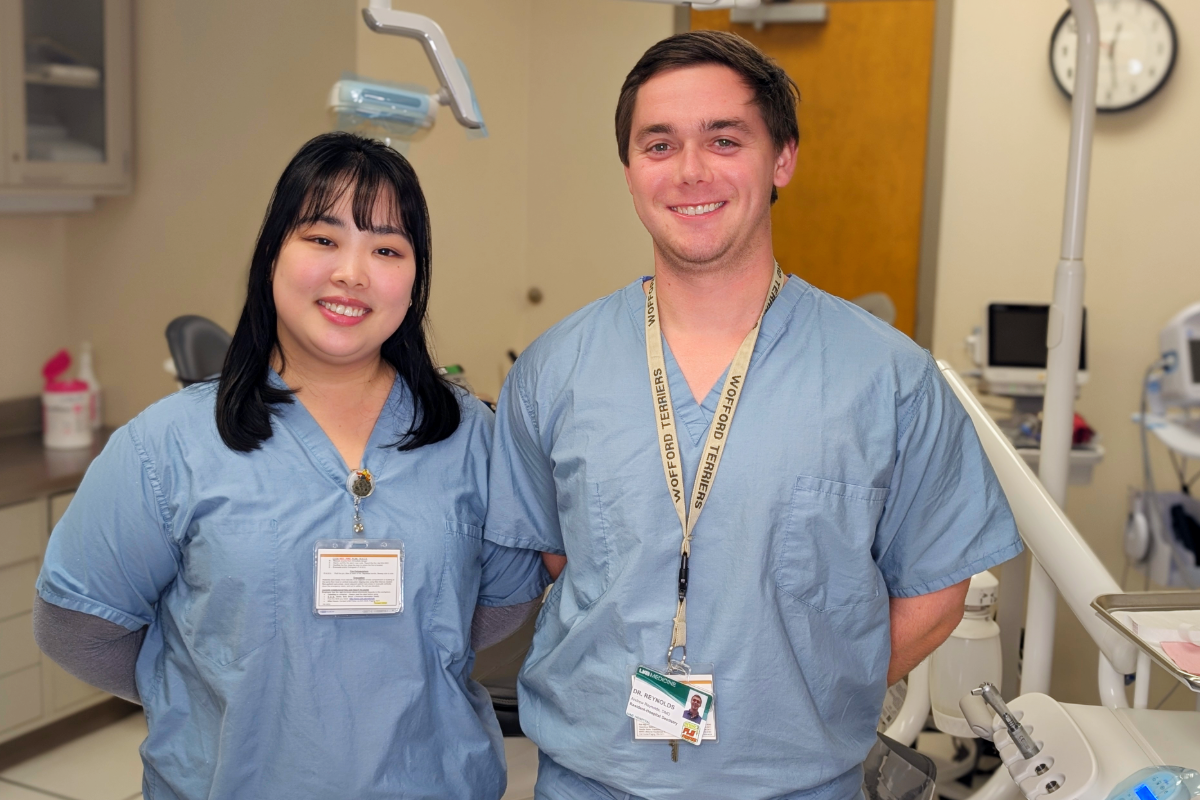
 The work environment for most general dentist practitioners is a peaceful place. Soft music and pleasant pictures are designed to calm potentially nervous patients, creating an overall relaxing atmosphere.
While that eventually will be the professional setting for many of the dentists who complete the University of Alabama at Birmingham School of Dentistry’s General Practice Residency (GPR), it is not always the scene they experience while going through the one-year postdoctoral program. After all, their responsibilities include providing dental care for patients at UAB Hospital, where the surroundings can be more traumatic than tranquil.
“We learn about trauma cases while in dental school, but learning it and actually dealing with it are very different things,” says UAB School of Dentistry graduate Grace Park, D.M.D., one of the six residents in the current GPR program. “Someone will come in with a bloody mouth, and at first you can be a little overwhelmed. You have to have the calm mindset to think about what you need to do to start treating them, which is easier said than done.”
“But being exposed to all kinds of trauma and learning how to deal with it will help us in the long run, and make us more competent dentists.”
That is one of the reasons why – after four years of undergrad studies and four years of dental school – some graduates are willing to postpone starting their careers for another year in order to go through the GPR program, which has been offered at UAB since 1977.
“I wanted to get the extra training before I begin working in private practice,” says current resident Andrew Reynolds, D.M.D., a graduate of the College of Dental Medicine at the Medical University of South Carolina. “Since I’ve been here, I’ve been exposed to things you don’t usually see in dental school. It’s been a crash-course of having to deal with medically complicated situations that I will definitely see in my career from time to time.”
Current GPR program director Christine Blass, D.M.D., followed this same path, spending a year in the program after graduating from the UAB SOD in 2016. She says the emphasis of the program is for residents to handle complex cases in a hospital-based setting in order to improve their overall dental capabilities.
“They are learning new skills that will help them be more productive,” Blass says. “We touch on trauma in dental school, but they don’t get any hands-on experience with it. So it’s good for them to get that while they’re here. Now if they see someone who has been hit in the face with a baseball, it won’t be as big of a trauma as some of the things they see here. They’ve already done it and laid hands on it, and they can navigate that much better.”
“Basically, it’s a year for them to transition from a setting where they had a lot of the decisions made for them, to now they get to kind of run the show. But they still have a safety net with us (faculty and physicians) behind them. So they can just work on becoming better and faster and all the things that will make them more successful once they’re out practicing.”
Park agrees. She says that after spending only a few months in the program, she already feels like her skills and knowledge base have improved significantly.
“There is not a day that goes by that I’m not learning something new in this residency,” Park says. “It prepares you for a lot of situations that you may run into later in a career in dentistry. It helps build that confidence in dealing with different types of situations.”
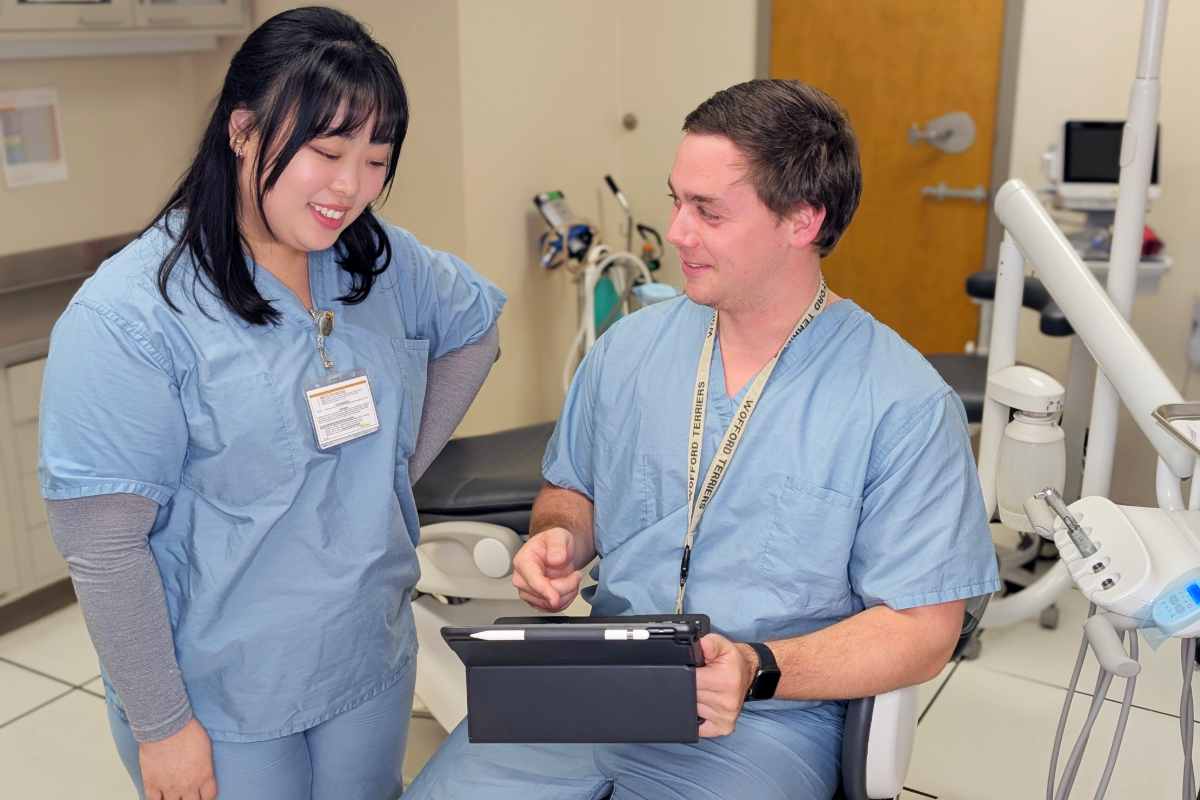 In addition to learning from the hands-on experience, Reynolds says the residents also are learning from each other. He points out that the six current residents are graduates of five different dental schools, providing a variety of perspectives to the job.
“Each person learned basically the same things in dental school, but in different ways,” Reynolds says. “It’s been great to get that extra exposure to take the bits and pieces from each person’s experiences and apply it to your own skillset. I’ve learned a lot from my co-residents, and that’s been invaluable.”
“We’re also taking some really interesting classes that are enhancing our knowledge and skillset. Things like an implant class where we’re learning how to do more complicated procedures in a safe manner. We’re being exposed to a lot of different things, but in a controlled environment where we can learn from it.”
Both Park and Reynolds say they plan to go into general practice after completing the residency, returning to a calmer environment where much of the focus is on basic dental care like cleanings and cavities. But whenever more complex situations arise, they say they will be much better prepared for it, thanks to their time in the GPR.
“I’ll be leaving here with both competence and confidence that what I’m doing is the right thing,” Reynolds says. “I’ll feel confident in my treatment plans, and also know that I have the competence to back it up.”
Or as Park says, “Having gone through this program, we’re going to be able to extend our access to care to all kinds of patients and situations.”
And that, according to Blass, is exactly what the GPR is designed to provide for the residents.
“It’s interesting seeing how their questions change over the course of the year,” Blass says. “At first, I get a lot of questions from everyone, but after a few months they become much more self-sufficient. They’re able to think through some of these complex patients. It’s something that you don’t really learn until you have to do it.”
“I’ve heard people say that one year of this residency is like five years of practice. They get more skills, they get faster, and they’re more productive.”