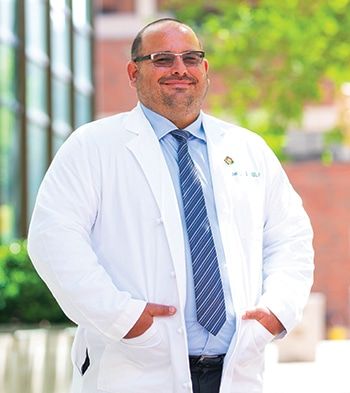
 Sixto Leal, Jr., M.D., Ph.D. (photo courtesy CAP Today)by Christina Crowe
Sixto Leal, Jr., M.D., Ph.D., Associate Professor, Laboratory Medicine, Director, clinical microbiology and Fungal Reference Lab and the SEBLAB biocontainment laboratory, is featured on the cover of the June 2023 issue of CAP Today, the monthly publication of the College of American Pathologists (CAP). CAP is the leading organization of board-certified pathologists, serving patients, pathologists, and the public by fostering and advocating excellence in the practice of pathology and laboratory medicine worldwide.
The article discusses candida auris, a relatively new, multidrug-resistant yeast first identified in 2009 in an ear specimen, and reported in the United States in 2016.
"Like certain other pathogens, C. auris’ domestic presence appeared to be linked to travel-related cases, then quickly spread, first to the metropolitan regions of Chicago and New York City and now to more than half the states," the article explains
 by Christina Crowe
The gastrointestinal tract is home to trillions of microorganisms where they exist peacefully in a healthy individual, performing important functions in metabolism, nutrition and protection from disease-causing organisms. Our immune system senses the microbiota but doesn't respond to it in an inflammatory manner, though in immune-mediated diseases of the GI system such as Crohn’s Disease and Ulcerative Colitis, CD4+ T cells over-react to components of the gut microflora and can induce inflammation and tissue damage. However, a subset of CD4+ T cells known as regulatory T cells or Tregs, can prevent autoreactive immune responses and a secreted protein, IL-10, is the principal restraining factor.
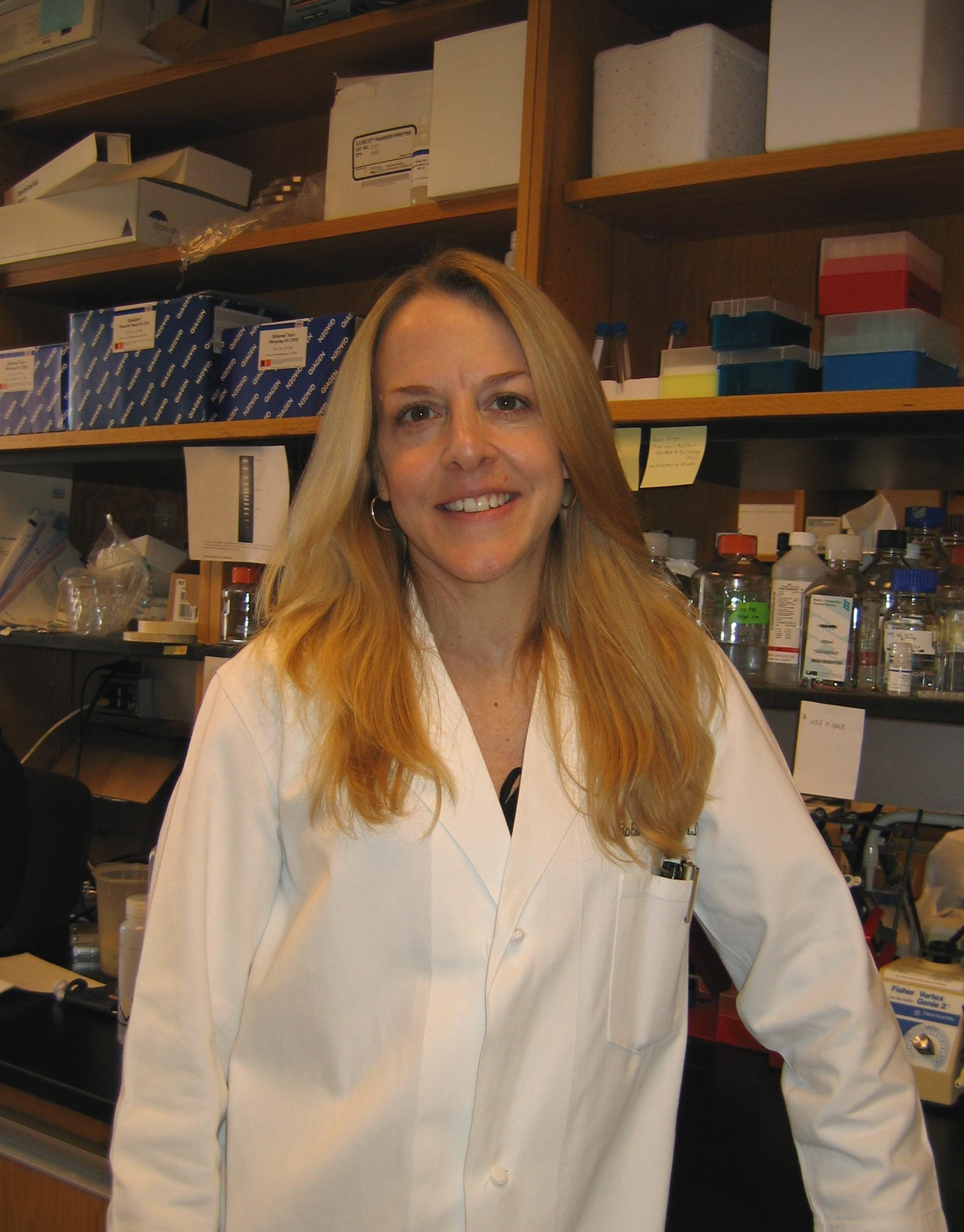
Robin Hatton, Ph.D., Associate Professor, Anatomic Pathology, along with Casey Weaver, M.D., Wyatt and Susan Haskell Endowed Chair for Medical Excellence, recently received a dual-primary investigator R01 grant to study mechanisms controlling the development and function of intestinal eTreg cells. The grant, funded by the National Institutes of Allergy and Infectious Disease (NIAID), totals $3.6 million over five years. Studies proposed in this award aim to define the cellular and molecular cues that direct the development of these IL-10–producing cells, with a long-term goal of identifying interventions to curb pathogenic immunity to the microbiota in human inflammatory bowel disease (IBD).
 by Hannah Buckelew
Shannon Bailey, Ph.D., Professor, Molecular and Cellular Pathology, Chair, UAB Institutional Animal Care and Use Committee (IACUC), has been awarded an R01 grant funding her research on circadian and mitochondrial dysfunction in alcohol-related liver disease. The grant, from the National Institute on Alcohol Abuse and Alcoholism of the NIH, is funded at $2.35 million over five years, through 2028.
Alcohol use is among the top 10 causes of preventable death in the United States, with alcohol-related liver disease (ALD) being the number one cause of death from alcohol use.
 By Christina Crowe
Adam Wende, Ph.D., Associate Professor, Division of Molecular and Cellular Pathology, has received a R01 grant from the National Heart, Lung, and Blood Institute of the NIH to study new roles of specific proteins called pyruvate dehydrogenase kinases, or PDKs, in heart failure. The $2.3 million grant runs through 2028.
Cardiovascular disease is the number one cause of mortality in the United States. Wende’s research examines the heart’s metabolism and fuel utilization. One of the key functions of a cell is the entry of nutrients into the mitochondria, which is highly regulated. That regulation, by a family of kinases called pyruvate dehydrogenase kinases, or PDKs, is induced by exercise, but suppressed in heart failure, mimicking a “switch.”
Page 36 of 120