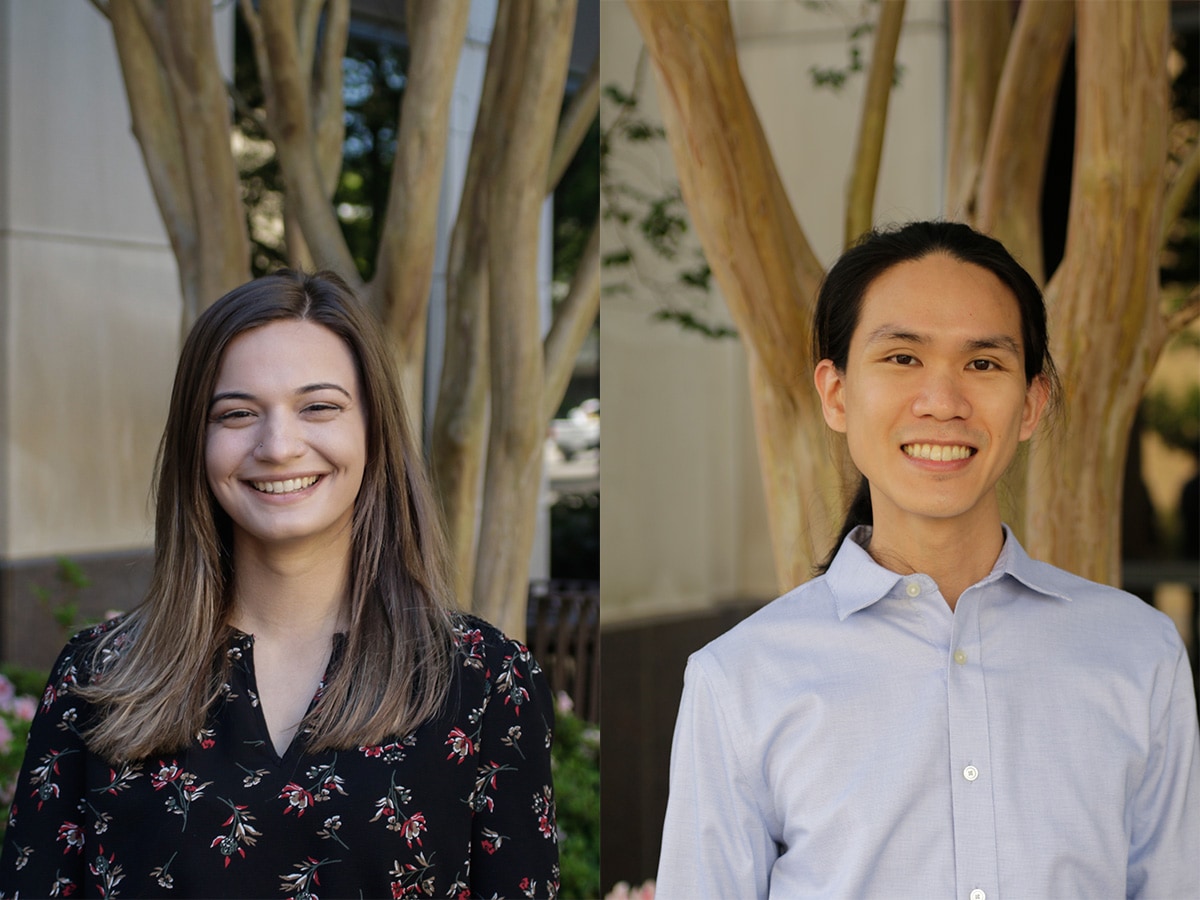
 Ava Smith and Brian Lu, Ph.D. Clinicians now have access to a tool that can help them classify diabetes into five subtypes, enabling more personalized treatment and better outcomes for patients.
Diabetes is a serious health condition in which the body has trouble controlling blood sugar levels. This occurs because the body does not make enough insulin, does not use insulin properly or both. Diabetes is classified into three main types — Type 1, Type 2 and gestational; but even within these types, diabetes is not homogenous. Research has identified five distinct subtypes that further characterize the disease.
“Knowing which subtype a patient falls into can help clinicians be more precise in their treatment regimen,” said Anath Shalev, M.D., director of the University of Alabama at Birmingham Comprehensive Diabetes Center and professor in the Division of Endocrinology, Diabetes and Metabolism. “Each subtype has different risks of secondary complications. This makes it important for clinicians to identify the subtype, so they can adjust and improve treatment based on what subtype the patient has.”
Now, researchers at UAB have developed a web tool to help clinicians easily identify their patients’ diabetes subtypes.
The UAB Precision Diabetes Program, made up of investigators in the Comprehensive Diabetes Center, Hugh Kaul Precision Medicine Institute and the School of Nursing, recently published research that validated a diabetes subtype classification model. They used the model developed at UAB to create a cluster prediction tool for clinicians.
DiaClue launched in March 2026 and is available as a free web app at diaclue.com.
How it works
The app prompts clinicians to enter patient data for six established parameters that doctors commonly assess for diabetes: GAD antibodies, HbA1c, body mass index, age, glucose and C-peptide. Based on the data entered, the app provides the subtype the patient falls into within a percentage.
If a patient has GAD antibodies, then severe autoimmune diabetes, or SAID, is their most likely subtype, which aligns with Type 1. If they have Type 2, they could be classified into one of four subtypes based on their inputs: severe insulin-deficient diabetes, or SIDD; severe insulin-resistant diabetes, or SIRD; mild obesity-related diabetes, or MOD; and mild age-related diabetes, or MARD. Gestational diabetes is not considered in this model.
Brian Lu, Ph.D., a scientist in Shalev’s lab, created the machine learning model that powers the tool. Ava Smith, a graduate student in the Graduate Biomedical Sciences program under the mentorship of Matthew Might, Ph.D., took the model Lu developed and built the user interface and supporting functionality to turn it into a web app.
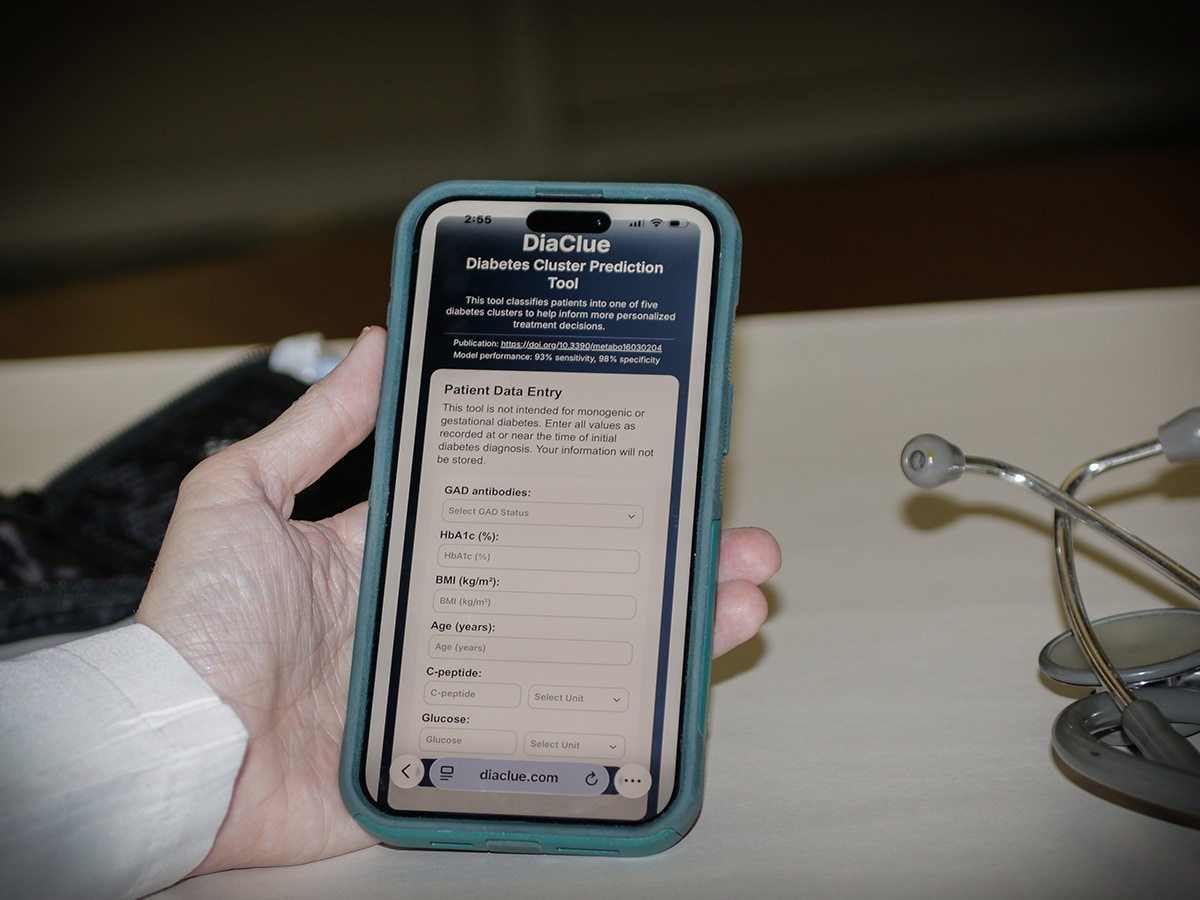 DiaClue is available as a free web app at diaclue.com.“DiaClue was developed in response to the idea that Type 2 diabetes should be understood as more than a single, uniform condition,” Smith said. “Type 2 includes multiple manifestations that may differ in management needs and complication risk. Our goal is to make it easier for clinicians to access more detailed, individualized information that can be used alongside their clinical judgment to support decision-making.”
Approximately 29.1 million Americans have been diagnosed with diabetes. Some 90-95 percent have Type 2, according to the Centers for Disease Control and Prevention.
A tool to drive awareness and education
There are currently no official clinical guidelines for diabetes subtypes. With this tool, researchers hope to educate and drive awareness among primary care physicians, who are usually the first to diagnose patients with diabetes.
Smith, who has Type 1 diabetes, says she hopes the app will continue to bring awareness to adult-onset Type 1 diabetes. Formerly called juvenile diabetes, Type 1 diabetes was thought to be primarily a childhood disease.
“While awareness continues to improve, adults who develop Type 1 diabetes are still at risk of being misidentified as Type 2, leading to delays in appropriate treatment,” Smith said. “Working on DiaClue has been especially meaningful for me because DiaClue could potentially prompt clinicians and patients to consider the possibility of a Type 1 diagnosis in an adult patient.”
While other diabetes cluster classification tools exist, Lu says DiaClue is the only tool based on recent United States patient data and goes a step further to offer therapeutic considerations for each subtype. For instance, if a patient is classified with severe insulin-deficient diabetes, the physician can consult the app for a summary of therapeutic considerations, which may suggest that “aggressive glucose control is recommended, insulin secretagogues, including incretin-based therapies, could be considered and that early treatment with insulin might be necessary and beneficial.”
Lu hopes the tool supports physicians’ therapeutic decisions and brings attention to the usefulness of measuring C-peptide. As part of the immature insulin molecule, C-peptide secretion from beta cells in the pancreas can be used to measure the body’s own remaining insulin production even in patients who are taking insulin. While it is an easy blood test and endocrinologists routinely measure it, he says, primary care physicians may not.
“C-peptide is a marker for beta cell function when measured under appropriate conditions,” Lu said.
A tool for tailoring treatments
Anish Patel, M.D., associate professor in the Division of Endocrinology, Diabetes and Metabolism, is an endocrinologist who treats patients with diabetes in the UAB Kirklin Clinic. After hearing Lu present research about subtype classification in 2024, Patel asked how clinicians could apply the research to clinical practice. The question sparked the initial idea to create an app for clinical use.
Most patients come to Patel diagnosed; however, he says, the app could help confirm if their initial diagnosis is correct. He says knowing the subtype could help patients understand their disease and manage it better.
Patel views DiaClue as a tool that could help inform medication decisions.
“There are many new medications available that all work in different mechanisms and that may be more beneficial for one subtype of diabetes versus another,” Patel said. “I think the app will help clinicians tailor medication regimens more appropriately.”
The next step forward
UAB scientists say they hope to expand access to the free tool with versions on the Apple App Store and Google Play Store in the future.
Researchers have made the codes for model training and analysis available for research and academic purposes.
Overall, researchers see DiaClue as another step forward in a precision medicine approach to treating diabetes, understanding the nuances of the disease and finding ways to personalize care for the nearly 600,000 Alabamians living with diabetes.
“Medicine, in general, has been moving to precision medicine and away from a one-size-fits-all approach,” Lu said. “Using the subgroups is a step toward that.”
DiaClue was a collaborative project between researchers in the Precision Diabetes workgroup led by UAB Comprehensive Diabetes Center Director Anath Shalev, M.D., and Precision Medicine Institute Director Matthew Might, Ph.D. Workgroup members are Andrew B. Crouse, Ph.D., Aleksandra Foksinska, Tiffany Grimes, Brian Lu, Ph.D., Peng Li, Ph.D., Fernando Ovalle, M.D., and Ava N. Smith.
To further expand the Precision Diabetes Program, the Comprehensive Diabetes Center is currently accepting campus-wide, collaborative applications for seed funding in precision diabetes.