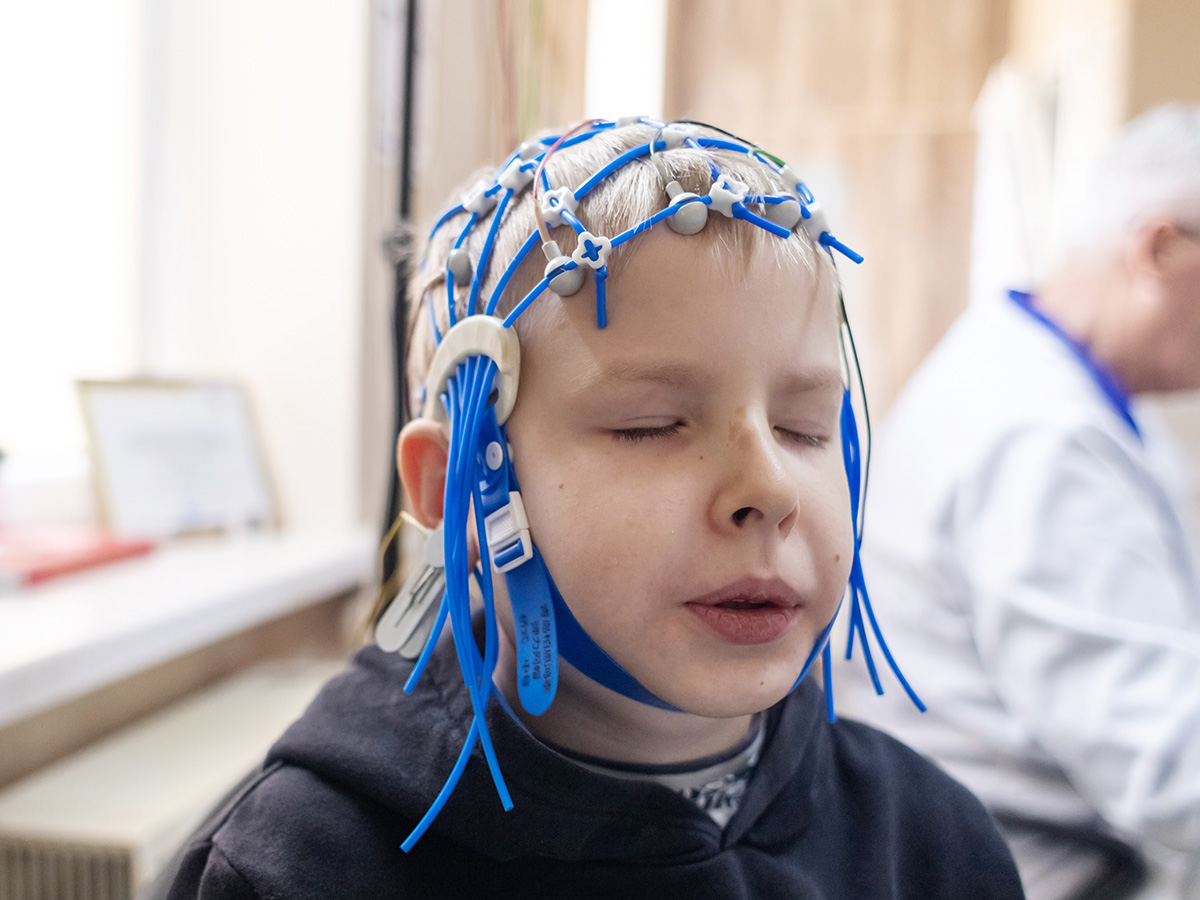
 Researchers from the University of Alabama at Birmingham are members of the large-scale long-term national HEALthy Brain and Child Development study consortium. Providing scientists around the world with new ways to answer critical questions about human brain development in early childhood, the HBCD study has announced its second data release from this landmark project.
The HBCD study is a large, multisite, longitudinal research effort supported by 12 national institutes, centers and offices at the National Institutes of Health. This collaborative study enables the collection and secure sharing of high-quality neuroimaging, electroencephalogram and phenotypic data at an unprecedented scale.
The study at UAB is led locally by principal investigators Cassandra Newsom, Psy.D., associate professor in the Department of Neurobiology, and Myriam Peralta-Carcelen, M.D., professor in the Department of Pediatrics.
“This marks a major milestone in our multi-site NIH-funded effort to better understand how factors during pregnancy influence neurodevelopment in infants and toddlers,” Newsom said. “The data release represents a culmination of hard work and represents a major step forward.”
The HBCD 2.0 Data Release includes what is currently the largest single study of infant MRI and EEG data in the world, along with a rich set of associated longitudinal phenotypic data from the prenatal period (N=3,542) through 15 months of age (N=672). Approved users can access MRI whole brain imaging data and EEG, as well as pre-processed tabulated data for both imaging measures and other phenotypic data.
“Researchers in child development and neuroscience now have rich, longitudinal brain, behavioral and genomic data from these two pivotal studies, which will enable a new generation of breakthroughs in these fields,” said Christina Chambers, Ph.D., co-director of the HBCD Consortium Administrative Core and professor in the Department of Pediatrics at the University of California San Diego School of Medicine.
 Cassandra Newsom, Psy.D.Data that will help change the lives of families
The HBCD data release includes several types of behavioral and biomedical data, including information on prenatal health and pregnancy exposures, including substance use and environmental exposures; social and environmental determinants of health; infant brain imaging and EEG activity; cognitive, behavioral and physical assessments; and wearable biosensor data.
“Data from these studies will fuel research around the world answering new questions about young people’s health and well-being that we, as study investigators, might never have conceived of,” added Charles A. Nelson III, Ph.D., co-director of the HBCD Consortium Administrative Core and professor of pediatrics and neuroscience at Harvard Medical School.
Families participating expressed gratitude for the incredible support throughout the study. The UAB HBCD team prioritized clarity in the process, committing to answering all questions with effective explanations. Researchers dedicated time to develop relationships with study participants, providing support for the parents and transparent updates about the development of the children and connecting them with resources when needed.
UAB’s commitment to longitudinal discovery
Newsom says current and future goals are to let other researchers know data is now available and to raise awareness about the study, as the team continues enrolling for another few years.
“We are still recruiting, enrolling women during their second trimester of pregnancy for another six months and following them and their babies for five more years,” Newsom said.
Access data through the NBDC Data Hub
Approved researchers can access whole-brain imaging data and pre-processed tabulated datasets through the NIH Brain Development Cohorts Data Hub, a secure platform designed to support scalable, compute-in-place analysis of large, multimodal datasets.
The study at UAB is made possible by several coordinators, study navigators and trainees. The Center for Clinical and Translational Science is a partner for coordinator support. Magnetic resonance imaging is completed at the Civitan International Neuroimaging Lab at UAB Highlands.
“While it took significant effort to bring this study to Alabama, we are now seeing the fruits of that effort, which is the second data release and more planned in the future,” Peralta said. “Our team will continue to work on this project. They are essential for our day-to-day operations.”
At UAB, co-investigators from the Department of Pediatrics include Namasivayam Ambalavanan, M.D., co-division director of Neonatology; and Jillian Hamilton, Ph.D., assistant professor of neonatology; the Department of Obstetrics and Gynecology includes Holly Horan, Ph.D., assistant professor of maternal-fetal medicine; and Carolyn Webster, M.D., assistant professor of maternal-fetal medicine; the Department of Radiology includes Ryan Willoughby, Ph.D., associate scientist; and Virendra Mishra, Ph.D., associate professor.
Learn more about the NBDC Data Hub and its two supported studies: the Adolescent Brain Cognitive Development Study and the HEALthy Brain and Child Development Study.
Research reported in this press release was supported by the National Institutes of Health under award numbers U01DA055352, U01DA055353, U01DA055366, U01DA055365, U01DA055362, U01DA055342, U01DA055360, U01DA055350, U01DA055338, U01DA055355, U01DA055363, U01DA055349, U01DA055361, U01DA055316, U01DA055344, U01DA055322, U01DA055369, U01DA055358, U01DA055371, U01DA055359, U01DA055354, U01DA055370, U01DA055347, U01DA055357, U01DA055367, U24DA055325, U24DA055330, U01DA041048, U01DA050989, U01DA051016, U01DA041022, U01DA051018, U01DA051037, U01DA050987, U01DA041174, U01DA041106, U01DA041117, U01DA041028, U01DA041134, U01DA050988, U01DA051039, U01DA041156, U01DA041025, U01DA041120, U01DA051038, U01DA041148, U01DA041093, U01DA041089, U24DA041123, and U24DA041147. The content is solely the responsibility of the authors and does not necessarily represent the official views of the National Institutes of Health.