Latest from NORC
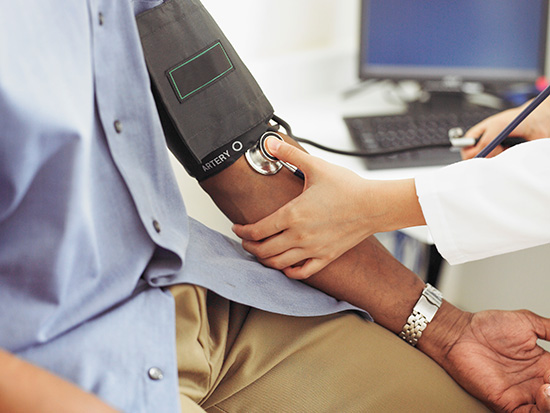
According to the Centers for Disease Control and Prevention, high blood pressure was a primary or contributing cause of more than a half million deaths in the United States in 2019. Researchers at the University of Alabama at Birmingham have launched a study in a subset of patients — obese individuals who experience high blood pressure at nighttime.

New research from the University of Alabama at Birmingham Department of Nutrition Sciences is shedding light on why weight loss may take longer than expected, due to an exaggerated reduction in energy expenditure below predicted values (metabolic adaptation) in women with overweight.

Ketones are among the most underappreciated byproducts of human metabolism — they play a vital role in extending the survival of humans in the absence of food. Additionally, ketones have emerged as a practical and effective dietary approach to weight loss and maintenance. The University of Alabama at Birmingham’s Eric Plaisance, Ph.D., chair of the Department of Human Studies in the School of Education and Human Sciences, explains how the ketogenic diet produces health benefits.

James O. Hill, Ph.D., chair of the University of Alabama at Birmingham Department of Nutrition Sciences, has received a five-year, $10.8 million award as part of the Nutrition for Precision Health (NPH) study through the National Institutes of Health's All of Us Research Program.

Step on the scale each morning and what do you get? Over the next two years, UAB researchers are answering that question in a study testing the power of low-effort interventions to manage weight.

At the end of each holiday season, people set out to create new goals for the coming year as a new year presents a fresh start. Many health and exercise goals are created with the best of intentions but fall short in execution as people often overcommit those goals from the start, making them inevitably unattainable, unrealistic and easy to stop working toward.
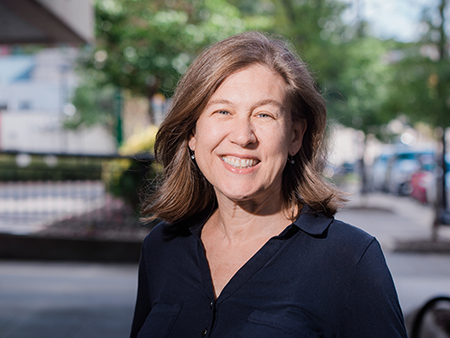
The undue burden of obesity, diabetes and hypertension in the Deep South is a focus for the 2021 Marchase Award winner, Andrea Cherrington, M.D. The award celebrates and encourages interdisciplinary work at the University of Alabama at Birmingham.

Is eating breakfast really that important? Should you eat dinner early and go to bed on an empty stomach? Is intermittent fasting good for you? These are age-old questions that researchers at the University of Alabama at Birmingham are hoping to answer. UAB has launched two studies, one with people with Type 2 diabetes and one with people who are overweight, to find out whether changing when you eat can make you healthier.

A recent study published in the Journal of Clinical Endocrinology and Metabolism by researchers at the University of Alabama at Birmingham found that nearly 40 percent of young adults without diabetes experience insulin resistance, a condition in which the body does not respond correctly to insulin and is unable to use glucose from the blood for energy.