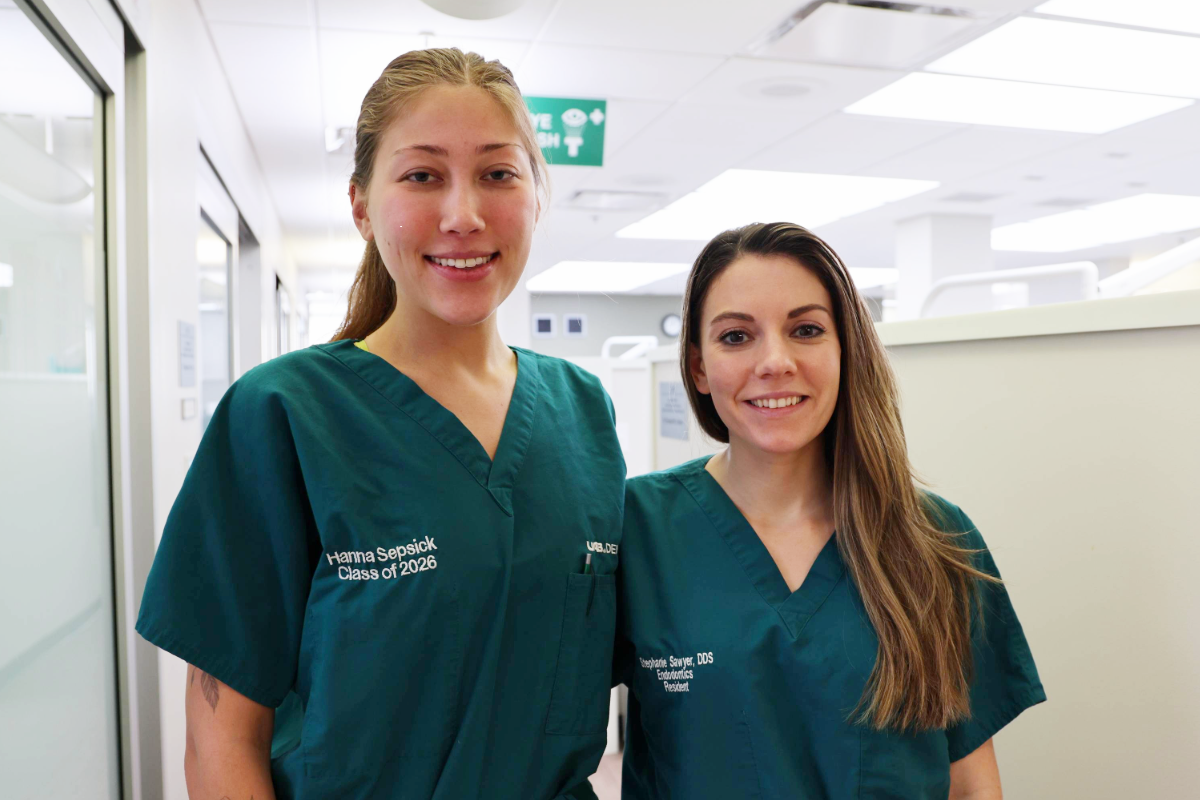
 Hanna Sepsick and Dr. SawyerIn the world of Endodontics, the dental specialty concerned with the tooth pulp and tissues surrounding the root, the goal of a root canal treatment is straightforward: to save a tooth by thoroughly cleaning and disinfecting the intricate canal system inside. For decades, the gold standard for this treatment has been sodium hypochlorite, made of a solution similar to common household bleach. It is highly effective, but it can be harsh on the tooth. What if a natural, potentially safer, alternative could be just as effective?
This is the compelling question at the heart of research led by endodontic resident, Dr. Sawyer, who is investigating the efficacy of oregano oil as a root canal irrigant. In an exclusive interview, Dr. Sawyer shared the motivations, challenges, and promising potential of this innovative project.
From the Kitchen Cabinet to the Dental Clinic
The inspiration for this research came from a desire to explore innovation in a field where change is slow. “There’s been very limited innovation in irrigants,” Dr. Sawyer explained. The project assesses the efficacy of different concentrations of oregano oil compared to sodium hypochlorite with the goal of determining if it could be a viable replacement.
The core of the experiment was meticulously designed. The research team instrumented 60 teeth and cultured two types of bacteria commonly found in root canal infections: Actinomyces israelii and Streptococcus intermedius. After allowing the bacteria to grow for three weeks, they tested three different concentrations of oregano oil (1%, 2%, and 3%), two concentrations of sodium hypochlorite, and a saline control group.
The preliminary results were encouraging. “In preliminary testing in petri dishes, no bacteria was able to grow at the 3% oregano oil concentration,” Dr. Sawyer noted. The team is now awaiting quantitative PCR (qPCR) results from the tooth model, which will provide precise data on bacterial reduction, transforming the project from a promising concept to evidence-based science and clinical application.
Overcoming Challenges Through Collaboration
A project of this scale is no small feat. The biggest technical challenge was the immense workload. “Instrumenting the teeth with so many groups was a very long process,” Dr. Sawyer said, referring to the 60 teeth that required precise preparation. This challenge was met not individually, but through dedicated teamwork. “It took a good team to overcome the challenge,” Dr. Sawyer emphasized, highlighting the collaborative effort of three other dental students involved in the project.
For Dr. Sawyer, this project represents a significant personal milestone. Having assisted on other projects in the past, this is the first research endeavor she has led from the beginning. “The most rewarding part has been learning the in-depth way to run a successful research project,” she shared. This experience in project management, from design to execution, is an invaluable skill that extends far beyond the laboratory.
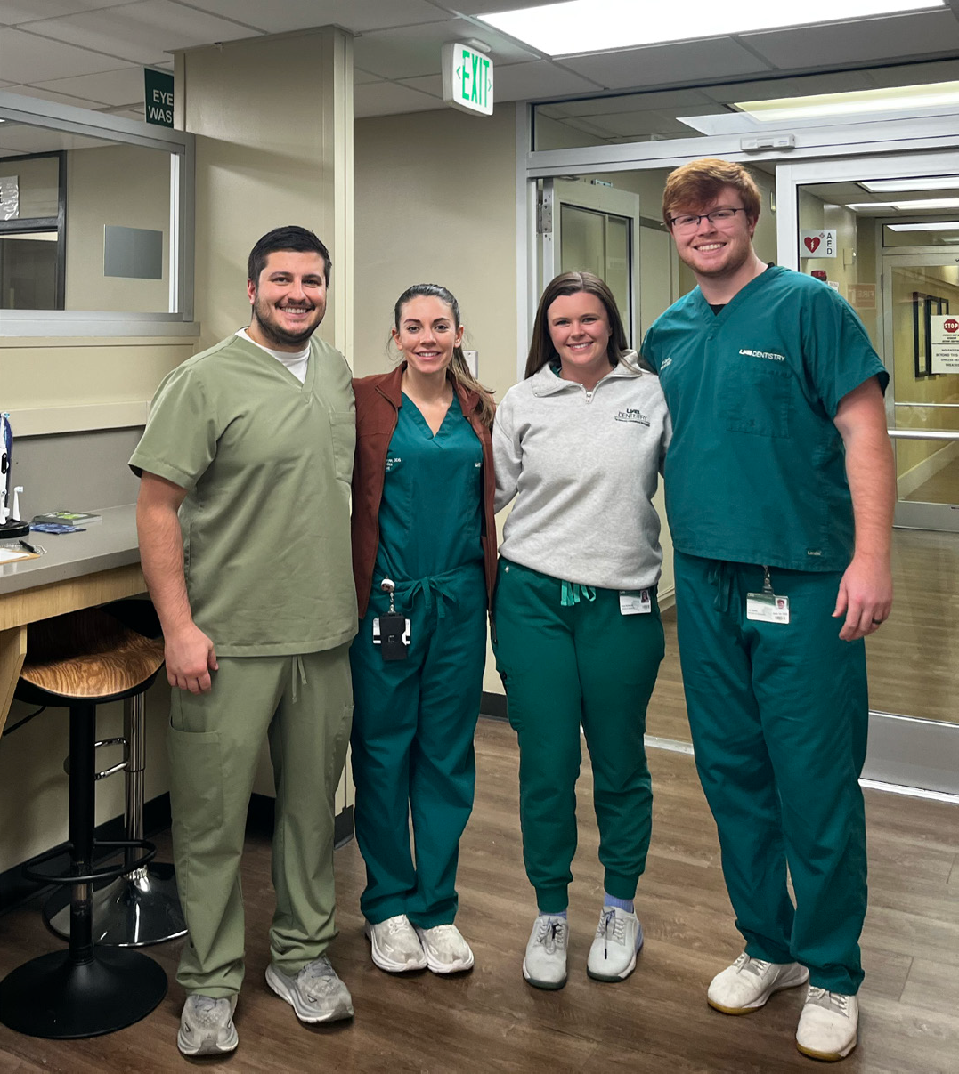 From Left to right: Dr. Molisani, Dr. Stephanie Sawyer, Kayla Hammer (D4), Ian Davis (D3)The Future of Natural Disinfectants
The implications of this research could be profound for the future of endodontic care. If oregano oil proves to be as effective as sodium hypochlorite in clinical trials, it could offer a new tool for dentists. Dr. Sawyer envisions a future where this line of inquiry leads to a “randomized control trial with patient use to see if the outcomes are comparable to sodium hypochlorite.”
The potential benefits would be significant. A natural irrigant could be less irritating to the delicate tissues surrounding the tooth root, potentially reducing post-operative discomfort for patients and increasing the comfort and safety of the procedure itself. Further, the applications may not stop at endodontics. Dr. Sawyer sees potential for this research to branch out, suggesting it could be investigated for use in “pulpotomies or as a mouth rinse to help destroy harmful oral bacteria.”
This cross-disciplinary potential underscores a key point: innovation often comes from exploring uncharted territory. Dr. Sawyer pointed out that a natural product like oregano oil is something large companies are less likely to invest in because it’s difficult to patent and monetize. This makes academic and student-led research even more critical for driving progress that prioritizes patient well-being over profit.
Advice for Aspiring Student Researchers
For students intrigued by the world of research, Dr. Sawyer’s journey offers a clear blueprint. Her advice is straightforward: take the initiative. “Talk to faculty in different fields of interest.”, she recommends. Further, she encourages students to be proactive in learning about ongoing projects, and not to be afraid to propose their own ideas. The recipe for success, based on Dr. Sawyer’s experience is to “be innovative and don’t give up.”
Dr. Sawyer’s work demonstrates that groundbreaking ideas can start with a simple question and a dedicated team. As the qPCR results come in, the student research community watches with anticipation. The humble oregano plant, a staple in kitchens worldwide, may soon become an essential tool in the modern dental clinic, thanks to the curiosity and perseverance of a student researcher.
Story originally published in Vol IV, Fall 2025 Bridging the Gap, a newsletter of the UAB Local Student Research Group.