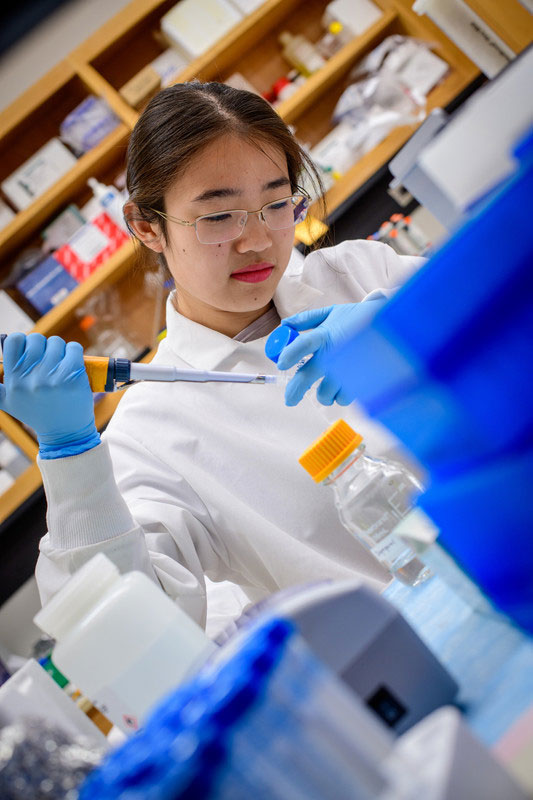
 Many undergraduate students participate in research laboratories under mentorship by primary and secondary BME faculty. While some students seek opportunities early in their academic careers via contact with faculty members. Others seek opportunities as they take our 300-level BME courses and identify research areas of interest. Students can receive course credit toward degree completion through four separate courses.
All BME undergraduates are eligible to enroll in BME 489 (to be replaced by a 289-389-489 sequence in Fall 2020). Once enrolled, you identify a research advisor who agrees to support the activity. A commitment of approximately 10 hours of research work per week will count as 1 hour of course credit — so three semesters of x89 research will meet a graduation requirement of one BME (or other) elective. Please ask your research advisor to contact the Undergraduate Program Director (
University Honors College
BME undergraduates who are members of UAB honors programs are eligible to receive course credit through Honors courses. These credits will generally apply to completion of sufficient hours for degree completion related to the specific honors program a student is enrolled in. For information about potential opportunities, contact the BME Honors College liaison (
BME undergraduates who are also part of the Science and Technology Honors Program are eligible to enroll in courses that allow laboratory research to be used for course credit toward degree completion in that program. For more information, contact
BME Honors Program
BME undergraduates invited to participate in the BME honors program are eligible to enroll in BME 494/495 as a way to use research activities for course credit. For more information about potential research opportunities, contact the Associate Chair for Education (
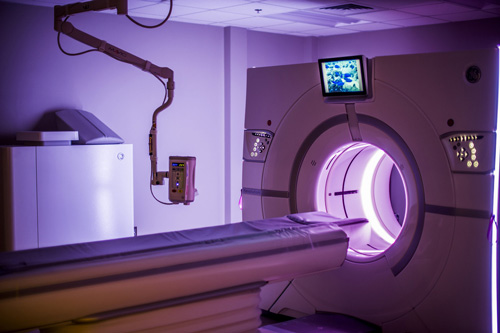 The Department of Biomedical Engineering has teamed with UAB's Undergraduate Neuroscience Program to create the Neuroengineering Minor. Neuroengineering is a field that uses engineering techniques to understand, repair, replace, enhance, or otherwise exploit the properties of neural systems. As this area continues to experience rapid growth, there will be an increased demand for graduates who are trained to contribute to the advancement of neuroengineering. For general information regarding the neuroengineering minor for engineering students, contact
Program Requirements
Applicants for the Neuroengineering Minor must meet the UAB criteria for admission. The minor is open to all interested students who have a 3.0 GPA or better. It is also be available to students who initiate the major course of study in BME or Neuroscience but decide not to complete those requirements.
To attain a minor in Neuroengineering from UAB, you required to complete the following courses (9 hours BME and 9 hours Neuroscience):
-
EGR 150: Computer Methods in Engineering (3 Hours)
An introduction to engineering computation using MATLAB language and Excel. Basic programming skills using built-in functions is emphasized. Generation and manipulation of vectors and matrices, operations on vectors/matrices, plotting, iterations calculations. If/else and other logical constructs, and data input/output are covered. Engineering applications are used throughout the course.
Prerequisites: MA 106 [Min Grade: C] or MA 107 [Min Grade: C] or MA 125 [Min Grade: C] (Can be taken Concurrently)
-
BME 312: Biocomputing (3 Hours)
Introduction to computational techniques used in biomedical engineering.
Prerequisites: (BME 150 [Min Grade: C] or EGR 150 [Min Grade: C]) and (EGR 265 [Min Grade: C] or MA 227 [Min Grade: C] and MA 252 [Min Grade: C]) and MA 260 [Min Grade: C] (Can be taken Concurrently)
-
NBL 355: Cellular & Molecular Neuroscience (3 Hours)
Introduction to the cellular and molecular biology, biochemistry, biophysics, genetics and function of the mammalian nervous system. This course will emphasize the development, anatomy, cellular and molecular biology and biochemistry of neurons and glial cells, and introduce electrical, biophysical and chemical signaling within and across neurons.
-
NBL 356: From Systems to Cognitive Neuroscience (3 Hours)
Introduction to the cellular and molecular biology, biochemistry, biophysics, genetics and function of the mammalian nervous system. This course will emphasize mechanisms of synaptic transmission, sensory systems, neuropharmacology, and synaptic plasticity; and introduce the molecular basis of diseases and disorders of the central and peripheral nervous systems.
Prerequisites: NBL 355 [Min Grade: C]
-
BME 450: Computational Neuroscience (3 Hours)
This course examines the computational principles used by the nervous system. Topics include: biophysics of axon and synapse, sensory coding (with an emphasis on vision and audition), planning and decision-making, and synthesis of motor responses. There will be an emphasis on systems approach throughout. Homework includes simulations.
Prerequisites: BME 312 [Min Grade: C]
-
One of the following two electives in Neuroscience:
NBL 425: Methods in Neuroimaging (3 hours)
Cognitive neuroscience research has provided valuable insights into the workings of the human brain. The techniques used in cognitive neuroscience span from postmortem brain studies to neuroimaging studies. The ability to perform neuroimaging studies on awake human individuals engaged in cognitive, social, sensory, and motor tasks has produced a conceptual revolution in the study of human cognition. This course will comprehensively examine the methods and techniques in neuroimaging with the primary goal of building basic knowledge in the concepts and techniques of neuroimaging. The course will explore techniques, such as single and multi-cell recordings, deep brain stimulation, electroencephalography, magnetoencephalography, functional magnetic resonance imaging, and diffusion tensor imaging. This course will be an apt venue for graduate students interested in neuroscience research to build a platform for continuing studies.
NBL 454: The Body Electric: Electronics for Biologists (3 hours)
Some of the most important aspects of biological systems involve electrical phenomena. From the operation of the nervous system, to the control of cardiac or gut motility, the response of bone to stress, and even the most basic membrane physiology of every cell, the body is electric. Additionally, electronic instrumentation and analysis techniques are a major part of biological research. And yet, the typical biology student has very little background in these topics. Formal engineering courses have too many pre-requisites, and require more mathematical sophistication than is truly needed for most biologists. This course is designed to try and fill this gap.
UAB Course Catalog
All courses listed for the minor are listed in the UAB Undergraduate Catalog. A full description of the minor will be added to the catalog in upcoming months.
One of the best things about UAB is its amazing diversity of its students — we are one of the top most diverse campuses in the United States. We want you to have every opportunity to succeed in your course work and college life. Here are some easy tips for you to follow:
Are you an international student interested in attending UAB? Explore the INTO UAB initiative.
- Visit UAB's International Student and Scholar Services. They have all sorts of forms, guides, and helpful links to make your life easier.
- Don’t be shy. Let your instructors know that English is your second language.
- Take advantage of class study groups. They let you go over material at your pace.
- Record lectures (with your instructors’ permission). Transcribe your recording to notes.
- Meet regularly with your undergraduate advisor. They are experts and can help!
- Visit the UAB English Language Programs website. They will give you assistance with both oral and written English.
- Visit the UAB Writing Center. They have tutors and instructional workshops.
- Frustrated and out of options? UAB student counselors are there for you.
And remember — you are not alone! There are other international students/non-native English speakers in just about every class you take! Share your stories and help each other!
A bachelor’s degree in BME from UAB provides a foundation in medical devices, biomedical implants, biomaterials, and biomedical instrumentation to compete in an increasingly technical medical field. It also prepares students for graduate or attend medical, dental, or another professional school.
According to the Bureau of Labor Statistics, employment of biomedical engineers is projected to grow 23 percent from 2014 to 2024 — much faster than the average for all occupations. Growing technology and its application to medical equipment and devices, along with an aging population, will increase demand for the work of biomedical engineers. You can learn more about expected salaries, types of employment, and other information from the Occupational Outlook Handbook.

Some of our alumni have gone on to:
- careers in medical products companies such as BioHorizons Implant Systems, Biological Innovations, Cook Medical, GE Medical, Evonik Industries, Guidant Corporation, Medtronic, NuTech Medical, Novartis, Phillips Medical Systems, Proctor & Gamble, St. Jude Medical, Smith & Nephew, TransGenRx, and Wright Medical Technology
- careers in medical centers and hospitals, health care groups, consulting companies, and computer application groups
- careers in regulatory agencies like the FDA
- advanced education — master’s, PhD, medicine, dentistry, optometry, pharmacy, MD/PhD, DMD/PhD — at institutions such as Duke, Georgia Tech, Rice University, University of Pennsylvania, University of Pittsburgh, University of Texas, UAB, and Vanderbilt
Are you interested in research? Do you want the opportunity to develop design and research skills beyond the standard BME curriculum?
Almost half of our undergraduates participate in research under the guidance of one of our primary or secondary faculty members. Typically, undergraduate research students are enrolled in both the UAB Honors College (for example, in the Science and Technology Honors Program) and the BME Honors Program. Many of our honors students go on to participate in the Fifth Year Master’s Program.
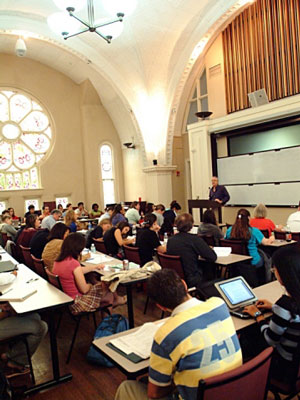 The Benefits of Honors Research
You will be mentored by faculty members in a research experience that is similar to graduate school. This will help you develop confidence and independence while boosting your communication and research skills. Ideally, your research project will result in a publication and/or presentation at a professional conference — a good thing to have on a job or graduate school application.
If you successfully complete the program you'll receive a certificate at the UAB Honors Convocation; your transcript will read “Graduation with Honors in Biomedical Engineering.”
Three credit hours of Honors Research may be used to satisfy a 400-level BME course elective. You may graduate with up to 6 credit hours to be applied towards a Master's Degree in Biomedical Engineering.
Eligibility for Admission into BME Departmental Honors
- Completion of at least 32 credit hours, with an overall GPA of at least 3.75.
- Completion of MA 227: Calculus III or EGR 265: Math Tools for Engineering Problem Solving.
- For transfer students, a transfer GPA of at least 3.75 and membership in the Phi Theta Kappa Junior College Honor Society.
Requirements
Completion of the BME undergraduate curriculum plus:
- One additional credit hour of BME 496: Biomedical Engineering Seminar.
- EGR 301: Honors Research (1 credit hour). Students in the Science and Technology Honors Program are exempt from this requirement.
- Selection of a three-member honors committee, which includes your research advisor and at least one primary BME faculty member.
- Approval of a formal proposal, which must be submitted to the honors committee at least one week prior to an oral defense of the proposal. It is highly recommended that the proposal be approved by the end of summer semester of the junior year.
- BME 494: Honors Research (3 credit hours). The course grade is based upon completion of the written proposal and oral proposal defense. The defense should be given using a PowerPoint presentation to the honors committee.
- A written honors thesis in the form of a scientific paper, due one month prior to graduation.
- BME 495: Honors Research II (at least 3 credit hours). The course grade is based upon completion of the written honors thesis and oral thesis defense. The defense should be given using a PowerPoint presentation to the honors committee.
- Successful oral defense of the honors thesis at least three weeks prior to graduation.
- Up to 6 additional hours of BME 495 may be applied towards a Master's Degree in Biomedical Engineering at UAB.
Need More Information?
Contact Dr. Mary Kathryn Sewell-Loftin
WTI 630A
1824 6th Ave. South
Birmingham, AL 35233