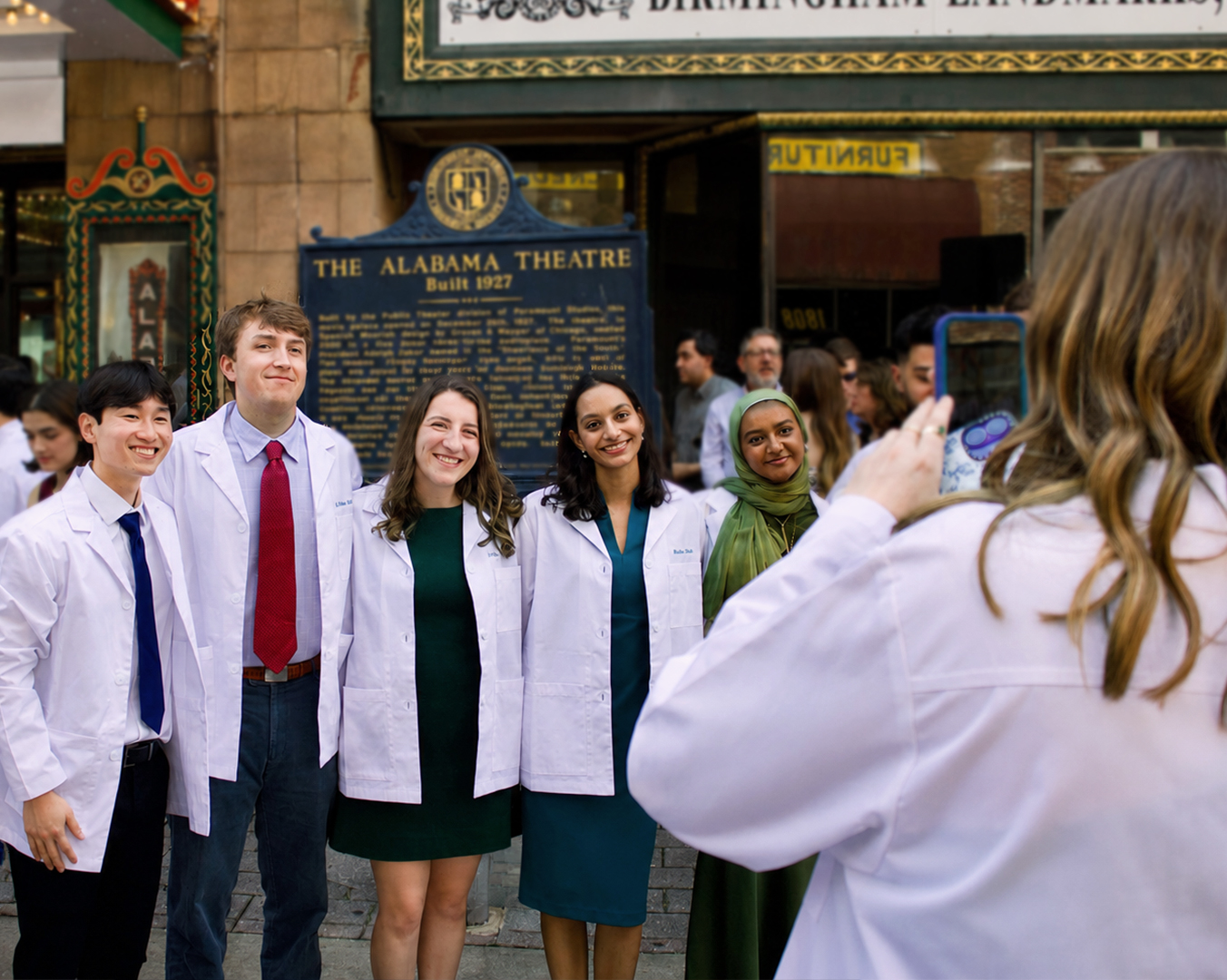
Entering Class of 2026 by Learning Community
Barfield-Carter Community
Assigned to the Birmingham campus for clinical training
Lead Mentor
Read about learning community +
In 1945, Melson Barfield-Carter, M.D., became the first female faculty member at the School of Medicine and the first woman to be named a department chair (of the Department of Radiology). She also was the first woman to graduate from Tulane Medical School, and she completed her residency in radiology at Massachusetts General Hospital. Barfield- Carter started the radiology residency training program and developed the School of Radiological Technology at UAB.
Elopre Community
Assigned to the Birmingham campus for clinical training
Lead Mentor
Read about learning community +
Latesha Elopre, M.D., MSPH, served as assistant dean for the Heersink School of Medicine Office of Access and Engagement – Resident and Fellow Experience from 2024 until her passing in July 2025. She dedicated her career to providing students, residents and fellows with the framework necessary to make indelible impacts on their society. She became the inaugural director of Diversity and Inclusion for the UAB Tinsley Harrison Internal Medicine Residency Program and subsequently served as the inaugural Graduate Medical Education (GME) director for Diversity and Inclusion. In addition to being a respected physician, she also had a national reputation as a researcher in infectious diseases.
Finley Community
Assigned to the Tuscaloosa campus for clinical training
Lead Mentor
Regional Campus Faculty Mentor
Read about learning community +
Wayne Finley, M.D., Ph.D., and Sara Crews Finley, M.D., became pioneers in the field of medical genetics when they co-founded the Laboratory of Medical Genetics, the first center of its kind in the Southeast, in 1962. The Finleys guided the medical genetics research, training, and service program at UAB for 35 years, providing genetics services and developing specialized diagnostic laboratories for detectable genetic disorders.
Hamilton Community
Assigned to the Huntsville campus for clinical training
Lead Mentor
Regional Campus Faculty Mentor
Read about learning community +
Herschell Lee Hamilton, M.D., came to Birmingham in 1958 as its first African American board-certified general surgeon. He was the first African American to receive operating privileges at University Hospital. Hamilton earned his nicknames as the “Dog Bite Doctor” and the “Battle Surgeon” for his work helping injured activists during the civil rights movement.
Harrison Community
Assigned to the Huntsville campus for clinical training
Lead Mentor
Regional Campus Faculty Mentor
Read about learning community +
Tinsley Harrison, M.D., served as dean of the Heersink School of Medicine and chairman of the Department of Medicine. He helped recruit nationally known physicians from Harvard University and the Mayo Clinic, among others. His special field of interest was cardiovascular medicine as well as the pathophysiological mechanisms of disease. Harrison is best known among physicians as the founding editor and editor-in-chief of the first five editions of Harrison’s Principles of Internal Medicine.
Hill Community
Assigned to the Birmingham campus for clinical training
Lead Mentor
Read about learning community +
Longtime Heersink School of Medicine faculty member Samuel Richardson “Dick” Hill Jr., M.D., served as president of UAB from 1977 to 1986. Hill practiced internal medicine and endocrinology before coming to the Medical College of Alabama in 1954. He was appointed dean of the college in 1962 and remained there as it evolved into UAB, serving as vice president for health affairs and medical center director and director of the University of Alabama Medical Education Program. Hill recruited John Kirklin from the Mayo Clinic to chair the surgery department and Gene Bartow from UCLA to coach the university’s first basketball team.
Hirschowitz Community
Assigned to the Tuscaloosa campus for clinical training
Lead Mentor
Regional Campus Faculty
Read about learning community +
Basil Hirschowitz, M.D., Ph.D., is a medical pioneer who, along with his colleagues, invented the first fiberoptic endo- scope that became the standard for visualizing and treating virtually every cavity in the body. Hirschowitz dedicated his career to the study of diseases of the upper GI tract and published more than 350 papers, many related to ulcer disease. He was also a leader in clinical trials that were the forerunners to new pharmaceutical treatments in gastroenterology, paving the way for widespread use of medications known today as Pepcid, Prilosec, and Nexium.
Kirklin Community
Assigned to the Birmingham campus for clinical training
Faculty Mentor
Read about learning community +
In the 1950s, while at the Mayo Clinic, John Kirklin, M.D., performed the world’s first series of open-heart operations using a heart-lung machine. Kirklin joined the UAB faculty in 1966 as chair of the Department of Surgery and the surgeon-in-chief for UAB Hospital. He held those positions until 1982 during which time he built one of the most prestigious cardiovascular surgical programs in the world.
Lyons Community
Assigned to the Montgomery campus for clinical training
Faculty Mentor
Regional Campus Faculty Mentor
Read about learning community +
Champ Lyons, M.D., arrived in Birmingham in 1950 to become the first full-time chair of surgery, a position he retained until his passing in 1965. That year, Lyons became one of the first faculty members to be named a distinguished professor. His major professional contributions were in the areas of surgical infections and vascular surgery.
McCallum Community
Assigned to the Birmingham campus for clinical training
Faculty Mentor
Read about learning community +
Charles “Scotty” McCallum Jr., DMD, M.D., came to Alabama in 1951 to complete a residency in oral and maxillofacial surgery after earning his dental degree from Tufts College Dental School. He earned a medical degree from the Medical College of Alabama in 1957 and became dean of the School of Dentistry in 1962. He later served as vice president for health affairs and director of UAB Medical Center before becoming the third president of UAB in 1987. After stepping down as president, he was elected to two terms as mayor of Vestavia Hills beginning in 2000.
Oparil Community
Assigned to the Birmingham campus for clinical training
Faculty Mentor
Read about learning community +
Suzanne Oparil, M.D., is a renowned cardiologist and a member of the prestigious National Academy of Medicine. Her research focuses on cardiovascular disease and the development of novel treatments for hypertension, including ACE inhibitors. She has also made important discoveries about mediators of pulmonary hypertension and the role of estrogen in blood vessels. She is a distinguished professor of medicine and director of the Vascular Biology and Hypertension Program at UAB.
Pittman Community
Assigned to the Birmingham campus for clinical training
Faculty Mentor
Read about learning community +
As the Heersink School of Medicine’s longest-serving dean—19 years, from 1973 to 1992—James Pittman Jr., M.D., left an indelible mark. He was known for his ability to recruit and retain nationally and internationally renowned physicians and scientists. He is credited with restoring a four-year medical school curriculum, replacing the 35-month program that was in place when he became dean, and creating space in the academic cycle for students to pursue research and service activities.

Awards
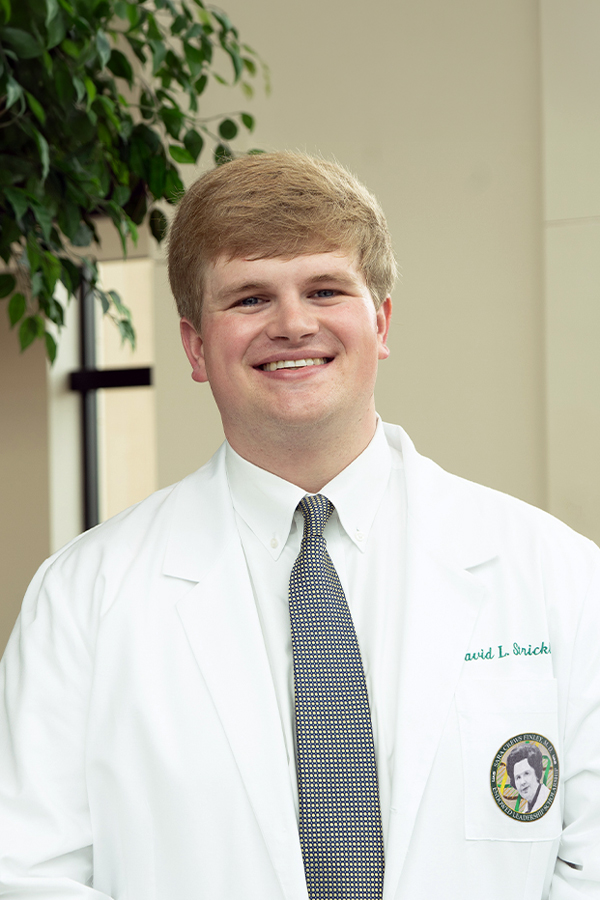
Sara Crews Finley, M.D., Endowed Leadership Scholarship
David Strickland
2026 Recipient
An Alabama native, David earned his undergraduate degree from the University of Alabama where he held a variety of leadership roles and received numerous honors, including induction into the Anderson Society, which honors the most influential undergraduate students on campus based on leadership and service.
During his gap year, he completed an accelerated MBA with a focus on public health and worked as a commercialization associate for Acuity Edge, Inc., evaluating emerging technologies and advising on inventions with commercial potential for NASA’s patent licensing program.
David has demonstrated a strong interest in the business side of medicine, including studying entrepreneurship in Portugal and serving as president of the UAB Business in Medicine Interest Group.
His commitment to service includes volunteering as a Spanish interpreter in underserved clinics, mentoring medical students, supporting programs for individuals with disabilities, and volunteering with a senior companionship program.
Read about this award +
About the Sara Crews Finley Award
To honor the legacy of Dr. Finley’s leadership and service, the Finley family has established a scholarship recognizing a rising third-year student who has excelled in academics and service, and embodies the leadership qualities for which Dr. Finley is so well remembered. The recipient was awarded for the achievements in the following criteria:
- Ranking in the top 25% of their class, as determined by our school at the time of application.
- Demonstrating leadership skills, including activities in and outside of their medical school experience.
- Displaying a commitment to service of others.
- Adhering to the principles of integrity and determination.
In addition to a full-tuition scholarship for the third and fourth years, the award includes a new white coat with a special insignia identifying the recipient as the Sara Crews Finley Leadership Scholar.
.
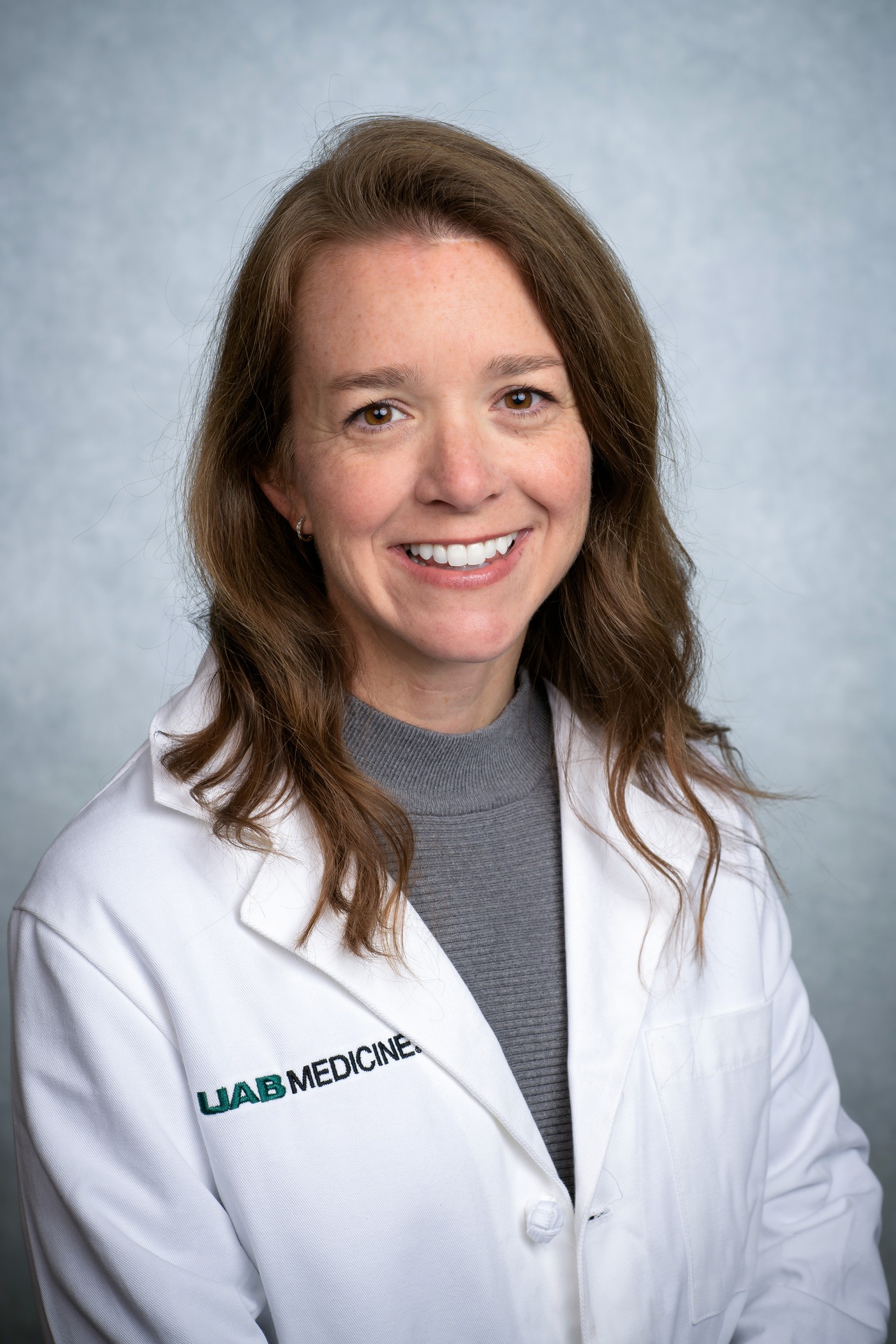
Brewer-Heslin Endowed Award for Professionalism in Medicine
Erin DeLaney, M.D.
2026 Recipient
Dr. DeLaney is an associate professor in the Department of Family and Community Medicine, and serves as the Vice Chair for Clinical Affairs and Quality. She joined the Department of Family and Community Medicine in 2013.
Dr. DeLaney has been recognized as a physician with a passion for keeping her community healthy through preventative medicine. She values being part of her patients’ lives and building relationships with them that will lead to improved care. Her work has been recognized by her department as improving access, reducing delays in diagnosis and follow-up, and strengthening communication across the healthcare team. She has also been recognized for her work with medical students, being named the Department of Family and Community Medicine Preceptor of the Year based on student feedback.
Read about this award +
About the Brewer-Heslin Award
Established in 2015 by former Alabama Gov. Albert P. Brewer, the Brewer-Heslin Award recognizes faculty physicians who exemplify the highest ideals of professionalism in the areas of:
- Dedication to providing highly skilled and deeply compassionate medical care and supporting access to such care for all people.
- Commitment to the highest standards of professionalism, including honesty and integrity in all matters and respect for all members of the health care team, including the patient and his or her family.
- Responsibility for the patient’s right to dignity, privacy and confidentiality within the bounds of law.
- Commitment to ethical principles related to the optimal provision of clinical care, and to seeking the talents and counsel of other health professionals when indicated.
- Dedication to lifelong learning through the pursuit of new knowledge, and to imparting such knowledge to physicians in training as well as to patients and the public.
- Responsibility for participating in activities that contribute to the improvement of the community and the betterment of public health.
Gov. Brewer’s gift was made in grateful appreciation for the care he received from – and the professionalism he has observed in – Dr. Martin J. Heslin, the James P. Hayes Endowed Professor of Gastrointestinal Oncology.
Ceremony Information
The White Coat Ceremony
The White Coat Ceremony was designed by The Arnold P. Gold Foundation to formally welcome new students into the medical profession and to set clear expectations regarding their primary role as physicians by professing an oath. Today, the ceremony emphasizes the importance of compassionate care as well as scientific proficiency.
Currently, a White Coat Ceremony or a similar rite of passage takes place at 97 percent of AAMC-accredited schools of medicine in the United States and Canada, as well as at osteopathic schools of medicine and at schools in 13 other countries. At the ceremony, students are welcomed by their deans, the president of the hospital or other respected leaders who represent the value system of the school and the profession.
The cloaking with the white coat—the mantle of the medical profession—is a hands-on experience that underscores the bonding process. It is personally placed on each student’s shoulders by individuals who believe in the students’ ability to carry on the noble tradition of doctoring. It is a personally delivered gift of faith, confidence and compassion.
This event is made possible by support from the University of Alabama Medical Alumni Association and the Arnold P. Gold Foundation.
About the Procession and Cloaking
The students will process in and be cloaked by Learning Community. Learning communities are small groups to which students are assigned upon entering medical school.
Students are cloaked by deans from the three regional campuses, or their designee.
Learn more about the physicians for whom the learning communities are named and view a list of students by learning community.
Safety and Courtesy
Please silence all cell phones, pagers and other devices prior to the start of the ceremony.
Please do not stand in or block the aisles.
Please note that flash photography is not allowed in the concert hall. A professional photographer will photograph each student shaking the dean’s hand. Students will receive information about ordering photographs.
About the UAB Marnix E. Heersink School of Medicine
In grateful recognition of a transformational $100 million gift from longtime University of Alabama at Birmingham supporter Marnix E. Heersink, M.D., the UAB School of Medicine is now named the UAB Marnix E. Heersink School of Medicine.
The record gift—the single largest philanthropic commitment in university history—named the UAB Marnix E. Heersink School of Medicine, and established the Marnix E. Heersink Institute for Biomedical Innovation and the Mary Heersink Institute for Global Health. The gift also provides support through both endowed and outright funds for key initiatives of the Heersink School of Medicine. Dr. Heersink, a renowned eye surgeon, innovator, and entrepreneur, desires for this gift to inspire and catalyze additional philanthropic contributions that support high-impact recruitments, programs, and research in the Heersink School of Medicine.
Heersink School of Medicine Leadership
Special Thanks
Our thanks to the following for their assistance during White Coat Ceremony: