By: Nathan Anderson
Long before she began exploring graduate education, Tayana Robinson, alumna for the Interdisciplinary Graduate Studies (IGS) program, understood that healthcare disparities affect real people and real communities. Those experiences helped shape her mission to create equitable, community-centered solutions that improve health outcomes and expand access to care—work she continues to pursue today through the interdisciplinary foundation she built at the University of Alabama at Birmingham (UAB).
Her passion for improving healthcare access and developing community-centered solutions stems from a deeply personal place. After experiencing the health challenges her parents faced, she became determined to find innovative ways to better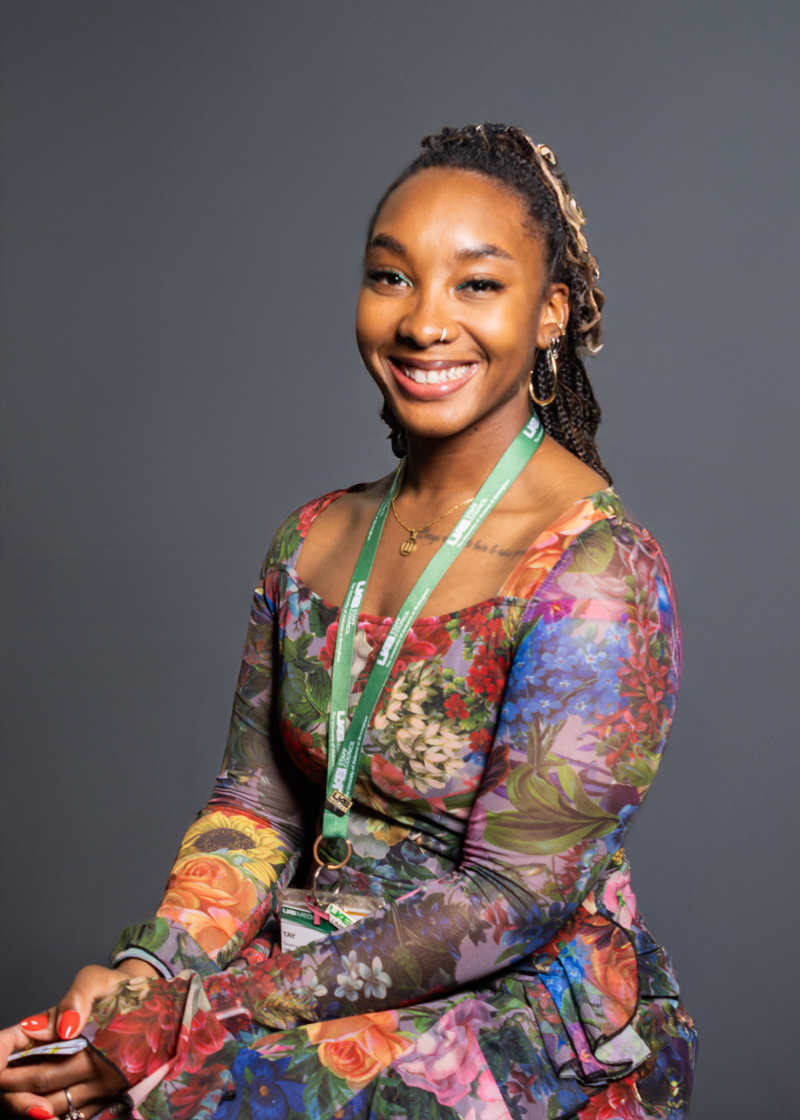 serve underserved and low-income communities.
That mission led her to UAB's IGS program, where she earned a Master of Science by combining two certificates in Artificial Intelligence in Medicine and Health Education.
"I was drawn to the program because of its interdisciplinary approach to solving real-world problems," Tayana said. " I wanted to integrate technology, healthcare, and social impact, especially for underserved populations as I’ve had experience and influence personally due to the health of my parents who have since passed.”
Unlike traditional academic pathways, IGS offered the flexibility she was looking for by allowing her to explore real-world challenges through multiple disciplines.
She was particularly drawn to the program's interdisciplinary approach and its emphasis on practical problem-solving.
"The most valuable aspect was learning to connect data and technology to real-world health outcomes," she said. "It pushed me to think more critically about equity, access, and communication."
That perspective continues to shape how she approaches her work today.
One experience that left a lasting impression was her capstone project, which explored how accurate data and modern technological tools can be used to identify health disparities and develop targeted interventions.
The project reinforced her commitment to addressing health inequities and closing the digital divide that often limits access to healthcare resources in underserved communities.
Throughout the program, Tayana also developed skills that extended far beyond technical knowledge.
"The program strengthened my skills in data analysis, research, and interdisciplinary collaboration," she said. "It also improved my ability to communicate complex ideas in ways that are accessible to diverse audiences."
Those skills have become essential in both her current role and her future aspirations. Today, Tayana works in UAB’s Department of Orthopedic Surgery while continuing to build a career focused on the intersection of public health, applied research, and emerging technologies.
In Orthopedic Surgery, she regularly relies on the organizational, analytical, and communication skills she developed through IGS. From managing physician calendars and coordinating call schedules to credentialing and deposition coordination, she applies a systems-thinking approach to streamline processes and support her team.
She also uses those same skills to onboard and mentor colleagues, helping workflows operate efficiently while fostering collaboration among team members. But perhaps the biggest takeaway from her graduate experience was recognizing the power of interdisciplinary collaboration.
Working alongside students and faculty from diverse academic backgrounds challenged her to think differently about problem-solving.
"It broadened my perspective and taught me to approach problems from multiple angles," Tayana said. "I became more open-minded and adaptable in my thinking and communication."
She was also pleasantly surprised by how intentionally the program connected technical learning with practical applications.
"It wasn't just about the tools," she said. "It was about making a meaningful impact, and that balance made the experience especially valuable."
Today, that philosophy continues to guide her future ambitions.
Inspired by her experiences in IGS, Tayana hopes to develop innovative tools, including an AI-powered health chatbot designed to support underserved communities. She also plans to build sustainable partnerships that strengthen community health outcomes and expand access to healthcare resources.
For students considering an interdisciplinary graduate degree, she encourages them to embrace opportunities that allow them to make a tangible difference.
"If you're interested in solving real-world problems across various disciplines, IGS is a great fit," Tayana said. "The program challenges you while giving you practical, purpose-driven skills. It's especially valuable for anyone passionate about making a meaningful impact."
For Tayana, that impact remains at the center of everything she does. Whether working in healthcare operations today or developing future technologies tomorrow, her goal remains the same: to create innovative, equitable solutions that help communities thrive.