By: Nathan Anderson
Every research study has the potential to change lives, but only if the people it aims to serve are represented. That belief has become the driving force behind Regan Gaskin's graduate journey at the University of Alabama at Birmingham (UAB). As a PhD student in the Health Services Administration program and a clinical research professional, she is working to break down barriers that have historically limited participation in healthcare research.
"My academic and professional interests center around mixed methods research and making clinical research more equitable and accessible, particularly for historically underrepresented populations and children with complex healthcare needs,"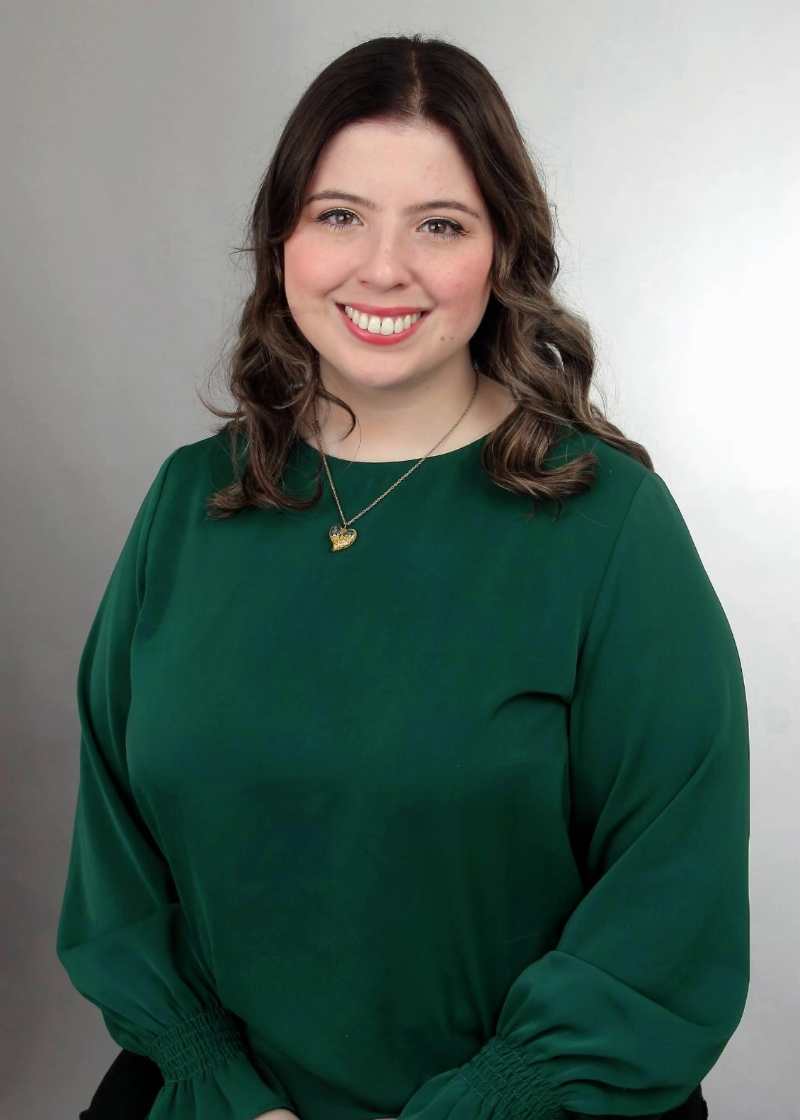 Gaskin said.
Her journey to this work began through a combination of disciplines. With academic backgrounds in psychology and public administration, she developed an early interest in understanding how healthcare systems, communication, and human behavior intersect to shape patient experiences and outcomes.
That curiosity eventually evolved into a deeper calling. Through her work in clinical research, Gaskin witnessed firsthand the barriers that often prevent certain communities from participating in research studies.
"Distrust, limited access, communication gaps, and systemic inequities can prevent certain populations from participating in research," she said. "I became especially interested in understanding why some communities are underrepresented in clinical research and how healthcare institutions can build more inclusive and representative research practices."
Determined to help address those challenges, she pursued graduate education to strengthen her research expertise and expand her impact. UAB quickly became an obvious choice.
With its emphasis on interdisciplinary collaboration, research excellence, and improving health outcomes across Alabama and beyond, Gaskin found an environment that aligned with both her professional experiences and future goals.
Having already worked within the UAB and Children's of Alabama research ecosystem, she had witnessed the power of collaboration among clinicians, researchers, students, and community partners.
"I had seen firsthand the impact that collaboration can have on patient care and public health," she said.
She chose the Health Services Administration PhD program because it offered the opportunity to combine rigorous research training with practical healthcare applications. One of the most meaningful aspects of the program has been her ability to immediately apply what she learns in the classroom to her work in pediatric neurosurgery.
From conducting mixed methods research to leading clinic-based survey initiatives, Gaskin has connected academic theory directly to real-world challenges. She has also found fulfillment in mentoring undergraduate students interested in research careers and contributing to projects that improve care for children with complex neurological conditions, including spina bifida.
"Conducting mixed methods research focused on barriers and facilitators to healthcare and research participation has been especially rewarding because it allows me to combine data with lived experiences to better understand complex healthcare challenges," she said.
Her journey, however, has not been without significant challenges.
Shortly before beginning her PhD program in 2022, her mother, who has a rare genetic cancer that does not respond to chemotherapy or radiation, underwent major surgery and began immunotherapy treatment.
At the same time, Gaskin was navigating her own health journey after being diagnosed with endometriosis. Balancing family responsibilities, personal health, full-time work, and graduate school quickly became one of the most difficult periods of her life.
"Trying to coordinate appointments while balancing work, coursework, and supporting my family was incredibly stressful and emotionally difficult," she said.
During that time, she found tremendous support from her faculty mentors.
"They were accommodating, compassionate, and genuinely invested in my success," Gaskin said. "Without their support, I do not believe I would have successfully completed the coursework portion of my PhD program."
The experience further solidified her belief in the importance of empathy, mentorship, and strong support systems within graduate education.
Despite the challenges, her graduate journey has also been marked by significant accomplishments. Among those milestones are receiving the Dean's Excellence Award for Staff, earning scholarships through UAB, presenting research at national conferences, and contributing to statewide public health efforts through the Alabama Food Fortification Initiative.
The initiative helped support Alabama House Bill 384, legislation signed into law in June 2025 that mandates folic acid fortification of corn masa flour and related products to help prevent neural tube defects, including spina bifida, particularly among at-risk populations.
For Gaskin, the initiative represents the very type of collaborative, community-focused work she hopes to continue throughout her career.
"One of the things I value most about my journey at UAB is the opportunity to contribute to work that directly impacts patients and families while also mentoring future healthcare professionals and researchers," she said.
After her expected graduation in 2027, she plans to remain in academic healthcare and research, focusing on improving equity and representation in clinical research participation. She hopes to continue producing actionable findings that strengthen healthcare systems, expand community engagement, and improve health outcomes for diverse populations.